CNA
CNA··4 min read
What luxury travellers really want now, according to hospitality’s biggest names
Experiences
As traveller expectations evolve, hospitality leaders are rethinking what luxury travel should look and feel like.
New: You can now listen to articles.
This audio is generated by an AI tool.
23 Jun 2026 06:05AM
(Updated: 23 Jun 2026 06:22AM)
Some of Asia’s biggest names in luxury hospitality say changing traveller expectations are forcing a rethink of the industry’s traditional playbook, with personalisation, wellbeing and authentic local experiences increasingly taking precedence over conventional markers of luxury.
That was the message at the Travel + Leisure Luxury Summit Asia, held at the Dusit Thani Bangkok on Jun 16, where more than 300 hotel executives, travel advisors, restaurateurs, designers, tastemakers and entrepreneurs gathered to discuss trends reshaping high-end travel.
Opening the conference, Jeninne Lee-St John, editor-in-chief of Travel + Leisure Southeast Asia, Hong Kong and Macau, said luxury travellers increasingly expect thoughtfully designed experiences, distinctive service and a stronger sense of purpose from the brands they choose.
“They're looking for more connection and, at the same time, more disconnection,” she said.
The theme surfaced repeatedly throughout the day, beginning with a panel on the future of travel for ultra-high-net-worth guests.
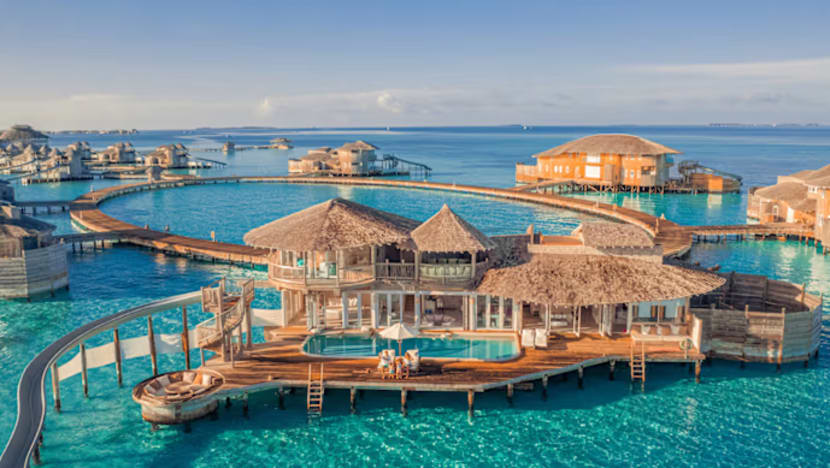
For Rhea Saran, global director of communications at Soneva, the challenge for luxury hospitality is no longer simply exceeding expectations through flawless execution, but delivering experiences that feel instinctive, flexible and personal.
Soneva helped pioneer barefoot luxury and sustainability long before either became industry buzzwords, and has increasingly moved away from rigid service standards in favour of empowering employees to respond to guests in real time.
“Instead of being beholden to SOPs, we have empowered our staff to make judgement calls,” Saran said. “It’s really about responding in the moment.”
Rather than relying solely on scripted service, brands are increasingly seeking to create experiences that feel intuitive and authentic, she added.
Saran also challenged the assumption that the world’s wealthiest travellers can be treated as a single market.
“I don’t think there is any segment that behaves in a particular way,” she said. “We have guests who are interested in privacy, but we also have guests who are interested in access. To be part of something that matters.”
Her comments suggested luxury travellers are becoming increasingly diverse in their motivations, with many seeking journeys built around personal interests, cultural engagement and a sense of purpose rather than status alone.
Gary Franklin, senior vice president of trains and cruises at Belmond, argued that one of luxury travel's greatest luxuries is time itself.
“People do value the time where they can slow down,” Franklin said. “Slow travel has become more and more precious.”
As travellers become increasingly time-poor and digitally connected, the opportunity to spend longer in fewer places and engage more meaningfully with destinations has become one of luxury travel's defining propositions, he said.
Franklin added that guests often remember only “two or three things that made a difference to their lives”, noting that those moments are often simple interactions with staff rather than expensive amenities or elaborate experiences.
Artificial intelligence, for example, was discussed less as a replacement for human hospitality than as a tool to enhance it. Mike Harlow, general manager of Scott Dunn Asia, and Nicky Kelvin of The Points Guy explored how AI can anticipate guest preferences, remove friction from journeys and simplify operational tasks, allowing staff to spend more time on meaningful personal interactions.
The focus on authenticity also extended to architecture and design. Taiwanese designer Andre Fu and Pooja Shah-Mulani, managing director of LW Design Group, argued that the most successful luxury hotels are those that express a genuine sense of place rather than imposing a universal aesthetic.
One of the summit’s biggest announcements reflected that thinking. Chef Gaggan Anand unveiled plans for Gaggan Hotel at Daimon Sake Brewery, a collaboration with hotelier Jason Friedman and designer Bill Bensley that will transform the 200-year-old sake brewery in Osaka Prefecture into an intimate, gastronomy-led luxury retreat.
Designed as an all-inclusive experience, the property will encourage guests to stay for two or three nights rather than simply dine and leave, combining food, sake, architecture and storytelling into an immersive journey.
Anand said he had been invited to open a restaurant at the historic brewery before deciding the property called for something more ambitious.
“I got there and felt there was something magical about it,” he said. “I thought this needs to be a hotel, not a restaurant.”
Friedman said the partnership worked because each collaborator brought a distinct creative perspective.
“There’s no ego overlap,” he said. “We all have incredible respect for the lunacy of each other. We know we're onto something good.”
Anand had earlier struck one of the summit's more provocative notes during a discussion on gastronomy, arguing that the restaurant industry had become overly preoccupied with trends and social media.
“We follow trends. We don’t follow our mouth anymore,” he said, urging chefs and diners alike to rediscover curiosity rather than chase algorithms or online attention.
“I’m still a very curious person,” he said. “Go randomly. Find the queues. Why do you need a plan?”
The Bangkok-based chef questioned whether restaurants had become overly performative, lamenting that too many diners were more interested in photographing meals than experiencing them.
“Restaurants were made for socialising,” he said. “Even on Valentine’s Day, couples are just on the phone. Zero romance.”
Calling for what he described as a “social detox”, Anand encouraged diners and travellers to embrace spontaneity rather than meticulously planning every experience.
The philosophy echoes a decision at his Bangkok restaurant, Gaggan 2.0, where phones have been banned at the table since May after Anand declared that “living in the moment is luxury.”
Source: CNA/bt
Related stories

ESPN
SportsJun 23, 2026 · 1 min
From U.S. to Spain, why every round-of-32 team wil...
ESPN

The Punch
NewsJun 23, 2026 · 1 min
Insecurity: Igboho defends action as ACF, NEF warn of anarchy
The Punch
The Punch
PoliticsJun 23, 2026 · 1 min
Ekiti gov poll: Oyebanji hails voters, promises inclusive governance
The Punch
The Punch
BusinessJun 23, 2026 · 1 min
Tinubu names Ogundipe NUC chair
The Punch