Indian Express
Bollywood’s ‘caste system’: Food in A, B, C categories; character actors paid after 90 days
From a distance, the film and television industry appears dazzling, wrapped in glamour and stardom. Hidden within these corridors are character artists, performers who are often overlooked and seldom respected despite being integral to the stories that unfold on screen.
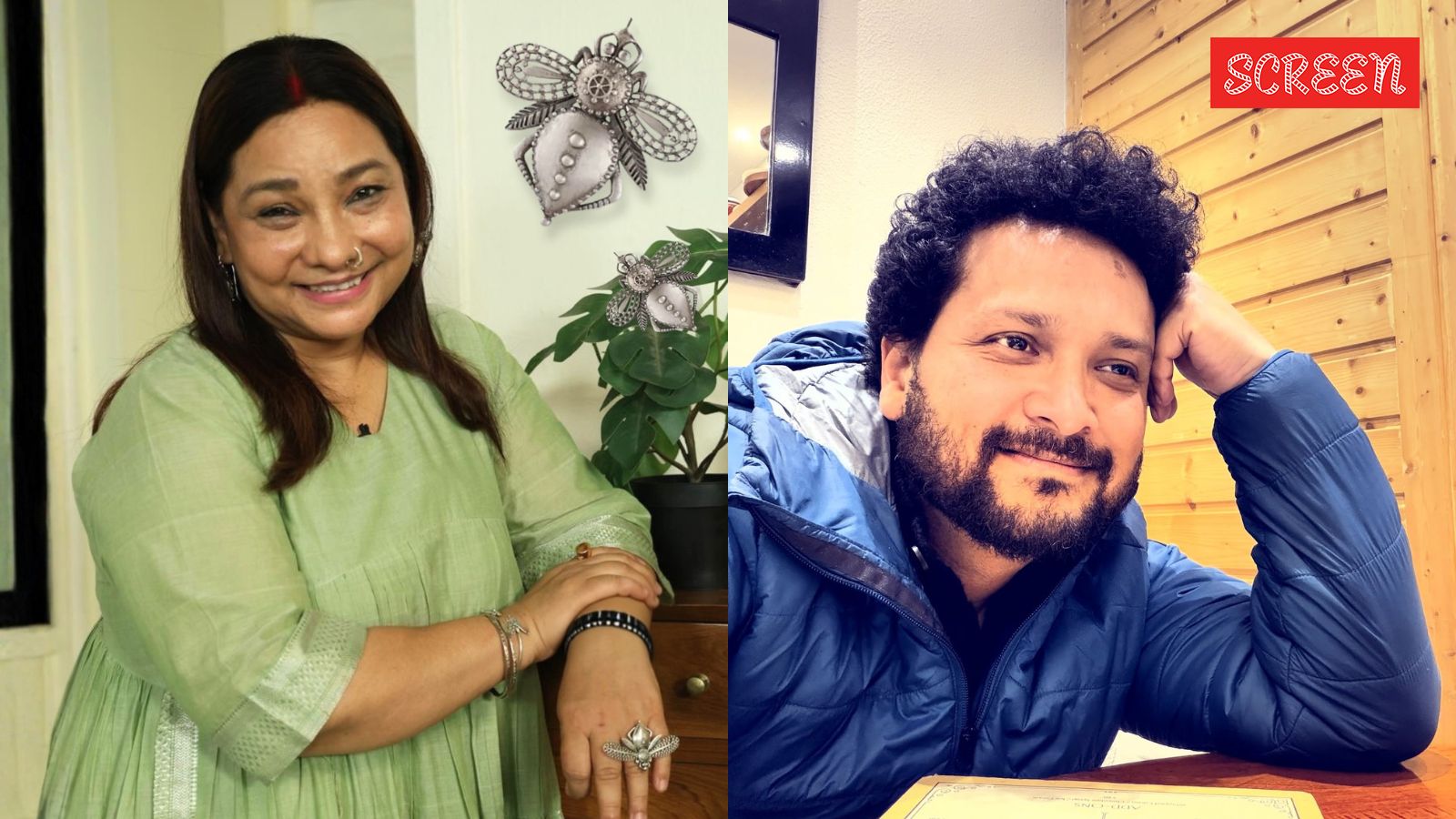
In an attempt to understand their lives, SCREEN spoke to character artists Jatin Negi and Sunita Rajwar. Jatin Negi has featured in films like Bell Bottom; last year he did a movie called Ajay – a biopic on Yogi Adityanath, where he played the villain. On television, Jatin has been a part of shows like CID, Crime Patrol, and Sumit Sambhal Lega, among others. To survive in Mumbai, Jatin also teaches acting.
Sunita Rajwar, an NSD alumunus, has been in the industry for 25 years. Despite playing a few impactful supporting roles, she has faced typecasting in her career. She has been a part of the Stree franchise and Shubh Mangal Zyaada Savdhan, web shows like Panchayat, Gullak, and TV shows like Aahat, Yeh Rishta Kya Kehlata. Other than acting, Sunita is also involved in production and casting.
Also Read: ‘Rs 1 lakh if willing to compromise’: Manvi Gagroo on Bollywood’s dark reality
Treatment on sets
For character artists, the struggle is not limited to landing roles; it often extends to being treated with respect on set. Sharing how actors playing secondary and tertiary roles are treated, Jatin Negi said, “Character artists generally don’t get respected unless they are a Paresh Rawal or Anupam Kher. Trained actors generally start with secondary characters and then climb up the ladder. But facilities are accorded as per the character you are playing. Usually in big films, lead actors get 4 vanity vans while sharacter artists only get a spot boy who takes care of their belongings. At times they have one makeup artist. If you are a senior character artist, you may get a good vanity van. Generally, character artists have to share a vanity van with other artists.Those who do tertiary roles usually share the van with 7-8 artists. Your role decides the respect you get.”
Sunita Rajwar added, “There is a lot of difference in status for a lead and a character artist on set; it’s just like our society. If someone has a main role, everything revolves around them. They will get a good room, they have their own staff. But if you play a smaller character, who is doing one scene or working for 2-3 days, even the spotboys don’t respect you.”
The lack of respect often goes beyond facilities and perks. “They don’t even remember the names of artists who are playing secondary or tertiary characters. In the scripts also, their name is never written. Once I needed money, and I played a tertiary character. In the script it was written as Man 1. We were lucky if they would ask us for food. Even if we asked for tea or coffee, it would never come,” said Jatin.
Discrimination in food: Sections A, B, and C
What makes character artists feel smaller is the divide that’s created on sets, especially when it comes to food. Jatin Negi shared, “In India, they create a divide on set; there are A, B, and C categories. A category has senior, or those playing primary and secondary characters. Those playing tertiary roles or extras have a different section for food. It breaks my heart to see this. I never liked this divide, but even big productions have it. The lead actors usually sit with directors. But this divide creates a very weird atmosphere on set; it feels like the caste system.”
Story continues below this ad
Jatin continued, “I played a tertiary character 7-8 years ago. I was in the get-up, so when I went to eat, they didn’t allow me inside. Then I had to call the production guy; it was 10 pm. Finally, when I got entry, I was shown a lane to the right where I was supposed to go and eat. I felt like an outcast. The quality of food is also so bad; there is an actual difference. It doesn’t happen everywhere, but I have seen a huge difference in the quality of food given to A and B category and the one given to those in C. There are three sections for food, and you are told which section you have to eat from. Many times, junior artists are given food far away from the set. They don’t have a tent or chairs to sit on. They have to stand and eat.”
Jatin recalled another incident on a film set and said, “The big stars are absolutely respectful to everyone. Many years ago, a friend of mine was playing a small role in a film. He was outside his vanity and requested green tea from the spotboy, but he was told they don’t have green tea. A superstar was working on this film. He heard this conversation, and he called the spotboy and said, ‘Are you saying that you guys have taken me in the film and you guys don’t have green tea to give an artist when he is asking for it?’ He immediately brought green tea. Superstars actually stand up for others.”
Payments and job security
Remuneration is another area where character artists often find themselves at a disadvantage. Jatin Negi said, “Payments for secondary and tertiary characters are often delayed. They will pay crores to the lead stars, but if you are playing a character role, it will be very difficult for you to get paid Rs 5 lakhs. This also creates a divide. If the film flops, people say they invested everything in the project and there is nothing left to pay others. Sometimes, after paying crores to one guy, they don’t have money left to make the film further.”
He added, “There is a huge difference in the amounts paid to leads and character artists. Tertiary characters are hired for Rs 5000 per day; There could be a deal where they have work for two days, and they are getting rs 8-10,000 after 2 months. Secondary characters might be hired at Rs 10000 per day, and they might usually have five days of work. But in the acting business, you get work after long breaks, so Rs 50000 coming after two months is nothing. If you play a primary character, your pay is still decent. The payments usually start from Rs 15-25,000 per day. If you are a big actor, you might get Rs 50,000 per day. If your character becomes a hit, then you might get Rs 1 lakh per day. If you are a lead, it’s a different story. In India, lead actors also have the power to get other actors or actresses replaced; they get primary characters replaced at times. I don’t understand why they are given so much power. I have seen that if someone plays a lead role 2-3 times, they get into the power game, demanding that actors be changed.”
Sunita Rajwar echoed Jatin Negi’s concerns. “Everyone is paid differently; it depends on market value. Even lead actresses don’t get paid as well as the hero. Every director, even some big names, try to make artists work for free, saying that they are getting a platform. There are actors who get paid more for working for five days as compared to those who work for 15 days. I have heard that character artists are the first ones to suffer during losses or pay cuts; I have not experienced it. But a friend was once told her payment would be reduced since the project faced losses. Main leads are paid on time. Earlier, the payment window was 45 days, then it increased to 60 days, and now it’s 90 days. And it’s 90 days after telecast, not 90 days after shoot. Some producers pay from time to time also. It all depends on the person.”
Story continues below this ad
The lifestyle of character artists
For many actors, the glamour associated with the profession rarely reflects the realities of their everyday lives. Sunita Rajwar said, “Maintaining a lifestyle is a personal choice. If you know where you stand, you can live life accordingly. I travel in an auto and metro to date. People meet me, click photos. I live in a small society in Mira Road, but it’s my choice. Why should I take a house in Juhu or Andheri so that people are impressed? If you do a good job, no one cares where you stay, what car you have, what phone you use. I do my makeup personally even today. The only impression you should leave is with your work. Actors make this clout around them about maintaining a lifestyle; it’s not like that.”
Sharing his views, Jatin Negi said, “I stay at Seven Bungalows in a 300 sq ft house; it’s a 1 BHK, and I pay Rs 40,000 rent. The building is older than 40 years, so when it rains, I have to put buckets on the floor. I live with my family. My wife is also working, so we manage. But some youngsters are in a worse condition. They take a flat where 4-5 people live together in 300 sq.ft. They will divide the rent, of course, but imagine the condition they would live in. So many of them come from good families.”
What’s better, working on films or TV?
When asked whether television and films treat character artists differently, Jatin Negi said, “In terms of payment and respect, TV is a better medium for character artists. On shows, even if you are a character artist, you will keep appearing occasionally, so if you get Rs 10,000 per day, but you are appearing in the show for 15 days, you get Rs 1.5 lakhs. In films, if you are a character artist playing a secondary or tertiary role, the treatment is not great. Everyone judges you according to the payment you get. I had an incident where I was playing a character. My work was for three days. This was around 2019. I went to shake hands with the director, but he didn’t respond. If the captain of the ship doesn’t respect you, then imagine how others would treat you?”
Don’t Miss: ‘Sanjay Leela Bhansali would appear in my nightmares, strangling me,’ says Heeramandi actor
Jatin also recalled instances where he experienced a more inclusive and respectful work culture. “When I was shooting BellBottom in Scotland, we were eating with junior artists. But everyone was treated equally; we all were talking to each other. It was so simple. There was basic human respect. During Sumit Sambhal Lega, the situation was good. We used to sit together with the director and eat. We used to share food from home, so TV is far better. They give us rooms on the set or studio to rest. Washrooms are clean.”
Story continues below this ad
For Sunita Rajwar, respect is not necessarily determined by whether one is working in films or television. She said, “There is no difference in terms of respect on film and TV. When you work sincerely, people also start respecting you more. It also depends on you. It’s our mistake also to expect that everything we get will be the same as the lead actor. There have been incidents where I have been very hurt about the treatment I got. When we come from an institute, we think we deserve some respect. Casting people often lie; they tell you about a character, and then it’s something else. In between, I left acting due to these reasons. I had gotten my artist card cancelled too.”
View original source — Indian Express ↗
Related stories
Indian Express
EntertainmentJun 23, 2026 · 1 min
‘Pay me Re 1 more than Akshay Kumar’: Sanjeev Kapoor on why he rejected MasterChef India
Indian Express

Dawn
EntertainmentJun 23, 2026 · 1 min
Breathing in Karachi comes with a warning as air quality deteriorates
Dawn

Rolling Stone
EntertainmentJun 23, 2026 · 1 min
Diane Warren Pens Tribute to Clive Davis: ‘Losing You Today Feels Like Losing My Father’
Rolling Stone

Philippine Daily Inquirer
EntertainmentJun 23, 2026 · 1 min
Police: Tacloban school shooting suspect played ‘violent’ game
Philippine Daily Inquirer