CNA
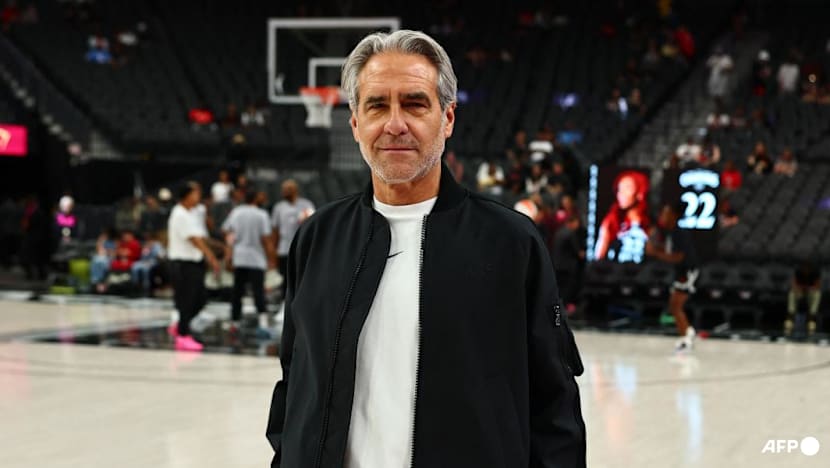
Nike CEO Elliott Hill on the race to revive the world’s biggest sportswear brand: ‘We’re here to win’
People
Nike’s veteran chief executive returned from retirement to revive a company that had lost momentum. The task, he admits, is proving tougher than expected.
23 Jun 2026 03:16PM
(Updated: 23 Jun 2026 03:24PM)
As he walks the floor of Nike’s flagship store in Los Angeles, chief executive Elliott Hill delivers fist bumps and handshakes to almost every member of the sales team. “Are you having fun?” he asks one.
“I love the energy down here. I’m looking at the presentation, I’m looking at the lighting, I’m listening to music, I’m looking at the vibe on the floor . . . It feels pretty good.”
Hill, a Nike veteran, was brought out of retirement in late 2024 to lead a turnaround at the world’s biggest sportswear brand, after a series of strategic mis-steps under his predecessor dragged down its profits and share price.
A shift to high-margin direct-to-consumer sales left Nike absent from shop shelves when in-person shopping roared back after the pandemic, opening the door to smaller, more nimble rivals such as On and Hoka. Nike’s push into lifestyle and fashion eroded its longstanding reputation for sporting excellence, while in China, its second-biggest market, local brands began eating up market share. The product range had grown stale, critics complained, and the company was felt to have lost its cool.
Hill’s appointment gave staff morale and — for a while — Nike’s share price a boost. The affable Texan, who began at the sportswear group as an intern in the 1980s, shifted the company back towards athletic performance and product innovation, and sought to rebuild relationships with retailers. His overhaul reorganised the business around individual sports, rather than the previous structure of men’s, women’s and children’s products.
But while the changes are bearing fruit, Hill admits the scale of Nike’s problems, exacerbated by the hit to customer spending power from US tariffs and higher oil prices, means the restructuring is taking longer than he hoped.
“What I didn’t realise until I got in is the amount of work that needed to be done and the amount of time [it would take] to get us to where we are and, more importantly, where we want to go,” he tells the FT in an interview. “I wanted us to be a little further along.” Nike’s revenues fell 3 per cent in the third quarter, excluding currency impacts.
Hill is undeterred. “There’s a sequence in this and the financials are going to follow,” he adds. “The medicine’s working. The diagnosis hasn’t changed. The prescription hasn’t changed [but] I might have to take the dosage up a little bit.”
The Oregon-based company has cut more than 2,000 jobs this year as Hill sought to make cost savings, particularly in areas where Nike expanded during its direct-to-consumer push. Some of the past investments in logistics, for example, were no longer needed.
“We can and will continue to look at our operating overhead and our structure for opportunities to be more efficient,” he says, adding that shareholders would be updated on progress at the November investor day.
There are some signs of improvement. An initial push to fix Nike’s business in North America, its biggest market, and in running, where the company has its roots, has brought both divisions back to revenue growth.
Football is next in line. On the day of our interview, Hill wears a pair of football boots, but with the studs sunk into a thick, flat translucent sole, a sign of the sport and culture “mash-up” he wants to encourage.
The World Cup taking place in the US, Mexico and Canada is an opportunity to show the effects of his strategy, dubbed “Win Now”, Hill says. Nike’s “Rip the Script” ad campaign featuring star footballers and celebrities has received more than 1bn views across all platforms, while the company’s boots are outscoring those made by rival Adidas by a ratio of more than 2:1.
“From an industry and a Wall Street perspective, the message is that Nike’s back. Nike’s back to leading — leading through product and innovation,” says Hill. “We’re here to win.”
The medicine’s working. The diagnosis hasn’t changed. The prescription hasn’t changed [but] I might have to take the dosage up a little bit.”
But Wall Street is yet to be convinced. Analysts have raised concerns the company’s recovery is running out of steam — since last August, Nike’s share price has dropped by about 45 per cent. RBC recently joined JPMorgan, Goldman Sachs and HSBC in downgrading the stock, describing the turnaround as “slower and narrower” than hoped.
UBS has warned of “lacklustre global sales momentum”, while analysts at BNP Paribas have said they expect further revenue cuts as Nike struggles in China — where sales fell by 11 per cent in the first nine months of the current financial year — and brands such as Jordan and Converse have become less popular. Nike is due to report fourth-quarter earnings on Jun 30, and has previously guided that revenues would fall between 2 and 4 per cent.
The company suffered a symbolic setback in April, when two runners completed the London Marathon in less than two hours wearing high-tech “supershoes” made by Adidas. Nike has been trying to break the two-hour mark for several years. Hill says it was a timely reminder that his focus on sport is the key to product innovation.
“It’s our job to service the best athletes in the world with the best products and help them meet their full potential,” he says. “We’re not going to just sit around and wait, we’re going to respond.”
Hill repeatedly comes back to one simple phrase: “We still have work to do.”
“We’re not presenting consistently around the world at the level that I want. When we do that, when we get the product going, and we get the marketplace going, and the storytelling, then revenue and profits follow.” The full effect of the corporate restructuring will only be felt early next year, he says, when new products feed through across all divisions and geographies.
So far successes have included the Nike Mind 001 — a US$95 (S$123) slip-on mule that claims to “alter the mind” using pressure points on the soles of the feet. The style sold out upon release and 2 million people have signed up to be notified when it comes back into stock. Production has doubled.
“We’ve got 76,000 people hustling. I think there’s an energy that wasn’t here in the past,” says Hill.
Our conversation is interrupted by a customer who asks to take a photo with Hill — something the chief executive says happens “pretty much every time” he visits a US store, and one that has “been an adjustment” for him personally.
“One of the reasons I retired was because I could anticipate how public the role would be. I’m a fairly private person, and I wasn’t sure that I wanted that for my life . . . I want people to take photos with me because of who I am as a person, not because of the title I have.”
Raised by a single mother in Austin, Texas, Hill joined Nike following a brief stint as a physical trainer at the Dallas Cowboys NFL team. Over the next 32 years he held several top executive positions before leaving in 2020, soon after the appointment of John Donahoe as chief executive. “I was tired,” says Hill. “Physically I needed to get fit.”
He started working with consumer brands including Weber barbecue grills and Tecovas, a Texan cowboy boot company, and set up a foundation to invest in local parks. He launched a music festival and a baseball team, while splitting his time between Texas and Italy.
“The whole idea was to remain relevant and create some impact . . . and of course enjoy my life and my family and my wife and travel and all the things that you do when you’re retired,” he says. “It was fun.”
Then, while visiting Palm Springs for a wedding, he met up with Phil Knight, the legendary founder of Nike. Over lunch the pair discussed family and American football — Hill’s “passion in life” — before conversation turned to the state of the company. “Eventually he asked me if I would help and I said yes,” says Hill. “Before you know it, I’m back as the CEO.”
He recalls a visit to a shopping centre near Stanford University while in town to discuss his potential return with the Nike board. “I went over to the mall, and to see the lack of pride in our product and our presentation to me was humbling. And not only humbling, it was disheartening,” he says. “That was probably the moment when I realised how much work was going to be required to do this role.”
Having already retired once, Hill swerves the issue of how long he’ll remain at Nike. The 62-year-old wants to see Nike back to its dominant best, where it is not only winning market share, increasing revenues and inspiring athletes, but also setting the pace across the industry and making the market itself bigger.
“Job’s not done until the job’s done. I guess Wall Street will be the judge of that, right?” he says. “It is a relay race. My job is to take the baton and make sure when I hand it off, that I hand it off better than I found it. And that’s the race I’m running right now.”
Josh Noble © 2026 The Financial Times.
This article originally appeared in The Financial Times.
Source: Financial Times/bt
Related stories

Rio Times
BusinessJun 23, 2026 · 1 min
Nigeria’s $5 Billion UAE Swap Worries the IMF
Rio Times
Rio Times
BusinessJun 23, 2026 · 1 min
Tanzania Bets on Russia for $2 Billion After a Western Rift
Rio Times

Rio Times
BusinessJun 23, 2026 · 1 min
Egypt’s Hassan Allam Wins a $727m Saudi Megaproject
Rio Times

Rio Times
BusinessJun 23, 2026 · 1 min
African Startup Funding Rebounds as Debt Overtakes Equity
Rio Times