BBC
BBC··1 min read
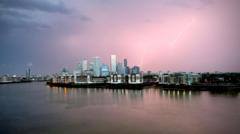
Thunderstorms light up sky across southern England
18 minutes ago
Simon King,Lead Weather Presenterand
Henry Moore
Thousands of lightning strikes lit up the sky overnight, as thunderstorms caused flash flooding and travel disruption across parts of England.
The storms rolled into the south west on Monday evening and moved towards the south east during the night, with people reporting being woken up in the early hours by loud crashes of thunder and flashes of lightning.
London Fire Brigade said it responded to 400 calls overnight, including two house fires believed to be caused by lightning strikes, while a house in Bristol was set ablaze during a storm earlier in the evening.
It comes as England braces for temperatures of up to 40C, with the Met Office issuing a rare red alert set to come into force on Wednesday.
Met Office data suggests there were 29,000 lightning strikes in a 24-hour period, with some very heavy rain in some areas leading to flash flooding.
The intense thunderstorms developed due to a couple of factors.
The first is that it was very warm if not hot across southern England on Monday afternoon and temperatures soared into the high 20s and low 30s.
This heat transfers into the atmosphere, giving it a lot of energy. That energy is then primed for a trigger to covert it into big cumulonimbus - thunder - clouds.
The trigger was an atmospheric disturbance higher in the atmosphere - which essentially allowed all that stored energy to be released, resulting in the intense thunderstorms.
Related stories

The Punch
SportsJun 23, 2026 · 1 min
World Cup update: Six teams qualified for round of 32, four knocked out
The Punch
The Punch
NewsJun 23, 2026 · 1 min
Rivers CP orders removal of illegal police roadblocks
The Punch
The Punch
NewsJun 23, 2026 · 1 min
UK schools to close early as record-breaking heatwave hits
The Punch
The Punch
NewsJun 23, 2026 · 1 min
Kano shuts two health training institutions over regulatory violations
The Punch