Indian Express
Indian Express··3 min read
Supreme Court stays Bowbazar blast convict’s early release after Bengal appeal
4 min readNew DelhiUpdated: Jun 23, 2026 03:17 PM IST
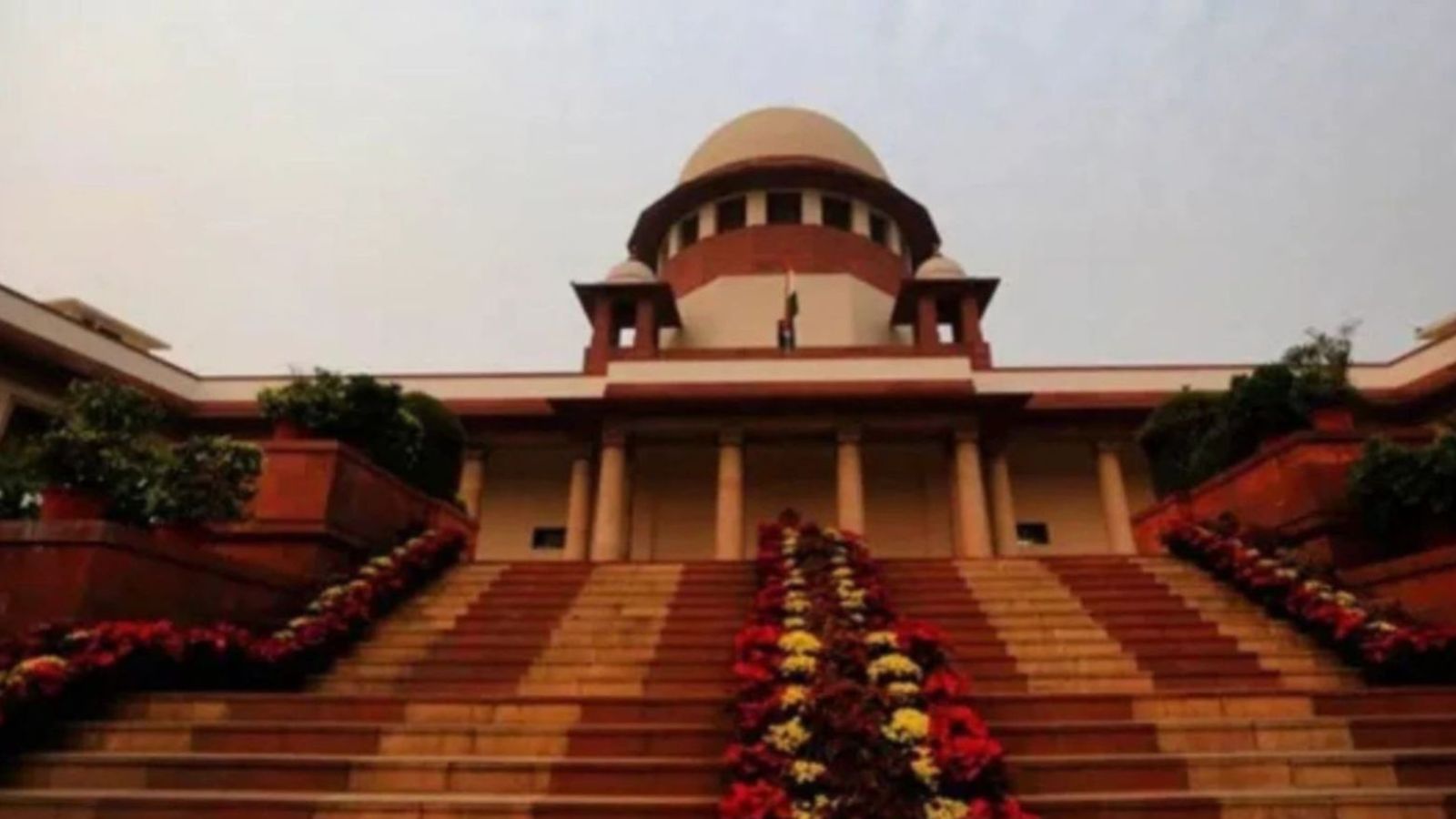
West Bengal's counsel mentioned the plea before a bench of Chief Justice of India Surya Kant, seeking an urgent hearing. (File Photo)
The Supreme Court on Tuesday stayed the Delhi High Court order directing the premature release of Mohammed Rashid Khan, convicted in the 1993 Bowbazar blasts in Kolkata that killed 69 people.
Issuing a notice on an appeal filed by the West Bengal government, a bench of Justices P K Mishra and Sanjeev Sachdeva said the high court’s June 5, 2026, order shall remain stayed in the meanwhile.
The state’s counsel mentioned the plea before a bench presided by Chief Justice of India Surya Kant on June 18, seeking an urgent hearing because it involved a “very serious offence”. The counsel said the State Sentence Review Board (SSRB) had recommended that Khan not be released, but the high court ordered his release.
Khan was convicted on August 31, 2001, under provisions of the Indian Penal Code, the Explosives Act, and the Terrorist and Disruptive Activities (Prevention) Act, for the blasts that ripped through a crowded area on the night of March 16, 1993.
Khan pleaded for remission, saying he had been in judicial custody for more than 33 years. He said he was now 77 years old and suffering from ailments such as chronic metabolic disease, diabetes, hypertension, benign prostatic hypertrophy, left eye cataract, and other age-related ailments.
Khan also pointed out that co-convict Pannalal Jaysoara was granted premature release on March 5, 2014. He said the SSRB had recommended his release on March 25, 2015, but it was rejected in September 2015.
The state opposed his request, saying he was the mastermind of the 1993 blasts. It pointed out that Jaysoara was released in March 2014 based on the SSRB’s December 9, 2013, recommendation before the Supreme Court, in connection with the Rajiv Gandhi assassination case, stated that “all States were restrained from exercising their power to remit sentences imposed upon inmates incarcerated in Correctional Home/ Jail custody and the procedure of Premature Release, especially of Convicts sentenced under Central Laws”.
Story continues below this ad
The state added that the SSRB decided to review and reject its decision to release Khan in view of the Supreme Court order.
‘Reformation rather than retribution’
Allowing Khan’s plea, the Delhi High Court had said, “There has been a reformative approach taken with respect to convicts in cases of remission rather than a retributive approach. In such a case, to keep the petitioner in jail, when he has already spent over 33 years in prison, may not be fruitful in any manner. The punishment undergone by the Petitioner has sufficiently fulfilled the deterrence sought to be induced in a convict who has committed such grave offence. Finally, considering the age, conduct and ailments suffered by the Petitioner, it may be considered that there would not be a recurrence of such offence by the Petitioner.”
The high court said, though the case “has had an impact on society at large”, the emphasis is on “reformation, rather than retribution” in the remission policy.
The high court also took into account that Jaysoara had already been granted remission. “Though in the matter of remission, no parity can be claimed for remission as individual conduct has to be seen, but this fact is significant, in the context of the gravity of offence. If for the same offence, co-convict could be granted remission, gravity of offence cannot be a ground to deny the benefit to the Petitioner, if he satisfies all the criteria.”
Story continues below this ad
The high court said there was no change of circumstance between the time the SSRB recommended his release and recalled it subsequently.
View original source — Indian Express ↗
Related stories

The Punch
NewsJun 23, 2026 · 1 min
Police arrest three over armed robbery, murder in Bauchi
The Punch
The Punch
PoliticsJun 23, 2026 · 1 min
Leave royal fathers out of politics, 10 aggrieved Kwara aspirants warn
The Punch
The Punch
NewsJun 23, 2026 · 1 min
Wiretapping: El-Rufai to file no-case submission as DSS closes case
The Punch
The Punch
BusinessJun 23, 2026 · 1 min
Baba-Ahmed disowns politician claiming PRP sold 69 forms to Kwankwaso
The Punch