Indian Express
Expert Explains | Ten years after referendum, how Brexit has reshaped UK’s economy and politics
A decade ago on this day, 51.9% of Britons, close to 17 million people, voted in a referendum to leave the European Union (EU), the world’s largest single market.
The divorce was finalised in 2020 with the signing of the Trade and Cooperation Agreement to govern the post-Brexit trade and security relationship between the UK and the EU.
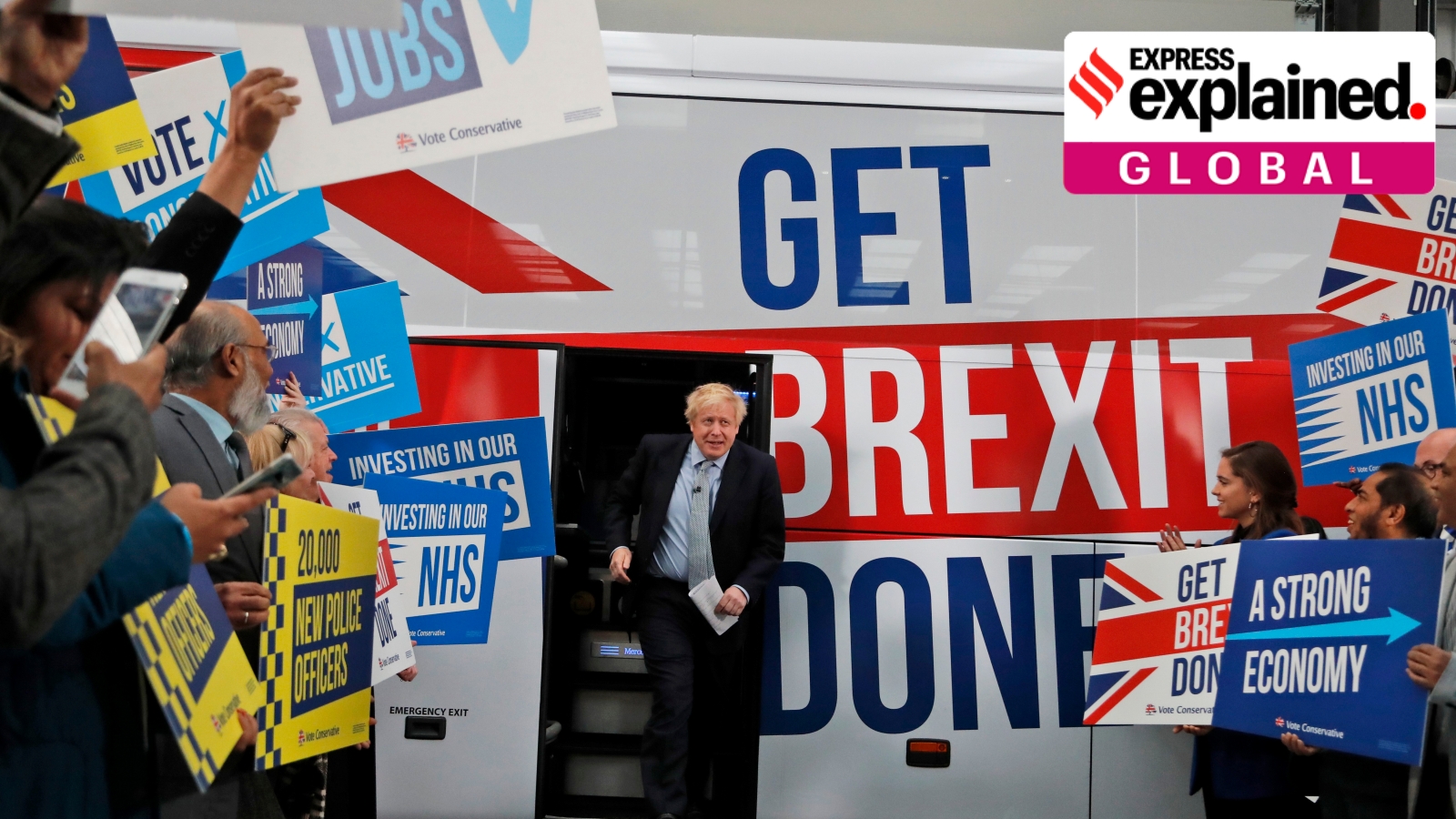
Brexit supporters claimed that leaving the EU would help the UK regain its sovereignty, control immigration, bring economic prosperity and improve welfare services. A decade later, the UK is defined by political instability, sluggish economic growth and rising inflation. Immigration, national identity and the rise of the far-right dominate its discourse. Here’s a look at how the UK’s economic and political landscape have seen a fundamental transformation since its departure from the EU.
A transformed political landscape
The period before the Brexit referendum was marked by political stability and orderly power transfers, despite challenges such as the 2008 financial crisis. What followed was an era of turbulence that saw six prime ministers leaving their office without completing their full term.
The latest casualty is Keir Starmer, who, despite winning a thumping majority in the 2024 parliamentary election, resigned on the eve of Brexit’s 10th anniversary amid rising unpopularity and party pressure.
Story continues below this ad
Although popular dissatisfaction had been rising in British politics since the turn of the 21st century — the 2003 Iraq war, the 2008 financial crisis and the 2009 MP expenses scandal — many celebrated Brexit as a rare opportunity for the deprived to vent their frustration without causing any significant rupture in the British political system. They were wrong.
Today, support for the two traditional parties of Britain is at an all-time low. Populist parties on opposing ends of the spectrum — the anti-immigrant Reform UK and the eco-populist Greens — have gained significant ground, visible in the recently concluded local elections. These parties are now competing to effectively consolidate the Leave or Remain bloc in their favour.
Brexit also weakened British nationalism because of the fact that majorities in Scotland and Northern Ireland who had voted “stay” were forced to go along with the “leave” vote. Today, sentiments in favour of an independent Scotland, which comprehensively voted against Brexit, remains at an all-time high.
Economy, trade, travel and immigration
Since leaving the EU single market and the customs union, trade has been negatively impacted largely because of the non-tariff barriers — complicated paperwork, customs bureaucracy — which has affected small UK businesses. According to the Office of Budget Responsibility (OBR), an autonomous forecaster of the British government, the long-term impact of Brexit on trade is expected to be a 15% decline in exports and imports of goods and services. OBR also forecast a 4 % decline in national income over the next 15 years.
Story continues below this ad
According to Bank of England data, published just before the 10th anniversary of Brexit, the British economy has taken a 6% hit after the UK left the union in 2021. This is a cumulative result of the post-Brexit shock and the rising trade barriers even after the UK negotiated a free-trade agreement with the EU. Business exchanges with the EU countries are now time consuming and expensive.
The British economy is weaker today. A research paper by the US National Bureau of Economic Research estimates a 6-8% reduction in economic output for the last ten years.
The Covid pandemic and the wars in Ukraine and Iran have only contributed to this decline. The incoming PM must grapple with the fact that an average Briton is older, sicker and less productive in a system where half of the government budget now directly services the National Health Service, welfare demands and repayment of debts.
Story continues below this ad
Thanks to its membership of the EU and its predecessors, British businesses relied on Europe (especially eastern European countries) as a cheap source of labour. With the end of the free movement, this source of labour dried up. Britain, in recent years, has seen a sharp rise in the recruitment of non-EU workers while migrants continue to cross the English Channel in small boats, putting pressure on struggling public services. The same Britain which left the EU to control immigration and reclaim sovereignty is now granting a record number of visas to non-EU workers while continuing with more than 4,000 EU laws.
Thanks to the post-Brexit end of the freedom of movement, new border controls and implementation of the new Entry-Exit System by the EU, which requires individuals from non-EU countries to register through fingerprints and photographs at the entry points of Schengen Area, travel delays for the UK citizens has increased.
The Brexit divide will stay
The political divide between the supporters and opponents of Brexit was not just about voting in a referendum. Even after five years of the UK formally leaving the EU, the division between the “leave” and “remain” groups has cemented into solid group identities and transformed into broader political discourses on national identity, sovereignty and British role in the world.
Story continues below this ad
A decade after leaving the EU, the UK finds itself in a world which is more complicated and less forgiving. With the transatlantic alliance in turmoil, the need for a strong and united Europe has never been so demanding. Starmer’s resignation has also put off his much-talked-about EU-UK reset. The progress on the reset was, anyway, slow.
It is, thus, not surprising that ten years after leaving the EU most Britons (57% as per the recent survey) now consider the decision a mistake. Sadly, for them the EU which is grappling with its own problems, does not consider the UK as its top priority.
View original source — Indian Express ↗
Related stories

ZDNet
TechnologyJun 23, 2026 · 1 min
This bestselling gaming device is not a Switch or a PS5 - and it's on sale for Prime Day
ZDNet

TechRadar
TechnologyJun 23, 2026 · 1 min
Forget the Switch 2 and PS5, the Nex Playground is the surprise game console hit of my household
TechRadar

Wired
TechnologyJun 23, 2026 · 1 min
The New ‘Odyssey’ Movie Is Sparking a Right-Wing Backlash. This Female Scholar Knows It Well
Wired

The Verge
TechnologyJun 23, 2026 · 1 min
These are the best smart home deals this Prime Day
The Verge