Indian Express
Indian Express··3 min read
To ensure safe rides, 44 old flyovers across Delhi to be repaired over the next three years
Following directions issued by a city court, 44 flyovers that are more than 15 years old will now be put through structural audits to assess their health and fitness, officials said.
“Structural audits of flyovers should be conducted every five years,” said a senior official of the Public Works Department (PWD), the Delhi government body that will test the strength and safety of flyovers that crisscross the city along its most critical traffic arteries.
“The PWD has identified 44 flyover corridors that require repair and rehabilitation,” the official said. A consultant will be appointed to carry out structural audits.
“Following that, repair and rehabilitation works will be undertaken to ensure the safety of both the flyovers and the commuters who use them. Regular repairs also ensure smooth, pothole-free and bump-free travel,” the official said.
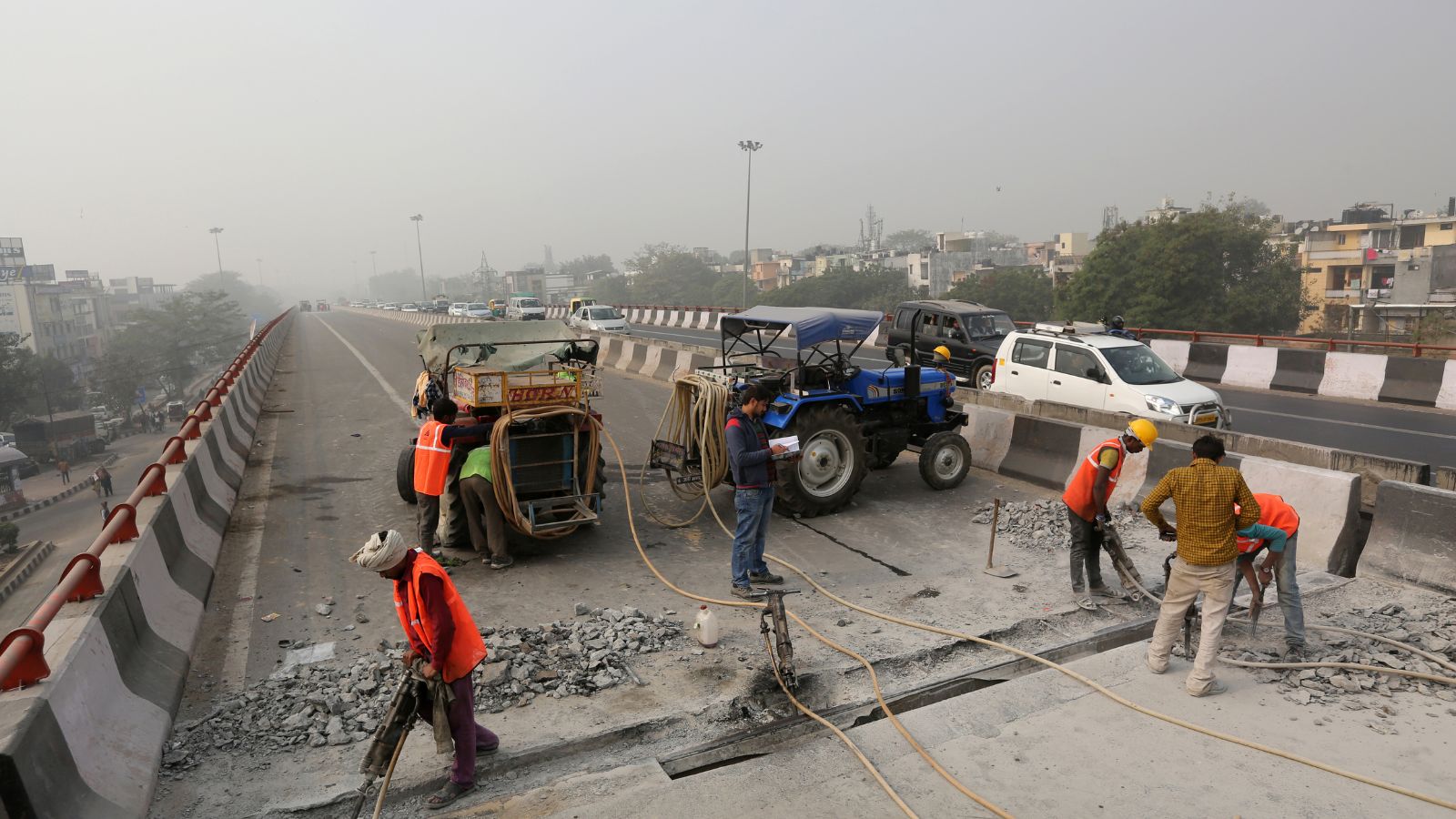
Given the large number of flyovers, the repairs will be carried out in phases. “If all of them are repaired at the same time, the city and its traffic will come to a standstill,” the official said.
The oldest structures will be repaired first, in particular those that were constructed before 2000, as they require immediate attention, the official said. “The auditing and repairs process will be completed over the next three years. Seven to eight flyover stretches will be repaired and rehabilitated every year,” the official said.
Story continues below this ad
Among the flyovers that will be taken up for repairs this year is the one at Shadipur in West Delhi, the first modern flyover in the city, which was opened to traffic back in February 1971.
Repairs of the Zakhira flyover, which too was built in the 1970s, and the Raja Garden, Seelampur, Peeragarhi, IIT, and Modi Mill flyovers, as well as the Barapullah Nullah culvert are also likely to begin in 2026, officials said.
Given the large number of flyovers, the repairs will be carried out in phases. (Express Photo)
The periodic repair, rehabilitation, and maintenance of reinforced cement concrete (RCC) structures is critical to ensure the safety, functionality and longevity of essential transportation systems. These structures are subjected to continuous stress from heavy traffic, weather conditions and environmental factors, and inevitably experience wear and deterioration over time, officials said.
If not addressed in time, such degradation can compromise the structural integrity of flyovers, leading to potential hazards, higher maintenance costs, and disruption of public services.
Story continues below this ad
Around 21 flyovers across the city, including the ones at Nehru Nagar, ISBT (Yudhishthir Setu), Sarita Vihar, Vikas Marg, Mukundpur, Karampura, Ashram Chowk, Najafgarh Drain (10 Nos. Bridge), Africa Avenue, Moti Bagh, Savitri Cinema, Tilak Nagar District Centre, Tilak Nagar Metro Station, Punjabi Bagh, Mayapuri, Andrews Ganj, Nehru Place, and Gokulpuri were repaired during 2024-25.
The rehabilitation process typically involves a comprehensive assessment of the structure’s condition to identify problems such as cracks, corrosion, spalling, and weakened joints.
“Once the problem areas are identified, repair strategies may include injection grouting, jacketing with high-performance concrete, and the application of protective anti-corrosive coatings to combat corrosion. Corrosion of reinforcement steel is one of the most significant threats to the durability of RCC structures, and the use of corrosion inhibitors, cathodic protection, or epoxy-based treatments helps mitigate these issues,” an official said.
In some cases, retrofitting measures such as adding external post-tensioning systems or using carbon laminates and Carbon Fibre Reinforced Polymer (CFRP) wraps are employed to enhance the load-bearing capacity and stability of the structure.
Story continues below this ad
The use of advanced materials, including high-strength, self-healing and rapid-setting concrete, ensures that the repair work not only restores structural strength but also minimises disruption to traffic flow during the rehabilitation process, officials said.
View original source — Indian Express ↗
Related stories

The Punch
NewsJun 23, 2026 · 1 min
Police arrest three over armed robbery, murder in Bauchi
The Punch
The Punch
PoliticsJun 23, 2026 · 1 min
Leave royal fathers out of politics, 10 aggrieved Kwara aspirants warn
The Punch
The Punch
NewsJun 23, 2026 · 1 min
Wiretapping: El-Rufai to file no-case submission as DSS closes case
The Punch
The Punch
BusinessJun 23, 2026 · 1 min
Baba-Ahmed disowns politician claiming PRP sold 69 forms to Kwankwaso
The Punch