CNA
CNA··1 min read
Over 5,000 people trapped in Myanmar scam centres near Thai border: Rights group
23 Jun 2026 06:20PM
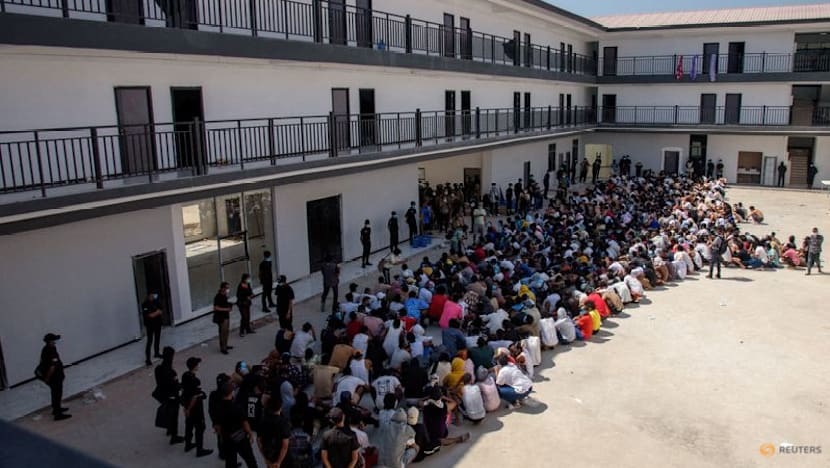
BANGKOK: More than 5,300 people are still trapped in online scam centres near Myanmar's Thai border, a human rights group said, over one year after thousands were freed during a multinational crackdown in the region.
In a letter to Thai police on Monday (Jun 22), urging them to take action, the Civil Society Network for Human Trafficking Victim Assistance (CSNHTV) said many of those trapped were foreign nationals held at four locations inside areas controlled by a Myanmar militia.
The group estimates that the people trapped include around 1,600 Chinese nationals, some 200 Burmese, 20 Thais, as well as citizens from the Philippines, Taiwan, Malaysia, Brazil, Russia, Kenya, Uganda, Rwanda and Zimbabwe.
Scam centres in Southeast Asia, including those in Myanmar and Cambodia, run illegal online schemes that defraud people worldwide and generate billions of dollars of annual revenues, according to the United Nations.
Many of these facilities, such as those along parts of the Myanmar-Thailand border, are operated by foreign nationals trafficked there by criminal gangs, often working in oppressive environments and subjected to abuse.
Thailand last year fronted a regional effort to dismantle the scam centres along its borders, pulling out some 5,000 people from sprawling scam hubs in Myanmar's Myawaddy area, but large-scale illegal operations have continued.
In its letter, the Thailand-based CSNHTV said a large number of victims were currently confined in scam compounds located within areas controlled by Myanmar's Democratic Karen Buddhist Army (DKBA) militia.
"Many of these compounds have yet to be dismantled or subjected to rescue operations to free all remaining victims," it said.
"As a result, these syndicates continue to engage in online fraud and human trafficking, causing harm to victims around the world, particularly in the United States and Europe."
Two DKBA officials did not respond to calls seeking comment.
A spokeswoman for Myanmar's military-backed government, which has publicly announced a crackdown on scam operations, also did not immediately respond to questions from Reuters.
Source: Reuters/rl
Related stories

The Punch
NewsJun 23, 2026 · 1 min
Ondo police arrest six suspected cultists, recover weapons
The Punch

ESPN
SportsJun 23, 2026 · 1 min
WNBA Power Rankings: Mystics up, Liberty down and ...
ESPN
The Punch
NewsJun 23, 2026 · 1 min
Anambra approves ₦640m projects, rolls out reforms to tackle erosion, others
The Punch

ESPN
SportsJun 23, 2026 · 1 min
First-half relief pitcher MVPs, busts and waiver w...
ESPN