Times of Israel
Contradicting Vance, Iran says no plans for IAEA inspections of damaged nuclear sites
Iran has neither held a meeting with International Atomic Energy Agency chief Rafael Grossi in Switzerland nor plans for the UN nuclear watchdog to inspect Iran’s damaged nuclear facilities, a foreign ministry spokesperson said Tuesday.
Esmaeil Baghaei said there was no protocol for such inspections, adding that Iran will continue its current obligations as a member of the nuclear Non-Proliferation Treaty and under its safeguards agreement with the IAEA.
The comments contradicted a statement by US Vice President JD Vance, who said Monday that “the Iranians have agreed to invite IAEA inspectors back into their country.”
Speaking to reporters at the Burgenstock resort in Switzerland, Vance called Iran’s ostensible invitation to UN nuclear inspectors “a major milestone for the American people and the first step in permanently denuclearizing or permanently ending a nuclear weapons program in Iran.”
However, a few hours after Baghaei’s comments, US President Donald Trump claimed that Iran had “fully and completely agreed to highest level nuclear inspections long into the future (Infinity!)”
Get The Times of Israel's Daily Edition
by email and never miss our top stories
By signing up, you agree to the terms
“This will insure ‘nuclear honesty.’ If they did not agree to this, there would be no further negotiations!” Trump wrote in a post on Truth Social.
“Based on this and other major concessions being made by Iran, I have agreed to allow the Hormuz Strait to remain OPEN, with no further naval blockade. However, all ships are remaining in place should it be necessary to reinstitute the blockade, which seems, at this point, highly unlikely,” Trump added.
The US lifted its blockade several days before Iran purportedly agreed to allow in UN nuclear inspectors, however.
Iran had initially pushed back against Vance’s comments on Monday, with Baghaei telling the official IRNA news agency that Tehran had not negotiated on its nuclear program and had not accepted any new commitments during Sunday’s talks with the US.
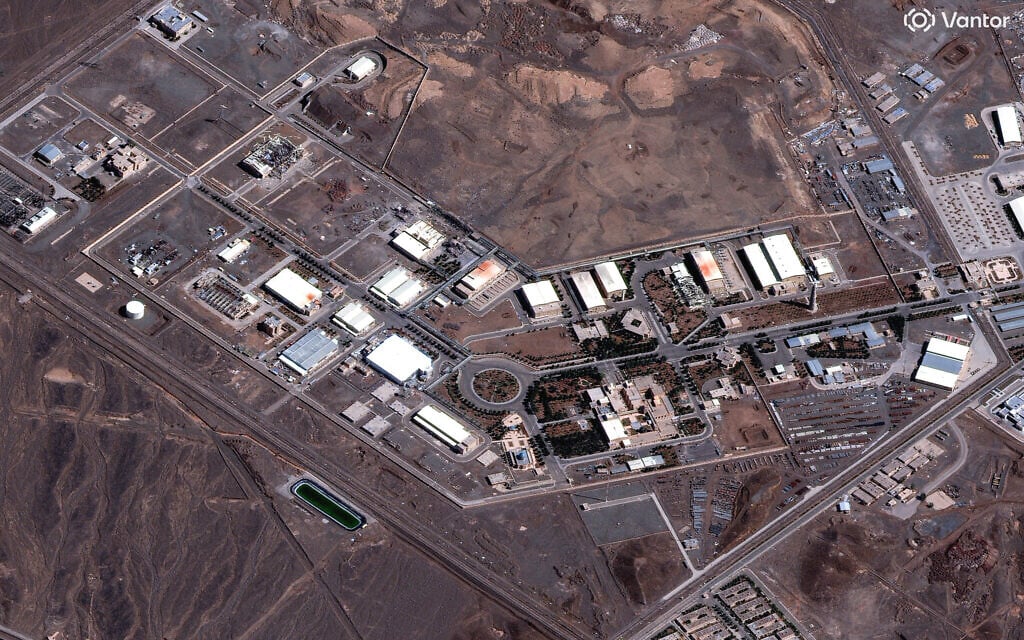
The IAEA has accused Iran of obstructing inspections and failing to give a full account of its highly enriched uranium stockpile after the material was apparently buried in US strikes on key Iranian nuclear sites during last June’s 12-day Israel-Iran war.
Tehran, which routinely calls for the destruction of Israel, maintains that its nuclear program is for purely civilian purposes.
However, before the June war, Iran had been enriching uranium to levels far beyond what’s necessary for any peaceful application, and consistently obstructed international inspectors from checking its facilities. Israel has also said Iran was taking steps toward weaponization.
‘Only’ Iran can determine how to use assets
In a second public rebuke of Vance, an Iranian diplomat said Tuesday that Tehran alone will decide how to use its frozen assets once they are unfrozen under a US-Iranian deal toward ending the Middle East war.
“Iran is the only country who will decide what to do with its assets, which are going to be defrozen and so I reject any claim by [Washington] about that there should… be any role for any other country to have an influence on those decisions or on those processes,” Ali Bahreini, the Iranian ambassador to the United Nations in Geneva, told reporters.
Vance had indicated the US was seeking to restrict the use of unfrozen Iranian assets to purchasing produce from US farmers for the “benefit” of the Iranian people, rather than terrorism.
According to Vance, the plan was worked out by Trump’s son-in-law and unofficial adviser Jared Kushner along with Qatari mediators, and would see Iranian funds unfrozen as part of a peace deal only after approval from Doha and Washington.
The initiative would be mutually beneficial to Washington and Tehran, since “if Iranian assets are ever unfrozen, they’re going to go to make American farmers richer and to feed the Iranian people,” Vance said. Public concerns about unfreezing Iranian assets were sparked by “misreporting” on the issue, he added.
Iran’s frozen assets largely consist of oil revenues and central bank reserves trapped overseas, built up over years of sanctions. About $12 billion is expected to be released under the initial accord.
Bahreini said there would be some technical arrangements made by Washington and Doha, because the assets were frozen by the US, and some are in Qatar.
In general, Bahreini claimed there had been good progress in the talks, but after two people were reportedly killed by Israeli fire in south Lebanon on Tuesday, he warned that any “violation” of the memorandum of understanding in Lebanon would create challenges for the talks.
“Lebanon is an unquestionable part of the agreement, and whatever happens in Lebanon affects the whole process, and it is the United States which should use all its leverage against Israel to make it to stop attacks against Lebanon,” he said.
The IDF said the strike was on armed Hezbollah operatives who were identified near Israeli forces.
Israel and the US launched a bombing campaign on Iran on February 28 in a bid to destabilize its regime and destroy its ballistic missile and nuclear programs, but the fighting entered a truce on April 8 with none of those goals achieved.
Israel had no part in negotiating the MOU reached last week, and Prime Minister Benjamin Netanyahu has distanced himself from it. Still, the terms of the opening clause, permanently ending the war and ruling out any resumption, indicate that it is binding on the US, Iran “and their allies.”
Israeli officials are bitterly opposed to the deal’s terms, which resolve none of the war’s key goals — notably, eliminating Iran’s nuclear and ballistic missile programs, and creating the conditions for the fall of the regime.
Separately, the US is mediating talks between Israel and Lebanon, after the Lebanese terror group Hezbollah attacked Israel on March 2 in support of Tehran, sparking a new round of conflict.
After the US and Iran signed their MOU last week, Iran has been insisting that Israel halt its military operation in Lebanon as a precondition for talks.
View original source — Times of Israel ↗
Related stories

The Punch
PoliticsJun 23, 2026 · 1 min
Akpabio rallies Senators for vote on state police bill
The Punch
The Punch
PoliticsJun 23, 2026 · 1 min
Senate adjourns emergency plenary on state police over Rep’s death
The Punch
BBC
PoliticsJun 23, 2026 · 1 min
PM to push ahead with controversial defence plan despite resignation
BBC

The Hindu
PoliticsJun 23, 2026 · 1 min
Dozens of Awami League activists arrested in Bangladesh as party marks founding anniversary defying ban
The Hindu