Antara News
Antara News··2 min read
Indonesia pushes downstreaming of 10 social forestry commodities
Pekanbaru (ANTARA) - Indonesia is strengthening downstream development of 10 key social forestry commodities to boost rural incomes and add value to forest products, the Forestry Ministry said on Tuesday, as it expands agroforestry-based economic clusters.
The Directorate General of Social Forestry at the Ministry of Forestry is prioritizing downstream processing of coffee, cocoa, sugar palm, clove, candlenut, vanilla, nutmeg, cashew, coconut, and pepper under its social forestry program.
"These ten commodity groups are expected to become locomotives for community economic development in Social Forestry areas through a cluster-based business approach," Director General of Social Forestry Catur Endah Prasetiani said in Pekanbaru, Riau.
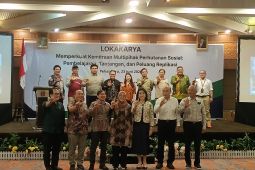
She made the remarks during a workshop on implementing the Agroforestry Partnership Program in Social Forestry held in Dayun Village, Siak District, and Rambahan Village, Kuantan Singingi District, Riau.
The workshop was organized by the Regional Community Forestry Training Center for Asia and the Pacific (RECOFTC) and APRIL Group under the theme "Strengthening Multi-Stakeholder Partnerships in Social Forestry: Lessons, Challenges, and Opportunities for Replication."
Related news: Indonesia outlines 12.7 million ha forest recovery target at COP30
Catur said most community groups still sell products in raw form, limiting their income while value-added processing is captured elsewhere in the supply chain.
"Downstreaming is not just about processing products, but transforming raw commodities into high-value products that can increase community income and create local jobs," she said.
She added the government is promoting multi-business forestry downstreaming supported by partnerships between community groups, government, the private sector, financial institutions, universities, and development partners.
She said success cannot be achieved through sectoral approaches alone, adding that Indonesia is implementing an Integrated Area Development (IAD) model under Presidential Regulation No. 28 of 2023.
The IAD model integrates programs and resources from central and regional governments, the private sector, financial institutions, and development partners into a unified action plan prepared by local governments.
So far, 82 districts and cities have committed to developing IAD-based social forestry programs, while 32 action plan documents have been signed by local governments.
"This shows growing regional support in making Social Forestry a platform for regional development. We hope districts in Riau province will follow by initiating IAD," she said.
Related news: Indonesia seeks stronger social forestry through agroforestry
Translator: Bayu Agustari Adha, Martha Herlinawati Simanjuntak
Editor: Rahmad Nasution
Copyright © ANTARA 2026
View original source — Antara News ↗
Related stories

The Punch
NewsJun 23, 2026 · 1 min
Soludo’s wife seeks greater investment to fight mother-to-child HIV transmission
The Punch
The Punch
EntertainmentJun 23, 2026 · 1 min
2027: Stay away from partisan politics, NYSC DG warns corps members
The Punch
The Punch
NewsJun 23, 2026 · 1 min
Politics won’t stop development projects in FCT, says Wike
The Punch
The Punch
PoliticsJun 23, 2026 · 1 min
Akpabio rallies Senators for vote on state police bill
The Punch