South China Morning Post
Anxious West seeks to rewrite global trade rules to counter China
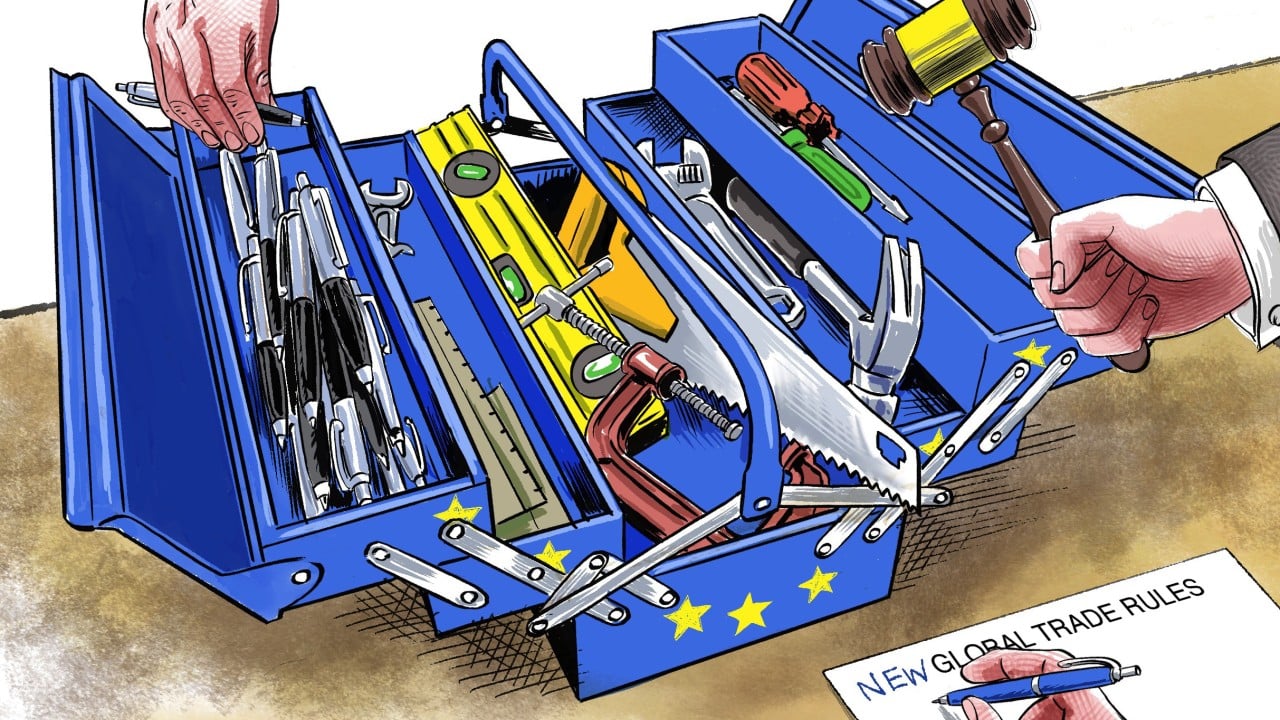
At the recent Brussels summit, the leaders of all 27 European Union states called on the European Commission to expand the bloc’s trade defence toolbox against “global macroeconomic imbalances”, widely understood to refer to China’s so-called overcapacity.
Measures under discussion include mechanisms for sector-wide tariffs and other restrictions in industries such as chemicals and green technology. Europe, long a critic of Washington’s Section 301 tariffs, is now considering instruments that increasingly resemble them.
For decades, the United States and Europe championed an open trading system built on multilateral rules, comparative advantage and global supply chains. They also urged China to open up its markets, lower tariffs, welcome foreign investment, strengthen intellectual property protection and integrate into the rules-based trading system.
Yet, as industrial competition intensifies, governments increasingly fear deindustrialisation, supply-chain vulnerabilities, technological dependence and the political consequences of economic dislocation. From Washington’s tariffs and industrial subsidies to Europe’s growing embrace of trade defence instruments, protectionism seems to be back in vogue.
That is the context in which the “overcapacity” debate exists. Overcapacity is a misnomer. China’s manufacturing capacity grew because it opened up and integrated itself into global supply chains. Chinese products became more competitive through scale, market discipline, infrastructure, industrial clustering and decades of manufacturing expertise.
02:41
EU leaders debate new China trade policy over ‘systemic threat’
China changed laws and regulations to meet international standards. It welcomed foreign joint ventures and wholly foreign-owned enterprises, deregulated its economy, created more incentives for businesses and entrepreneurs, and offered stronger protection for intellectual property rights. In other words, China did the things its trading partners wanted it to do.
View original source — South China Morning Post ↗
Related stories
Bloomberg
BusinessJun 23, 2026 · 1 min
SpaceX Loses $600 Billion in Value Over Three Days
Bloomberg

TASS
BusinessJun 23, 2026 · 1 min
Tokenization of goods in warehouses discussed with marketplaces
TASS

Bloomberg
BusinessJun 23, 2026 · 1 min
Supreme Court Puts New Curbs on Human-Rights Suits in Cisco Win
Bloomberg

MarketWatch
BusinessJun 23, 2026 · 1 min
Sons, brothers and husbands. More men are now caregivers for aging relatives.
MarketWatch