Indian Express
Kunal Shah to become WhatsApp CEO: What CRED-Meta deal means for India’s fintech sector
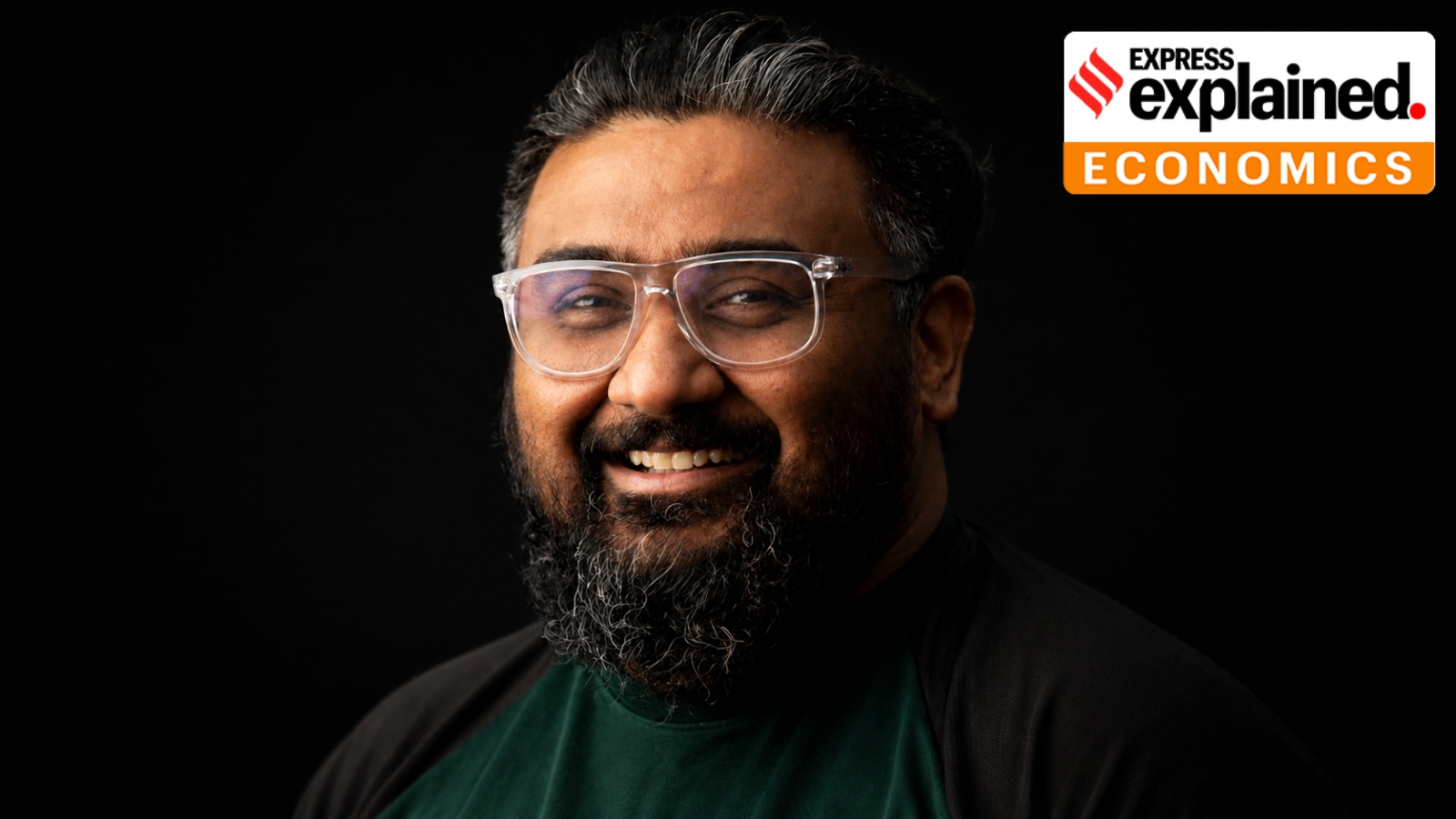
From dropping out of Mumbai’s Narsee Monjee Institute of Management Studies (NMIMS) to becoming the new chief executive officer (CEO) of WhatsApp, the world’s leading messaging platform owned by Meta Platforms, Kunal Shah has had quite a journey in the startup ecosystem.
Shah, 43, the founder of CRED — a members-only fintech platform that rewards users for paying their credit card bills on time — has the distinction of being one of India’s notable startup leaders. While moving to Menlo Park, California, the head office of WhatsApp, he also secured a $900 million (around Rs 8,500 crore) investment for CRED from Meta, underscoring the Meta’s confidence in his vision and leadership. India is WhatsApp’s largest market with more than 500 million active users.
“As for me, I’ll be joining Meta to lead WhatsApp globally. Meta comes in as a minority investor in CRED. No access to member data,” Shah said.
“While it’s come very far, the delta between WhatsApp today and its full potential is massive. I look forward to working with Mark (Zuckerberg, Meta CEO), Chris (Cox, Meta’s chief product officer) and the leadership across Meta for the next step in WhatsApp’s journey. Will Cathcart (Shah’s predecessor at WhatsApp), thank you for scaling something the world relies on quietly, and for making this transition smooth,” Shah said on his role in WhatsApp.
Unconventional path
Shah, who was born in Ahmedabad and raised in Mumbai, earned a Bachelor of Arts degree in Philosophy from Wilson College. He later enrolled in the Master of Business Administration programme at NMIMS but chose to leave before completing it, opting instead to pursue entrepreneurship. His unconventional academic path is often cited as proof that curiosity, self-learning, and practical experience can sometimes be more valuable than traditional credentials.
“I was not afraid of protecting a reputation. I was willing to make mistakes and learn… What surprises me is that a lot of young people in India want to protect their reputations when they have none,” Shah said during a recent podcast.
The new WhatsApp CEO is among India’s most prominent fintech entrepreneurs, widely recognised for building successful consumer internet businesses and for his understanding of consumer behaviour, technology, and startups. As the founder of CRED, he has influenced how affluent Indians engage with credit cards, rewards, and financial services, and shaped customer experience.
Entrepreneurial journey
Story continues below this ad
Shah’s entrepreneurial journey began long before CRED. In 2010, he cofounded FreeCharge, a digital payments and mobile recharge platform that quickly became one of India’s most successful startups. The company was acquired by Snapdeal in 2015 for about $400-450 million, one of the largest startup exits in India at the time. After exiting FreeCharge, Shah spent time investing in and mentoring startups across India and Southeast Asia.
According to his LinkedIn profile, he has been an investor in companies such as Razorpay, Unacademy, Spinny, and several other high-growth ventures. He also served in advisory roles with organisations including AngelList and investment firms such as Y Combinator and Sequoia Capital. His profile describes him simply as “Founder: CRED, curious”, reflecting the intellectual curiosity that has become part of his public persona.
In 2018, Shah founded CRED, and the company targeted India’s most creditworthy consumers and built a premium brand around trust, rewards, and financial discipline. Over the years, CRED expanded into lending, payments, e-commerce, and wealth-related offerings, emerging as one of India’s most closely watched fintech startups.
“Our vision is to improve the money relationship for the top 25-30 million Indians. Many are first in their families to use credit cards or mutual funds,” he said in an interview recently.
Story continues below this ad
After the Meta announcement, he told CRED staff: “Team CRED, I’ll still expect you to be a 10x version of yourselves. I’m stepping away from the operating role and will continue as a shareholder. My commitment doesn’t change. Just the role.”
Announcing Shah’s appointment, Zuckerberg on Monday said, “Kunal built CRED into one of India’s most important technology companies, and he brings the kind of builder mentality and global perspective that will serve him well in running the world’s biggest messaging app.”
“I look forward to working with Kunal to continue to make WhatsApp the best service for billions of people and millions of businesses,” Zuckerberg said.
Beyond entrepreneurship, Shah is also widely followed on social media platforms such as X and LinkedIn for his observations on business and technology.
Story continues below this ad
Concerns over CRED-Meta deal
New Delhi-based economic think-tank Global Trade Research Initiative (GTRI) has raised concerns over Kunal Shah’s appointment as WhatsApp head and Meta’s $900 million investment in CRED. “First, American technology companies are gaining increasing control over India’s fintech sector and the vast financial data generated by Indian consumers. Second, many Indian fintech startups appear more interested in building companies for eventual sale to foreign buyers than in creating long-term Indian-owned digital champions,” GTRI said.
The Meta-CRED transaction comes at a time when India’s digital-payments ecosystem is increasingly dominated by platforms linked to US firms. Walmart controls about 72% of PhonePe, Google owns Google Pay and Meta owns WhatsApp Pay, GTRI said. “The proposed CRED investment would further strengthen the control of foreign technology giants in a sector built largely on Indian public digital infrastructure such as Aadhaar, UPI and India Stack,” Ajay Srivastava, founder of GTRI, said.
CRED’s 17 million users and control of over 40% of India’s credit-card bill payments make it a uniquely valuable financial-data platform. “CRED may not provide access to customer data to Meta today, but GTRI expects soon all of this data will be directly or indirectly be made accessible for METAs use which can further use/sell it for training AI models,” GTRI said.
View original source — Indian Express ↗
Related stories

TASS
TechnologyJun 23, 2026 · 1 min
Iran to let limited number of vessels pass through Hormuz — news agency
TASS

Wired
TechnologyJun 23, 2026 · 1 min
Prime Day Streaming Deals 2026: HBO, Paramount Plus, Crunchyroll
Wired
The Guardian
TechnologyJun 23, 2026 · 1 min
Hantavirus quarantine ends for Americans held for six weeks in Nebraska
The Guardian

ZDNet
TechnologyJun 23, 2026 · 1 min
I convinced my mom to buy an Oura Ring - and now its price is even lower
ZDNet