Indian Express
Indian Express··4 min read
Rs 750 for full tank vs Rs 600 earlier: Delhi cab drivers feel the heat as earnings dip
3 min readUpdated: Jun 23, 2026 06:03 PM IST
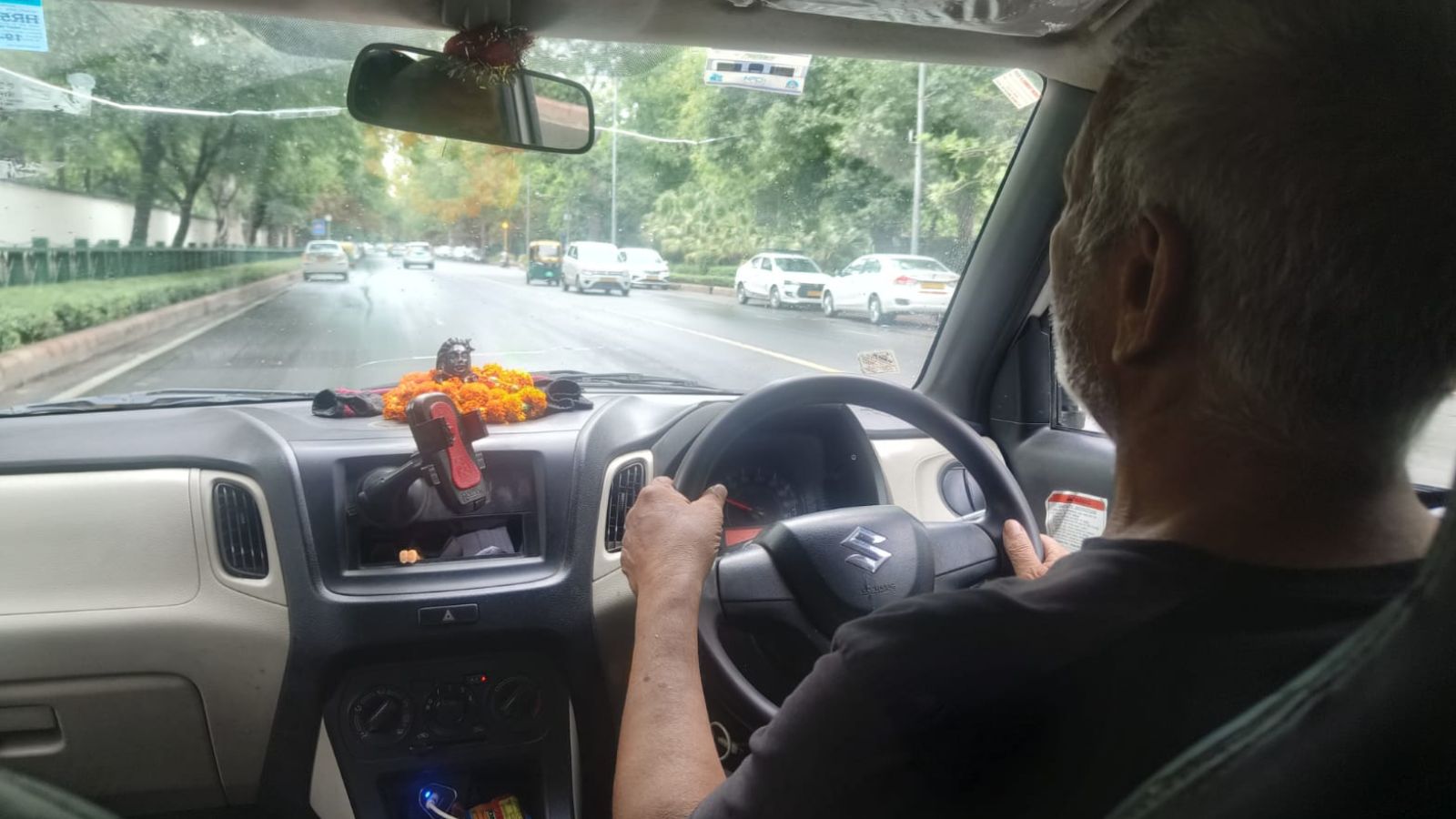
45-year old Arun Kumar says his earnings have been squeezed in the past two months. (Express Photo)
As soon as a passenger sits inside 45-year old Arun Kumar’s taxi and he enters the OTP to start the ride, a robotic voice speaks out from the phone: “Yeh AC ride hai. Kripya AC on rakhe (This is an AC ride. Please keep the AC on).”
“Yeh awaaz sunke gussa aata hai (This voice makes me angry). It just reminds me of my budget,” says Kumar, adding that his earnings have been squeezed in the past two months.
Cab drivers in Delhi have witnessed their earnings drop due to hikes in CNG prices and the constant functioning of ACs owing to the summer heat. While this has led to higher expenditure from their side, drivers claim that ride-hailing apps Rapido and Uber have not increased fares to pass on the higher costs to customers.
Uber and Rapido did not respond to requests for comments by The Indian Express.
In May, in a series of hikes, CNG prices shot up from Rs 77.09 kg to Rs 83.09 kg, along with hikes in petrol and diesel, as the war in West Asia had led to a closure of the Strait of Hormuz. The complete halt in vessel movements through the maritime route impacted India’s crude oil and liquefied natural gas (LNG) imports.
Around 40% of India’s oil imports and over 55-60% of LNG imports come from West Asia through the Strait; as for LPG, a whopping 90% of the country’s imports depend on the narrow waterway between Iran and Oman.
“Earlier, I used to get my entire tank filled for around Rs 600. Now, it costs me around Rs 700-750,” says Kumar. “At this time, they should have increased fares automatically for passengers, but they are scared that the passenger will take the other app,” he adds.
Story continues below this ad
At the same time, the city has also been hit by the summer heat: temperatures crossed 45 degrees Celsius several times in the past weeks. This means that the AC in the cab has to be on and turned to the highest level all the time, which brings down mileage of the car. So cab drivers also have to spend more just to drive the same amount of kilometres they were doing previously.
“In winters, I can drive the car for around 180-200 km on a full 8-kg cylinder. In summers, it drops drastically to less than 150 km because the AC is on all the time. No passenger will agree to sit without the AC,” says 38-year old Umesh Thakur, another driver.
Gurvinder Singh, 28, says he would get through the day with just one cylinder, but now needs to fill his cylinder twice. “After paying for gas, rent and commissions, I am left with around Rs 1,500 in a day, compared to an average of Rs 2,000 earlier,” he says.
Some drivers also complain that due to summer holidays in schools and the extremely hot summers, they are getting significantly fewer bookings.
Devansh Mittal is a Correspondent at The Indian Express, based in the New Delhi City bureau. He reports on urban policy, civic governance, and infrastructure in the National Capital Region, with a growing focus on housing, land policy, transport, and the disruption economy and its social implications.
Professional Background
Education: He studied Political Science at Ashoka University.
Core Beats: His reporting focuses on policy and governance in the National Capital Region, one of the largest urban agglomerations in the world. He covers housing and land policy, municipal governance, urban transport, and the interface between infrastructure, regulation, and everyday life in the city.
Recent Notable Work
His recent reporting includes in-depth examinations of urban policy and its on-ground consequences:
An investigation into subvention-linked home loans that documented how homebuyers were drawn into under-construction projects through a “builder–bank” nexus, often leaving them financially exposed when delivery stalled.
A detailed report on why Delhi’s land-pooling policy has remained stalled since 2007, tracing how fragmented land ownership, policy design flaws, and mistrust among stakeholders have kept one of the capital’s flagship urban reforms in limbo.
A reported piece examining the collapse of an electric mobility startup and what it meant for women drivers dependent on the platform for livelihoods.
Reporting Approach
Devansh’s work combines on-ground reporting with analysis of government data, court records, and academic research. He regularly reports from neighbourhoods, government offices, and courtrooms to explain how decisions on housing, transport, and the disruption economy shape everyday life in the city.
Contact
X (Twitter): @devanshmittal_
Email: [email protected] ... Read More
Stay updated with the latest - Click here to follow us on Instagram
Tags:
cab drivers
rising fuel prices
Summer heat
View original source — Indian Express ↗
Related stories

The Punch
PoliticsJun 23, 2026 · 1 min
Akpabio rallies Senators for vote on state police bill
The Punch
The Punch
SportsJun 23, 2026 · 1 min
Niger officially request to quit ICC
The Punch
The Punch
SportsJun 23, 2026 · 1 min
Abia’s approach to sports development strategic — Commissioner
The Punch
The Punch
NewsJun 23, 2026 · 1 min
Opposition demands probe over Borno ₦4bn rail project error
The Punch