South China Morning Post
What fuels global trade imbalances: China’s overcapacity or America’s failure to adapt?
China’s industrial overcapacity should not be singled out for blame amid trade imbalances, as economies worldwide are struggling to adapt to shifts in the global economy, contributing to mounting pressures, a prominent Chinese scholar said in comments directed at the United States.
“The reason why our imbalance is becoming a bigger problem is that the rest of the world is having a bigger problem in adjusting the economic structure,” said Huang Yiping, dean of Peking University’s National School of Development and an adviser to China’s central bank, on Tuesday.
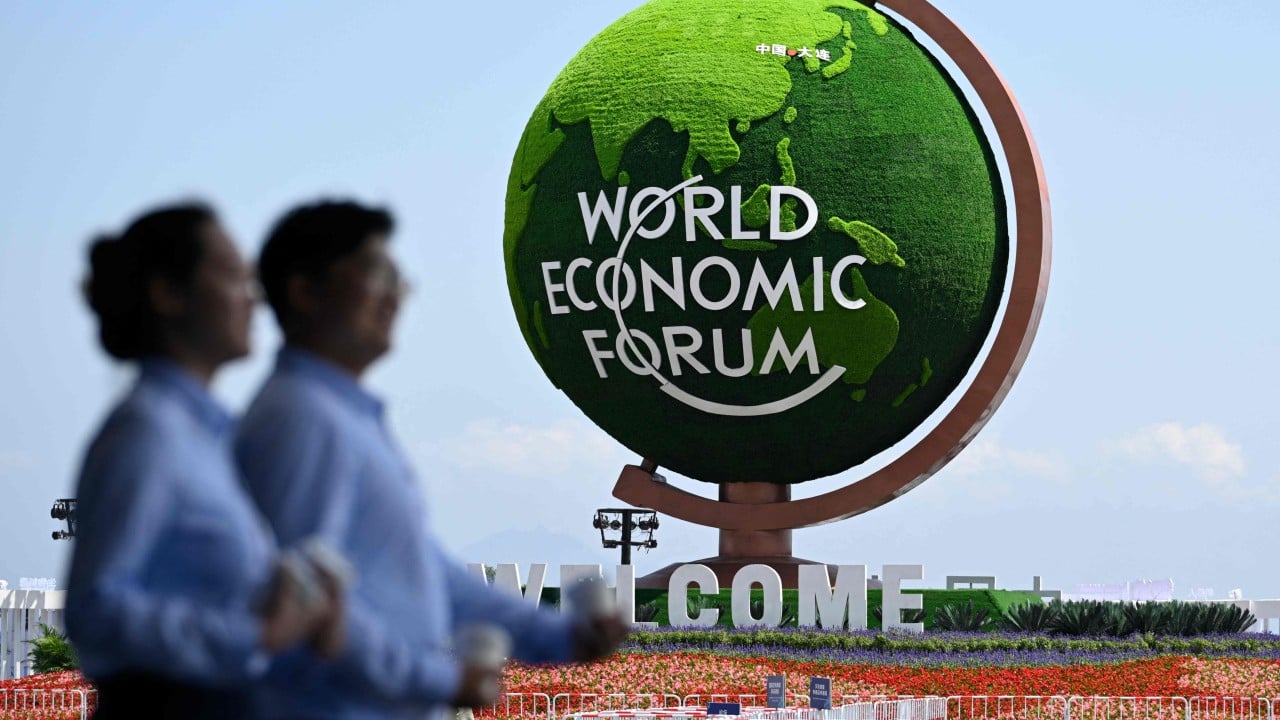
Speaking at the World Economic Forum’s annual meeting in Dalian, Huang pointed to the US, arguing that Washington’s complaints over Chinese exports hurting manufacturing jobs had overlooked America’s deeper constraints in managing the impact of trade and globalisation.
Discussions of global imbalances featured prominently at the gathering, also known as Summer Davos, as China’s record trade surplus fuels concerns that Beijing’s industrial policy is generating excess capacity that is spilling over into global markets.
Huang said Beijing had made progress in reducing external imbalances, with its current-account surplus narrowing from nearly 10 per cent of gross domestic product in 2007 to about 3.7 per cent in recent years. But he acknowledged that more aggressive measures were needed to boost consumption, which remains well below global averages.
“How to work together with the rest of the world is a challenge we face, not just by China, but also by other economic partners,” he said.
View original source — South China Morning Post ↗
Related stories

Straits Times
BusinessJun 23, 2026 · 1 min
Italy cannot hold election next April, economy minister says
Straits Times

Bloomberg
BusinessJun 23, 2026 · 1 min
SpaceX Slides Amid Tech Selloff; AMC Tumbles on Share Sale | Stock Movers
Bloomberg

The Moscow Times
BusinessJun 23, 2026 · 1 min
Former Aeroflot CEO Arrested in Moscow, Reports Say
The Moscow Times

Bloomberg
BusinessJun 23, 2026 · 1 min
America's Nuclear Buildout Gains Speed
Bloomberg