SBS News
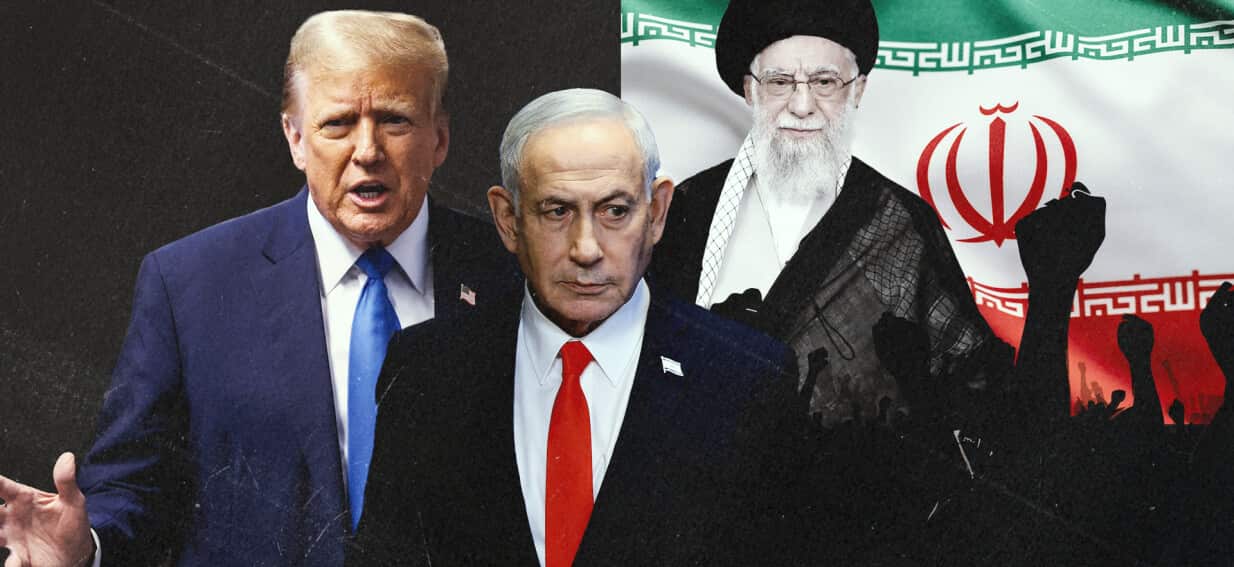
Has Trump and Netanyahu's push for regime change in Iran backfired big time?
Forcing regime change in Iran was widely considered to be one of several goals the United States and Israel had in going to war with Iran, and something some Iranians wanted, but it now appears far away.
After the US and Israel killed Iran's former leader, Ali Khamenei, Donald Trump urged Iranians to "seize control" of their country.
"When we are finished, take over your government. It will be yours to take," the US president said, after the first wave of US and Israeli air strikes hit Iran in late February.
The call, echoed by Israeli Prime Minister Benjamin Netanyahu, made clear that regime change was a core aim of the joint campaign — and executing a long-held dream of Netanyahu's.
Four months later, the US is walking away, leaving thousands dead, the global economy wounded, US weapons stocks reduced — and the regime still intact.
News that makes sense
Your trusted source for staying up-to-date with the world around you. Get free daily news updates and analysis, straight to your inbox.
Rather than weakening Iran's political structure, experts say the joint agreement signed with the US last week has instead emboldened and strengthened it.
US leaders, including Trump and his defence chief Pete Hegseth, insist there has been regime change, pointing to the killing of Khamenei and top Iranian security and political officials.
Trump 'feels he was fooled'
But that doesn't constitute regime change, Middle East analyst Amin Saikal says, partly because Khamenei was succeeded by his son Mojtaba.
Saikal says Trump may have felt later that he was being "played" by Netanyahu over regime change.
"Trump personally has never really said that he is very much in favour of regime change. In fact, he has said a few times that regime change does not really work," he told SBS News.
"I think Trump feels that he was fooled by Netanyahu."
Charles Miller, a senior lecturer in politics and international relations at the Australian National University, says the US side may have believed they could replicate the political change it managed in Venezuela.
"I think it became quite clear not too long into the war that this attempt to basically ... swap out the leadership for one that would be more cooperative with the United States and Israel, wasn't going to work," he said.
Dara Conduit, a political science lecturer at the University of Melbourne, says regime change was never a main goal of Trump's, pointing to his statements during the January protests that killed thousands, that "help was on its way".
"And that help wasn't forthcoming, and many Iranians were massacred in the streets," she told SBS News.
"But [regime change] is not something that's been particularly well planned, and I don't think it's something that Donald Trump really is deeply wedded to."
Was regime change ever possible?
Experts say the 'decapitation' strategy — killing the chief at the top — is unlikely to effect regime change in a political system like Iran's, where power is decentralised in what is called a 'mosaic structure'. Each region in Iran is apparently controlled independently by an arm of the Islamic Revolutionary Guard Corps (IRGC).
The regime may not have majority public support, but it does control many aspects of state power, including the IRGC, the volunteer Basij militia, the network of mosques, and various national committees.
"The regime is built to survive," Saikal says.
And it's built as tough as possible to withstand a "crack" from the US.
"They designed the Iranian military to basically be as robust as possible to an attempted invasion by the United States that would change the region, so that meant basically designing these long-range missiles and later designing drones, dispersing and hardening their facilities, building a very large army and Revolutionary Guards Corps, such that it would be very difficult for the United States to invade Iran."
Miller adds that, without a ground operation or a collaborator on the inside, regime change was always unlikely.
Regime 'far more emboldened'
Far from abolishing the regime, the memorandum of understanding signed last week — along with reaffirming the Strait of Hormuz under the control of Iran, and a US$300 billion ($431 billion) reconstruction fund — also makes it clear that both sides must "refrain from interfering in each other's internal affairs", such as attempting regime change.
Conduit says Iran has benefited from the deal more than it had during previous rounds of nuclear talks, where sanctions relief was the main incentive.
"It's actually quite remarkable how much the dial has, I guess, shifted in the regime's favour. It has certainly come out in a much stronger position than it went in," she said.
Saikal said the US and Israel underestimated the resilience and capability of the regime.
"The regime is far more emboldened than it was," he told SBS News.
It's unclear whether the US will try again for regime change. But it's unlikely to happen in the near future.
"There are a lot of people in the American political establishment and the Israeli political establishment that believe there is unfinished business here," Conduit said.
"So I wouldn't be surprised if it does escalate again at some point, I mean, with the hope that the US and Israel has learned its lessons from this conflict that the Iranian regime won't be easily overpowered."
For the latest from SBS News, download our app and subscribe to our newsletter.
View original source — SBS News ↗
Related stories
ABC News
PoliticsJun 23, 2026 · 1 min
Outgoing British PM holds secret meeting with likely successor
ABC News

TASS
PoliticsJun 23, 2026 · 1 min
Contacts between Lavrov, Rubio to continue — senior Russian diplomat
TASS

Stuff
PoliticsJun 23, 2026 · 1 min
Trump’s troubled reflecting pool faces fresh scrutiny over vandalism claims and duck deaths
Stuff

The Hill
PoliticsJun 23, 2026 · 1 min
Lawn care company pledges $1M repair damage to the White House South Lawn from the UFC fight
The Hill