Indian Express
Indian Express··4 min read
Rainfall 43% deficit so far, kharif crops likely to be hit: Government
4 min readNew DelhiJun 24, 2026 05:30 AM IST
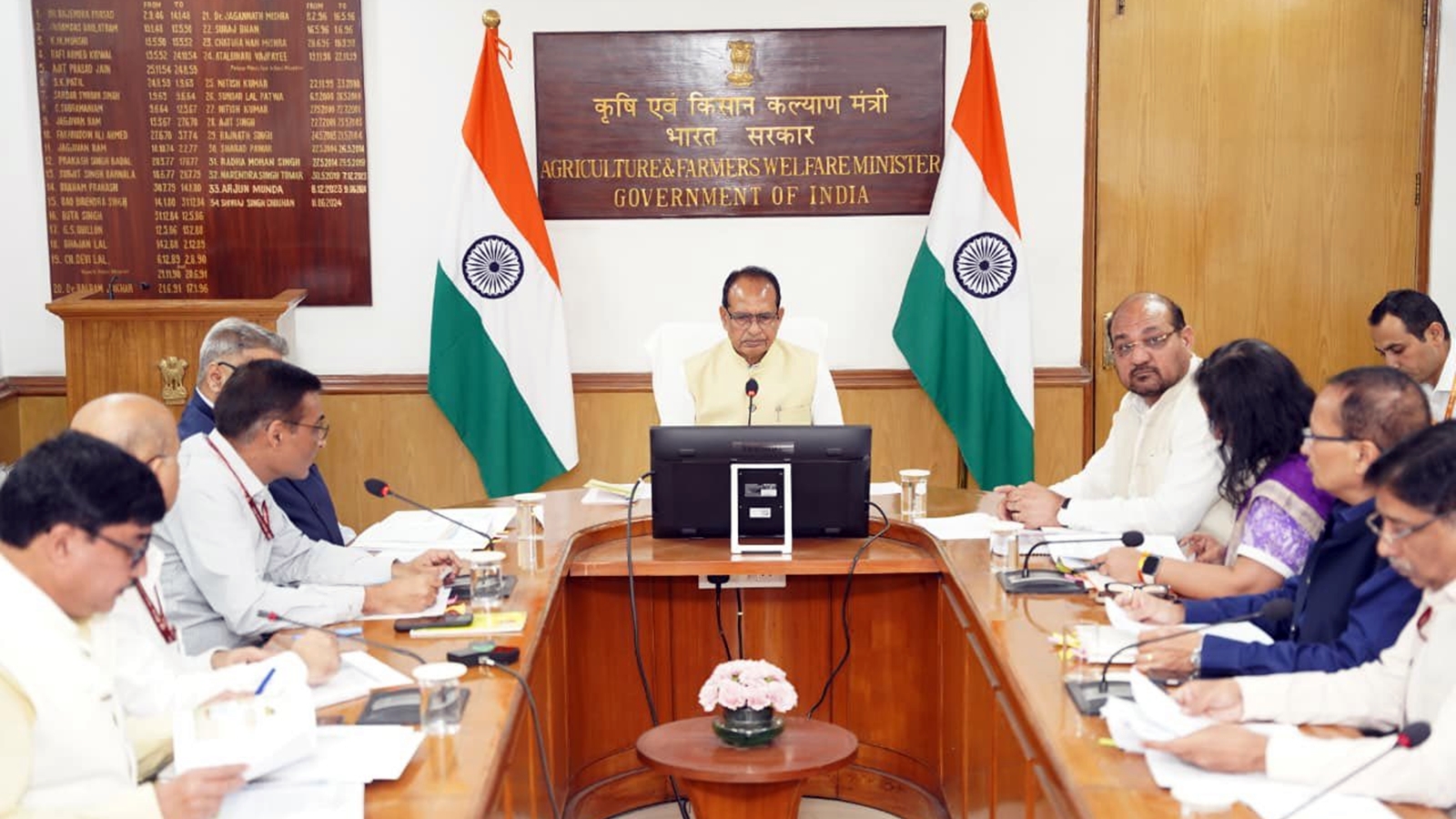
Agriculture Minister Shivraj Singh Chouhan chairs a review meeting at Krishi Bhawan in New Delhi, Tuesday. (Image source: X/@ChouhanShivraj)
With India staring at a fairly weak monsoon season this year and kharif crops likely to be impacted, the Agriculture Ministry has formulated contingency plans for districts likely to be most affected due to low rainfall, and identified 111 districts with irrigation coverage of 25 per cent or less as ‘high priority’ needing intervention, Agriculture Minister Shivraj Singh Chouhan said on Tuesday.
After chairing a review meeting, held over video conference, with state agriculture ministers, senior officials and district collectors, Chouhan said that 315 districts across the country were likely to be affected due to low monsoon rainfall.
“Of these (315 districts), 111 districts are of high priority, where the irrigation coverage is less than 25 per cent; 76 districts are of medium priority, where 25-50 per cent irrigation is available; 128 districts are of low priority, where relatively better irrigation is available through dams and other means. The bulk of these districts are in 12 states — Madhya Pradesh, Maharashtra, Gujarat, Uttar Pradesh, Rajasthan, Karnataka, Bihar, Jharkhand, Telangana, Andhra Pradesh, Odisha and Tamil Nadu,” Chouhan said, addressing a press conference after the meeting.
He said a detailed discussion was held with the state agriculture ministers and district collectors, and they were urged to intensify preparations at the local level.
“We are facing potential conditions for a weak monsoon due to El Niño — an impact that is already becoming visible, as the monsoon is currently significantly delayed. Overall, rainfall has been 43 per cent below normal so far. Weather forecasts indicate that conditions are likely to remain weak during the week of July 2nd,” Chouhan said.
The India Meteorological Department (IMD) has said that the country as a whole was expected to receive rains that were only 90 per cent of the long period average during the monsoon season. If that turns out to be the case, it would be the driest monsoon season in India in over a decade. As of now, the situation is looking even more grim.
For June, IMD had predicted 92 per cent rainfall. But with just one week remaining in the month, the shortfall in rainfall over the country as a whole is more than 42 per cent. Of the 36 States and Union Territories, as many as 26 have a deficiency of 20 per cent or more, as on Tuesday. Nine of these have a deficiency of more than 60 per cent.
Story continues below this ad
June was predicted to be one of the better months in this monsoon season, with the latter months expected to be more impacted by the El Nino phenomenon. But the progress of the monsoon remained stalled for a week after June 15. It began progressing northwards only on Monday.
Chouhan said the monsoon situation implied a potential impact on the kharif crops. He said that an “El Niño Monitoring Cell” and a “Crop Weather Watch Group” have been constituted in Delhi to continuously analyse the progress of the monsoon, crop sowing, crop conditions, input supplies, and market signals.
States have also been instructed to set up their own control rooms and designate a nodal officer to coordinate with the Centre. Most states have already nominated their nodal officers, he said, adding that reviews are being conducted weekly at the secretary level, and he himself reviews the situation regarding El Niño every Tuesday.
Chouhan said that the Indian Council of Agricultural Research (ICAR) and ICAR-Central Research Institute for Dryland Agriculture (CRIDA) have prepared District Agriculture Contingency Plans (DACP) for all the districts. In these plans, clear measures have been given, keeping in mind the climate, cropping pattern, water resources and risks of each district, such as: what should be the alternative crops in case of less rainfall, what should be the strategy of crop change, how to make the best use of the available water, how to create new income options by reducing the risks, he said.
© The Indian Express Pvt Ltd
Harikishan Sharma, Senior Assistant Editor at The Indian Express' National Bureau, specializes in reporting on governance, policy, and data. He covers the Prime Minister’s Office and pivotal central ministries, such as the Ministry of Agriculture & Farmers’ Welfare, Ministry of Cooperation, Ministry of Consumer Affairs, Food and Public Distribution, Ministry of Rural Development, and Ministry of Jal Shakti. His work primarily revolves around reporting and policy analysis. In addition to this, he authors a weekly column titled "STATE-ISTICALLY SPEAKING," which is prominently featured on The Indian Express website. In this column, he immerses readers in narratives deeply rooted in socio-economic, political, and electoral data, providing insightful perspectives on these critical aspects of governance and society. ... Read More
Tags:
delayed monsoon
monsoon
Shivraj Singh Chouhan
View original source — Indian Express ↗
Related stories

ESPN
SportsJun 24, 2026 · 1 min
Johnson reunites with May, goes No. 9 to Mavs
ESPN

ESPN
SportsJun 24, 2026 · 1 min
Ghana: 'VAR went for coffee' to aid 'lucky' Englan...
ESPN
ESPN
SportsJun 24, 2026 · 1 min
'The City is Ready': Trae Young welcomes AJ Dybant...
ESPN

ESPN
SportsJun 24, 2026 · 1 min
Devers apologized to Vitello: 'A misunderstanding'...
ESPN