South China Morning Post
South China Morning Post··2 min read
Experts reveal why deadly Hong Kong blaze spread so rapidly
This story has been made freely available as a public service to our readers. Please consider supporting SCMP’s journalism by subscribing.
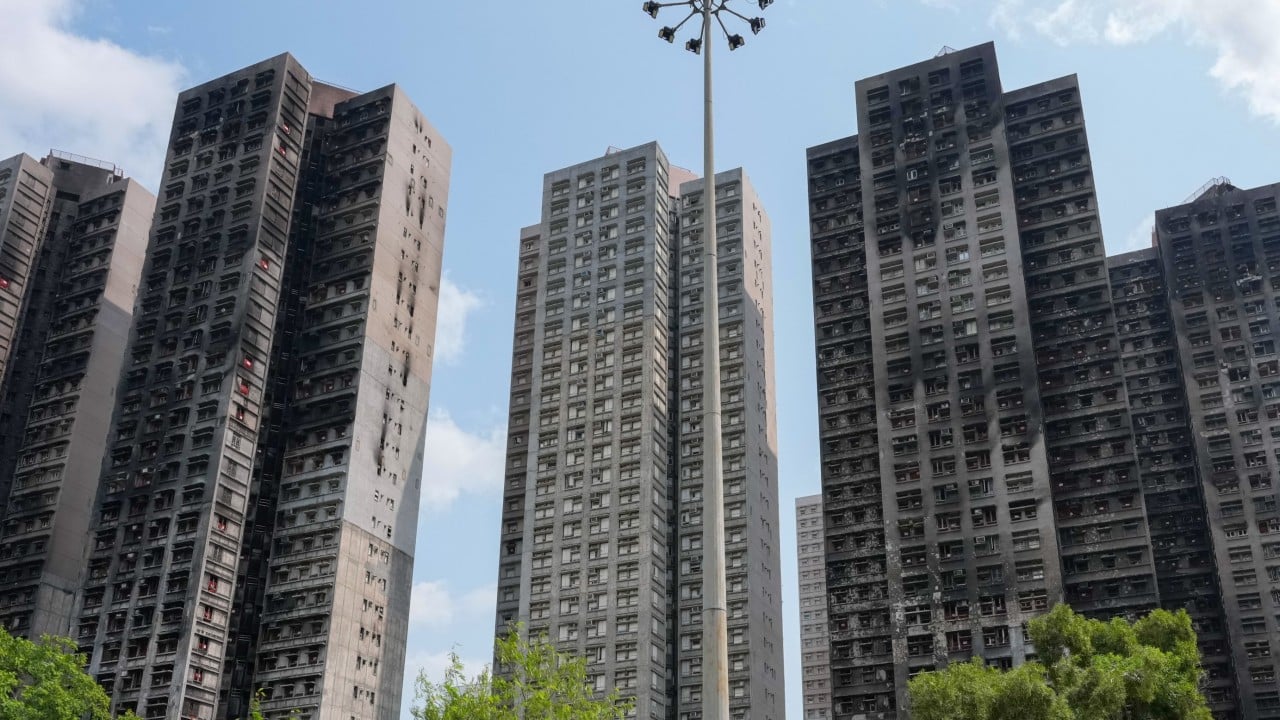
As a judge-led panel continues its public inquiry into Hong Kong’s deadliest fire in decades, experts are set to give evidence on factors that contributed to the rapid spread of the blaze.
Richard Yuen Kwok-kit, chair professor of architectural engineering at the City University, will testify on Wednesday before the independent committee regarding the fire at Wang Fuk Court in Tai Po. He was appointed by the government as a fire engineering expert.
Following him will be two witnesses from the Fire Services Department: Dr To Chi-wing, the divisional commander for the airport, and Yiu Men-yeung, assistant director for New Territories South, who is also head of the government’s interdepartmental investigation task force.
The panel, led by Justice David Lok Kai-hong, has also appointed two professors from Polytechnic University as independent experts.
The fire broke out on November 26, 2025, while the residential estate was undergoing a major renovation. It burned for more than 43 hours, claiming 168 lives and displacing nearly 5,000 residents, making it the city’s worst blaze since 1948.
At a previous session on Monday, Lok said the panel would not seek to upgrade its status to a statutory commission of inquiry with powers to summon witnesses.
He explained that doing so could delay the process by years and hinder the timely release of a final report needed to support legal proceedings and reforms.
While such powers could compel testimony, he added, they would not necessarily ensure full cooperation from witnesses.
Monday’s session also heard from Lam Kin-kwan, deputy head of the government’s interdepartmental investigative task force, and Dr Lee Wing-man, chief chemist in drugs and toxicology at the Government Laboratory.
Lam said the fire spread “geometrically” in its early stages and noted that earlier emergency calls and a faster response could have been critical in limiting its escalation.
Lee confirmed that the fire originated in the light well outside units 104 and 105 at Wang Cheong House, with a discarded lit cigarette believed to be the most likely cause.
Laboratory tests also found that materials used at the renovation site – including scaffolding mesh, polyfoam boards and plastic sheets – were not fire-retardant.
She further noted that temporary access openings, covered with wooden or aluminium composite boards in place of fire-rated windows on emergency staircases, allowed toxic smoke and flames to enter the stairwell.
Follow our live coverage as experts share their insights.
More from our coverage:
View original source — South China Morning Post ↗
Related stories

Indian Express
NewsJun 24, 2026 · 1 min
Daily Briefing: 6 years before SIT probe, audit flagged record-keeping gaps in Ram Temple donations
Indian Express

Philippine Daily Inquirer
NewsJun 24, 2026 · 1 min
Caprice Cayetano, Heath Jornales on pressure, fame after landing first lead roles
Philippine Daily Inquirer
ABC News
NewsJun 24, 2026 · 1 min
Breaking: Police to review case of Epstein accuser Virginia Giuffre
ABC News

BBC
NewsJun 24, 2026 · 1 min
Bondi Beach shooting hero pleads not guilty to alleged assault on his father
BBC