Indian Express
Indian Express··4 min read
Builder ‘pocketed’ buyer’s money for 10 years, ordered to refund Rs 5.25 lakh
5 min readNew DelhiJun 24, 2026 09:00 AM IST
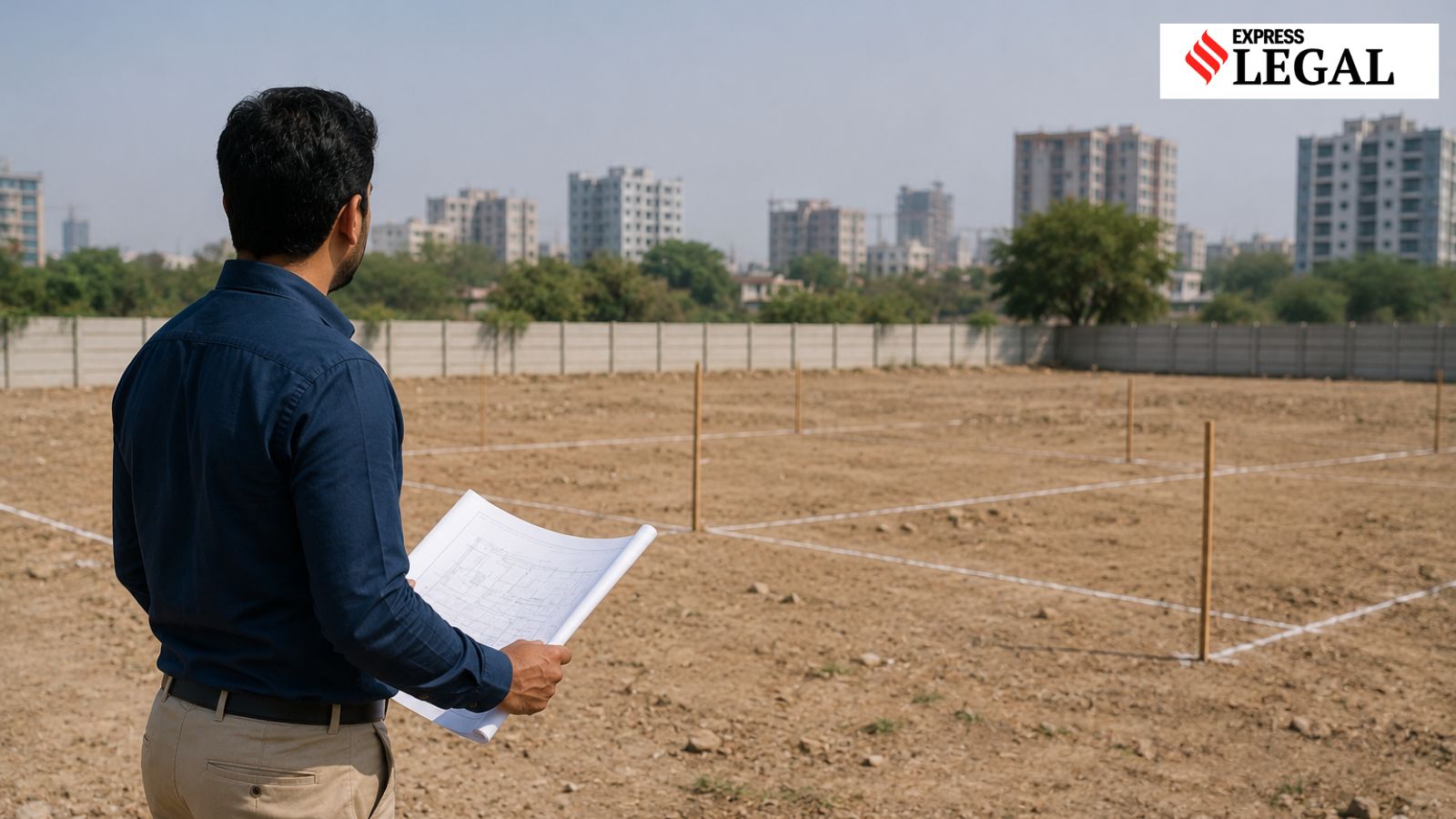
The consumer body held that real estate entity cannot use public deposits as interest-free capital while keeping consumers hostage to speculative regulatory milestones. (AI-generated image)
Noting that the housing society and builder had accepted substantial sums from an “innocent consumer” in 2015 and “pocketed” the funds while the project remained only on “paper” for over a decade, a Punjab consumer body has ordered them to refund over Rs 5.25 lakh to a software engineer.
President Naveen Puri, along with members Prem Singh Salaria and Harvimal Dogra, called it a “classic case” of unfair trade practice after finding that the builder and housing society collected money from buyers without obtaining mandatory approvals and left the project on paper for over a decade.
“The opposite parties (housing society and builder) accepted substantial sums from an innocent consumer as early as late 2015 under the binding promise of delivering housing within 36 to 48 months. More than a decade has passed since those funds were pocketed, yet the project remains entirely on paper,” the June 10 order read.
The commission was hearing the complaint filed by 32-year-old software engineer Jagpreet Singh Tamber, who sought a refund of the amount deposited along with interest, alleging gross deficiency in service and unfair trade practice.
Booking in 2015, no construction yet
It was placed on record that the complainant, a software engineer, acting through his father, applied for membership in a housing scheme named “Krisha Heights” located in Delhi, promoted by the Colors Housing Society in 2015.
It was added that the official brochure of the said housing society pointed out that the construction was mandated to begin in 2015 and reach full completion within a maximum timeline of 48 months.
Relying on these explicit promises, the complainant allegedly deposited a total sum of Rs 5.36 lakh across multiple dates via bank cheques, earning membership.
Story continues below this ad
However, when the complainant conducted a physical inspection in July 2017 revealed that not a single brick had been laid on site and no developmental groundwork existed.
Consequently, in July 2017, he exercised his lawful contractual right to withdraw and submitted a formal surrender of membership request, seeking a refund of his core refundable capital totalling Rs 5.25 lakh.
It was alleged that instead of honouring this surrender, the builders engaged in a protracted cycle of administrative buck-passing.
‘Public deposits not interest-free capital’
The commission found that the builder’s defence that the project could not advance due to delayed policy notifications concerning some policy by government authorities holds no legal weight.
It was added that collecting vast amounts of money from consumers without securing mandatory regulatory clearances, environmental approvals, and zoned land allocations constitutes a classic case of unfair trade practice.
A real estate entity cannot use public deposits as interest-free capital while keeping consumers hostage to speculative regulatory milestones, the commission said.
It was held that holding a buyer’s hard-earned money indefinitely without starting construction constitutes a major deficiency in service.
The commission held that collecting vast amounts of money from consumers without securing mandatory regulatory clearances, environmental approvals, and zoned land allocations constitutes a classic case of unfair trade practice.
The consumer body pointed out that the complainant cannot be expected to wait endlessly for an illusive residential unit.
The commission said that the moment the builder failed to demonstrate substantial project completion milestones within the stipulated timeline, the complainant became legally entitled to a full refund along with equitable interest.
The commission noted that the builder accepted substantial sums from an innocent consumer as early as late 2015 under the binding promise of delivering housing within 36 to 48 months.
However, the court found that more than a decade has passed since those funds were pocketed, yet the project remains entirely on paper
The commission directed the housing society and the builder to pay Rs 5.25 lakh to the complainant, representing the core deposit balance after deducting the non-refundable membership fee.
The housing society and builder were further directed to pay interest at the rate of 7 per cent per annum on the principal amount of Rs 5.25 lakh, calculated from the date of the last major deposit of December 2015 until actual payment is made.
Significance of ruling
This ruling underscores that builders and housing societies cannot collect money from homebuyers without securing essential approvals and then indefinitely delay projects by citing regulatory uncertainties.
Story continues below this ad
For consumer-related grievances, individuals may contact the consumer helpline in their respective states (Chandigarh: 0172-2700183) or call the National Consumer Helpline at 1915 for assistance.
Richa Sahay is a Legal Correspondent for The Indian Express, where she focuses on simplifying the complexities of the Indian judicial system. A law postgraduate, she leverages her advanced legal education to bridge the gap between technical court rulings and public understanding, ensuring that readers stay informed about the rapidly evolving legal landscape.
Expertise
Advanced Legal Education: As a law postgraduate, Richa possesses the academic depth required to interpret intricate statutes and constitutional nuances. Her background allows her to provide more than just summaries; she offers context-driven analysis of how legal changes impact the average citizen.
Specialized Beat: She operates at the intersection of law and public policy, focusing on:
Judicial Updates: Providing timely reports on orders from the Supreme Court of India and various High Courts.
Legal Simplification: Translating dense "legalese" into accessible, engaging narratives without sacrificing factual accuracy.
Legislative Changes: Monitoring new bills, amendments, and regulatory shifts that shape Indian society. ... Read More
Tags:
Consumer dispute Redressal Commission
View original source — Indian Express ↗
Related stories

ESPN
SportsJun 24, 2026 · 1 min
Celtics' Stevens: Brown remains 'big part of us'
ESPN

ESPN
SportsJun 24, 2026 · 1 min
Which teams crushed 2026 NBA Round 1? Best picks, ...
ESPN

Japan Times
NewsJun 24, 2026 · 1 min
Trapped on Everest for days, Nepali survivor recounts escape
Japan Times

Straits Times
NewsJun 24, 2026 · 1 min
‘Paris in this heat is awful’: Tourists change plans as sites close early
Straits Times