Indian Express
Why India’s first US FDA-approved antibiotic can change the fight against superbugs
For decades, India has been known as the world’s pharmacy, building a formidable global presence in generic medicines and vaccines. Much of that success stems from the country’s 1970 patent regime, which enabled Indian companies to manufacture medicines discovered elsewhere through alternative production processes. The model transformed access to affordable medicines, nurtured domestic drugmakers and helped India emerge as the world’s largest supplier of generic drugs. But it also meant that few companies ventured into the far riskier business of discovering new medicines — a process that can take more than a decade, cost billions of dollars and still end in failure.
That is what makes Wockhardt’s latest achievement noteworthy. On May 30, 2026, the US Food and Drug Administration (FDA) approved ZAYNICH™ (cefepime and zidebactam), a novel intravenous antibiotic for treating adults with complicated urinary tract infections caused by susceptible Gram-negative bacteria. This is a group of bacteria that have a distinctive outer cell wall, which makes them harder to kill with antibiotics.
Developed over 17 years at the company’s research centre in Chhatrapati Sambhajinagar, the drug is being described as the first new chemical entity fully discovered, developed and commercialised by an Indian pharmaceutical company to receive US FDA approval. The milestone comes at a time when antimicrobial resistance — the ability of bacteria to evade existing drugs — is emerging as one of the world’s most pressing public health threats, even as most large pharmaceutical companies have scaled back or exited antibiotic research because of poor commercial returns.
According to Wockhardt, ZAYNICH™ was evaluated in a Phase III trial involving 530 patients across 64 sites in the United States, Europe, Latin America, China and India. The drug also received approval from the Drugs Controller General of India (DCGI) on May 27, 2026, and the company has applied for marketing authorisation in Europe.
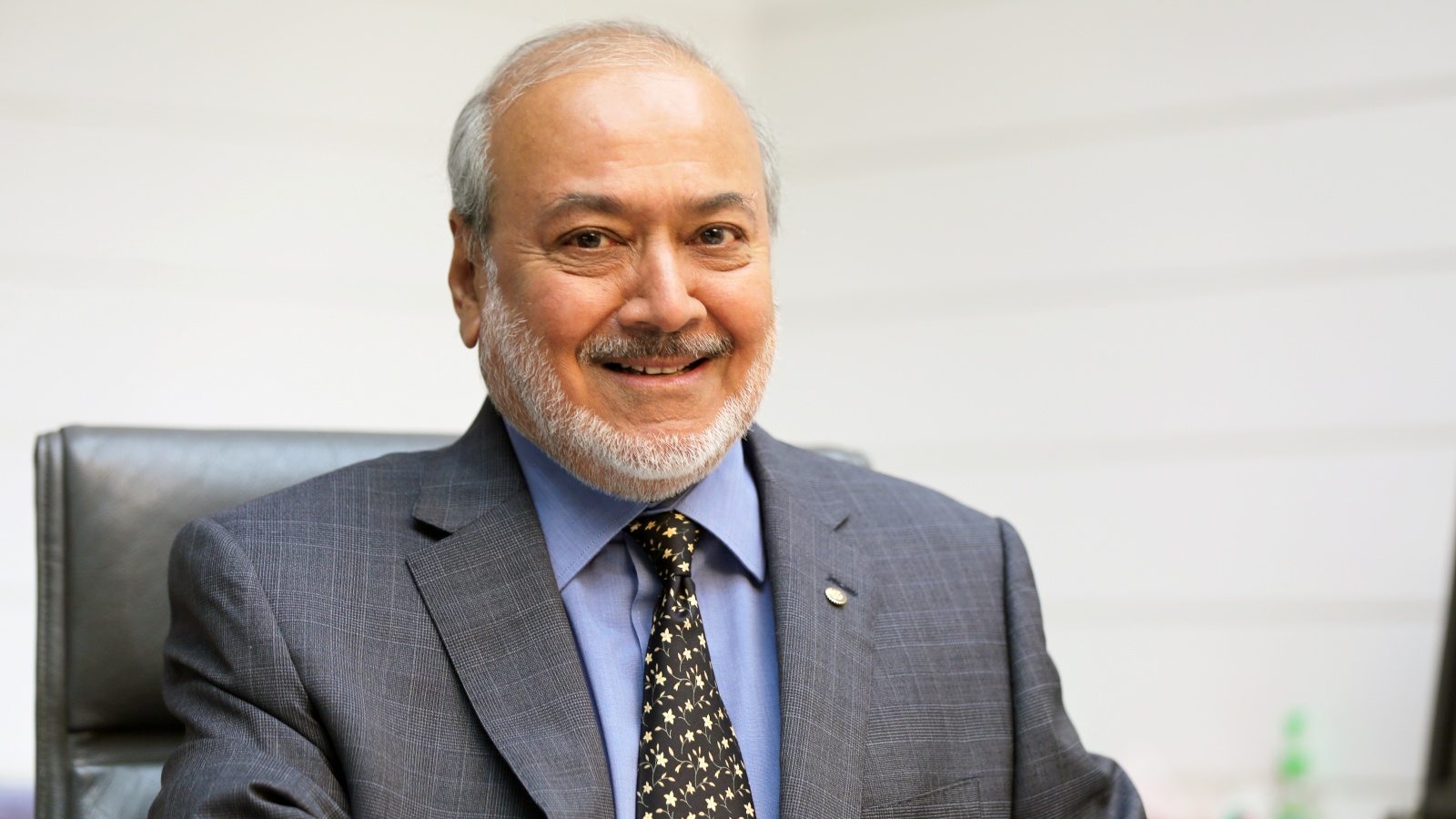
In an interview with The Indian Express, Dr Habil F. Khorakiwala, founder of the Wockhardt Group and an antibiotic researcher with doctorate in pharmaceutical sciences from Purdue University, spoke about the growing challenge of antimicrobial resistance, the significance of the approval, and how the drug could change treatment options for severe Gram-negative infections (pneumonia, UTIs and bloodstream infections). Excerpts:
The drug has been approved for complicated urinary tract infections. What exactly are these infections and how serious can they become when existing antibiotics fail?
Complicated urinary tract infections are part of a larger problem of multidrug-resistant Gram-negative infections. About 60 per cent of infections globally are caused by Gram-negative bacteria, and resistance among these organisms is rising rapidly.
Story continues below this ad
For many of these infections, commonly used advanced antibiotics such as meropenem are no longer effective. In complicated UTIs, roughly 25 per cent of cases involve multidrug resistance and doctors often have limited treatment options. They are forced to use older drugs such as colistin, which can damage the kidneys. In some cases, around one in five patients may require dialysis. It is a serious global problem, not just an Indian one.
How long did researchers work on this drug?
Around 200 researchers worked on ZAYNICH™ for 17 years at our research centre in Chhatrapati Sambhajinagar.
Complicated UTIs account for over six lakh hospitalisations annually in the US. What is the burden in India?
India’s burden is around five times the US figure, roughly three million cases. Of these, about 1.2 to 1.3 million are treated in hospitals, and nearly a quarter are involved in complicated UTIs with multidrug resistance.
Story continues below this ad
Which age groups are most affected?
Women generally have a higher burden of UTIs. The incidence is also higher among men and women above the age of 50. However, infections can affect anyone at any age.
Are these infections becoming more common in India?
India is seeing resistance develop faster than many Western countries. Factors such as hygiene conditions, sanitation, hospital environment and inappropriate antibiotic use contribute to the problem. Many emerging markets face similar challenges. China, for example, also reports a high incidence of resistant infections.
What treatment options do patients currently have when multidrug-resistant Gram-negative bacteria are involved?
Doctors often rely on older drugs such as colistin or combinations of antibiotics. These may help save lives, but they can also damage organs, particularly the kidneys. Physicians are aware of the risks, but they often have no alternative. Without treatment, the infection can spread to the bloodstream and become fatal. ZAYNICH™ offers a safer and more effective option without requiring such compromises.
What other infections could the drug eventually be approved for?
At present, we have approval for UTIs in India and the US. We expect broader approvals in Europe for multiple serious Gram-negative infections, including bloodstream and intra-abdominal infections. Once that happens, India is likely to follow international practice and expand the indications.
Story continues below this ad
The drug works against Gram-negative bacteria in general, not just those causing urinary tract infections. Our clinical programme initially focused on UTIs, but compassionate-use cases included patients with pneumonia and other severe infections. As approvals expand, we expect ZAYNICH™ to be used across a broad range of serious Gram-negative infections.
Will the drug be available in hospitals or pharmacies?
It will be available only in hospitals because it is an intravenous treatment. We intend for it to be available in both private and government hospitals, although inclusion in government procurement systems takes time. The treatment typically lasts seven to 10 days, with three intravenous doses administered daily.
How much is it likely to cost in India?
In the US, treatment is expected to cost between $12,000 and $15,000. In India, we plan to offer it at a 75-80 per cent lower rate.
Can you elaborate on the compassionate-use cases before approval?
We treated more than 80 patients under compassionate-use provisions. These were patients for whom all available treatments had failed and doctors believed there were no remaining options. More than 90 per cent survived. Some patients arrived too late, when the infection had already spread extensively. Six of the patients were from the US, while the rest were largely from India. Cases came from hospitals such as Medanta, Apollo, Hinduja and several others.
Story continues below this ad
The medicine was supplied free of cost because compassionate use is not a commercial programme.
How many people die in India because existing antibiotics fail to treat these infections?
Across all multidrug-resistant infections, not just UTIs, around 300,000 people die every year. UTIs account for about 25 per cent of that burden.
How is ZAYNICH™ different from antibiotics already available?
It belongs to a completely new class of antibiotics known as a beta-lactam enhancer. New antibiotic classes emerge only occasionally.
What makes it different is the way it targets bacteria. It acts on a critical bacterial mechanism that has not been exploited by previous antibiotics. That is why it remains highly effective against resistant organisms. We believe it could remain effective for 20 to 30 years, although resistance can eventually emerge to any antibiotic.
Story continues below this ad
Is this a truly ‘Made in India’ antibiotic?
The science, technology and its active pharmaceutical ingredient (API) were developed in India. It is our own molecule with a highly complex manufacturing process involving around 30 stages.
View original source — Indian Express ↗
Related stories

TechRadar
TechnologyJun 24, 2026 · 1 min
Windows 11 is now 5 years old — and for the first time this decade, I think Microsoft's finally onto a winner with the…
TechRadar

Rio Times
TechnologyJun 24, 2026 · 1 min
LatAm Pre-Open: AI Crash Rocks Markets, Brazil Hits Record
Rio Times

AllAfrica
TechnologyJun 24, 2026 · 1 min
Nigeria: U.S. Sanctions Lagos-Based ISIS Financier, Bureaux De Change in Global Terror Crackdown
AllAfrica

Indian Express
TechnologyJun 24, 2026 · 1 min
Why haven’t these birds left yet? Thousands of migratory waders are still in Mumbai’s wetlands
Indian Express