
Rio Times
Fujimori Takes Insurmountable Peru Lead as Sánchez Cries Fraud
Politics
Key Facts
—The lead. Keiko Fujimori holds a near-unbeatable lead in the official count, on course to win the presidency on her fourth attempt after three earlier defeats.
—The margin. With about 99.9% of tally sheets counted, she leads by roughly 41,800 votes, or 50.11% to 49.89%.
—The decider. Votes from Peruvians living abroad broke heavily her way, by close to 79,000, tipping a contest split between coast and countryside.
—The holdout. Her rival, Roberto Sánchez, refuses to accept the count, alleges fraud, and has called supporters into the streets.
—The stake. Peru is among the world’s largest copper producers, so its political stability feeds directly into global metal markets.
—The fine print. Officials are not due to formally proclaim a winner until around the middle of July.
The Peru election Fujimori spent fifteen years chasing has tipped her way after a two-week count, putting her on the brink of the presidency, even as her opponent refuses to concede.
After one of the closest finishes in its modern history, Peru is on the verge of a result. The official count puts Keiko Fujimori ahead by a margin now too small to overturn, on course to take the office on her fourth try.
A formal proclamation has not yet come, and the electoral authorities are not due to declare a winner until around mid-July. But the arithmetic, with almost every ballot counted, leaves little room for the outcome to change.
The result caps two weeks of nerve-shredding counting since the June 7 runoff. It also reopens an old wound, because the losing side is refusing to accept the outcome.
How the Peru election Fujimori won was decided
The numbers are extraordinarily tight. With almost every tally sheet counted, the national electoral office put Fujimori on just over fifty percent and her rival just under, separated by about forty-one thousand votes.
For a country of more than thirty million people, that is a sliver. The lead even changed hands during the count, which is part of why the contest stayed so charged.
The result split along a familiar map. Roberto Sánchez, a candidate of the left, swept the poorer rural interior and the southern highlands.
Fujimori, a conservative, carried the capital Lima and the coast. The decisive edge came from an unusual place: Peruvians living abroad, who broke heavily for her and handed her a lead of close to seventy-nine thousand overseas votes.
That foreign-vote margin was larger than her national lead. In effect, the Peruvian diaspora decided who will run the country.
Who Keiko Fujimori is
Fujimori is one of the most recognisable figures in Peruvian politics. She is the daughter of Alberto Fujimori, the late former president who governed in the nineteen-nineties and remains deeply divisive.
She has now reached a presidential runoff four times and lost the previous three, twice by tiny margins. This victory closes a fifteen-year quest that had come to define her career.
Her politics are broadly pro-business and friendly to private investment. For markets, she represents continuity rather than the larger state role and higher mining taxes that her opponent favoured.
She will also inherit a famously unstable system. Peru has churned through a long line of presidents in the past decade, with repeated impeachments, resignations and clashes between Congress and the executive.
Why a contested result matters
Sánchez has not conceded. He alleges irregularities in the count, has demanded that every vote be respected, and has called his supporters onto the streets of Lima.
Peruvians have seen this script before, with the roles reversed. In 2021 Fujimori herself lost a wafer-thin runoff and spent weeks disputing the result before it was confirmed.
The electoral authorities are not due to formally proclaim a winner until around the middle of July. Until then, a confirmed result and a fully accepted one are not the same thing.
The deeper worry is legitimacy. A president who takes office after so divisive a vote may struggle to govern with the authority needed to break Peru’s cycle of turmoil.
What it means for investors
Peru rarely makes global headlines, but it matters far beyond its borders. It is one of the world’s largest copper producers, and copper is central to electric vehicles and the wider energy transition.
A pro-investment president is the outcome most mining companies were hoping for. Long-stalled projects, such as a major copper mine in the south blocked for over a decade by local opposition, could in theory advance more easily.
The local currency, the sol, has been the worst performer in the region this year, moving with every twist of the count. A clearer result should help steady it, if the dispute fades.
The real risk for investors is not the winner but the aftermath. A drawn-out fight over legitimacy, rather than the policy of any one president, is what tends to paralyse decisions in Peru.
Frequently Asked Questions
Who won the Peru election Fujimori contested?
Keiko Fujimori of the conservative Fuerza Popular party has effectively won, leading the official count by about forty-one thousand votes with almost all tally sheets processed. It is her first presidential victory after three previous runoff defeats, though officials will not formally proclaim a winner until around the middle of July.
Why is the result being disputed?
Her opponent, Roberto Sánchez of the left-wing Juntos por el Perú, has refused to accept the count, alleged fraud and called supporters into the streets. The margin is so narrow, and the lead changed hands so often during counting, that the losing side sees room to challenge the outcome.
Why does the Peru election matter to investors?
Peru is one of the world’s largest copper producers, a metal essential to the global energy transition, so political instability there can ripple into metal markets. A pro-business president is generally welcomed by mining investors, but a prolonged dispute over the result could unsettle the currency and delay decisions.
The Rio Times · Power Map
See who really holds power in Latin America
Click to open the Power Map →
View original source — Rio Times ↗
Related stories
South China Morning Post
PoliticsJun 24, 2026 · 1 min
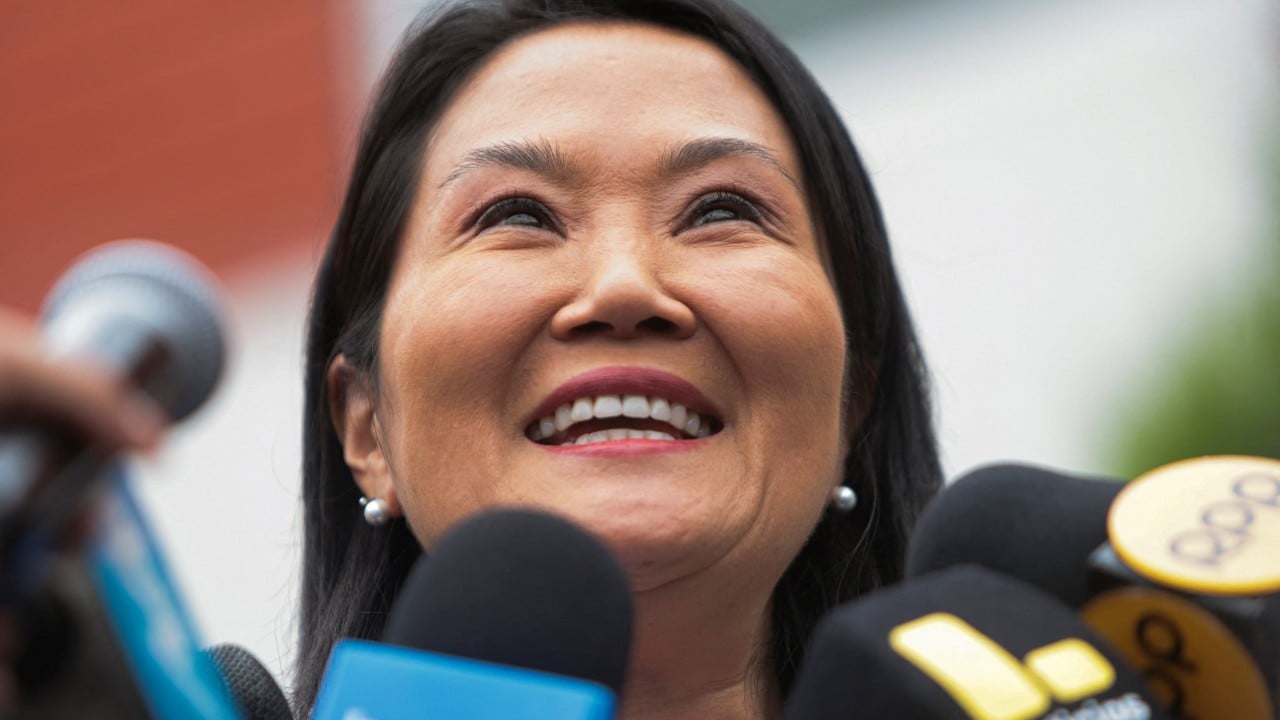
Keiko Fujimori edges closer to winning Peru’s presidency
South China Morning Post

Straits Times
PoliticsJun 24, 2026 · 1 min
Key Starmer ally Jones rules himself out of contest to be Britain’s next PM
Straits Times

OnlineKhabar
PoliticsJun 24, 2026 · 1 min
RSP promised a smarter convention than its rivals and is delivering the same old chaos
OnlineKhabar

Philippine Daily Inquirer
PoliticsJun 24, 2026 · 1 min
Tacloban shooting renews push for CCTV coverage in campuses
Philippine Daily Inquirer