Indian Express
Asian Games row: Manika Batra threatens legal action, seeks PM intervention
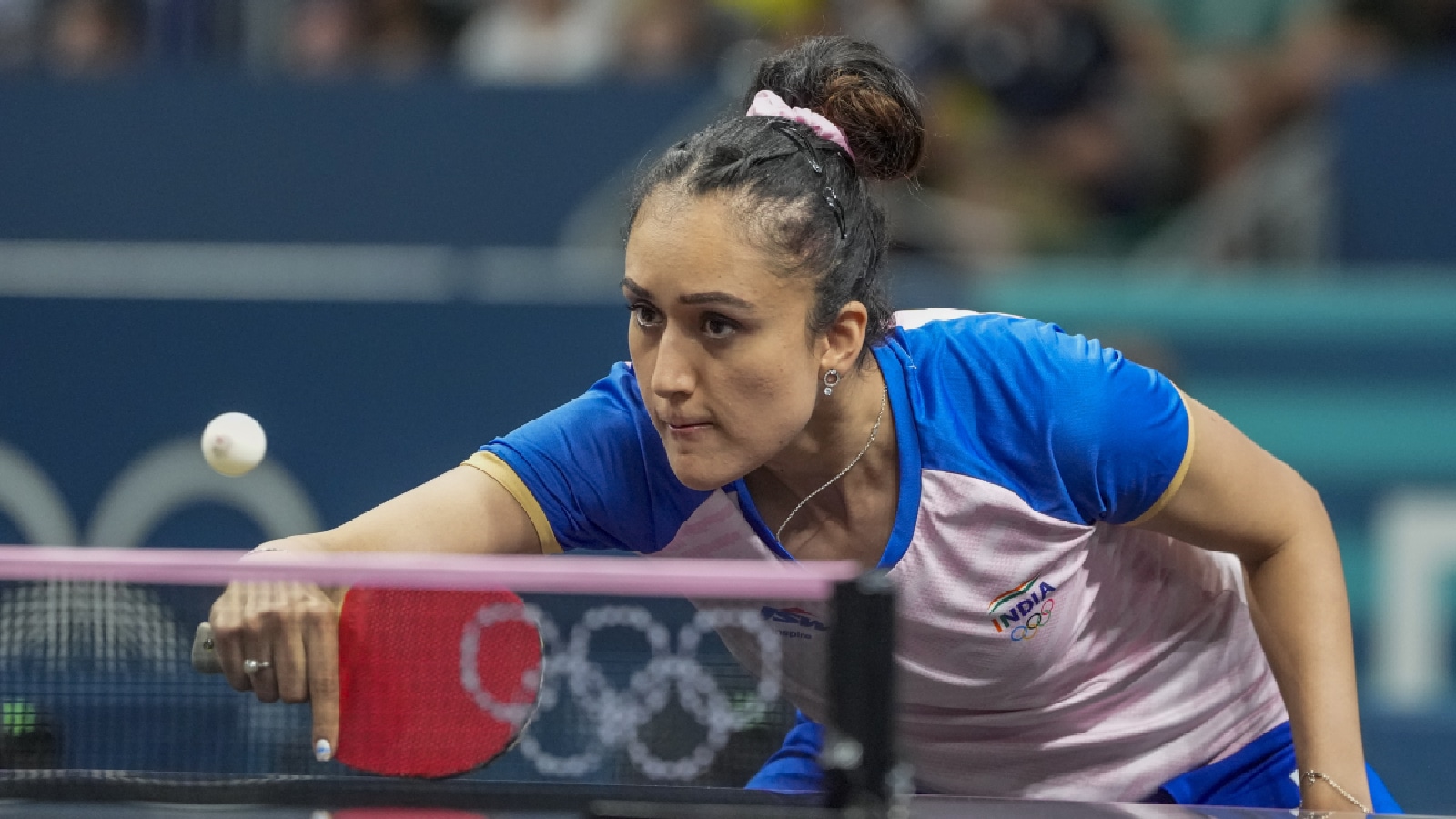
India’s leading table tennis player Manika Batra has intensified her challenge to her exclusion from the Asian Games squad, issuing a strongly-worded statement demanding answers from the Table Tennis Federation of India (TTFI) and warning that she could pursue legal action if a satisfactory explanation is not provided. Batra also said she has sought Prime Minister Narendra’s intervention.
Batra, who was named only as a reserve for the Aichi-Nagoya Asian Games, insisted that she was not seeking a place in the team or asking for the decision to be reversed. “Let me state this clearly. I am not asking to be selected. I am not asking anyone to overturn the decision. I am asking for answers,” Batra said.
The former Asian Games medallist questioned the basis on which players were evaluated, pointing out that she is currently ranked World No. 51 and that international rankings operate on a rolling points system. She asked what period had been considered during the selection process and whether a marginal drop outside the world’s top 50 was enough to render a player ineligible.
“If an athlete who has consistently been around the Top 50 moves from 50 to 51 over a week or two, does that suddenly make her ineligible?” she asked.
Batra also highlighted what she described as strong recent form, saying she had registered victories over top Asian opponents and highly-rated Chinese players. She argued that current performances should form part of the evaluation process, citing sports ministry guidelines that emphasise recent form in team selections.
The controversy stems from the TTFI’s selection policy, which gives weightage to both world and national rankings. According to federation officials, players inside the world top 50 earned automatic qualification, while the remaining places were decided using a formula that considered international rankings, domestic rankings and committee discretion. Batra, currently three ranking points behind the world No. 50 spot, did not feature in the national rankings after skipping domestic events.
In her latest statement, Batra pushed back against criticism regarding her absence from domestic tournaments, arguing that international players often have to balance a demanding global calendar, travel schedules, recovery periods and visa requirements.
Story continues below this ad
The 31-year-old also questioned the exclusion of players with proven records at major events, specifically referencing Ayhika Mukherjee, who was part of India’s historic women’s doubles bronze-medal winning partnership at the Hangzhou Asian Games.
“When athletes with such achievements are left out, it naturally raises questions about the criteria and evaluation process that led to these decisions,” Batra said.
A major focus of her statement was the role of the selection committee. Batra said she had been informed that the final team was decided through a voting process and argued that athletes deserved to know who voted, the reasons behind those votes and whether any conflicts of interest had been disclosed.
“If a vote was taken against me, what were the reasons behind those votes? Were they based on documented performance criteria, or on subjective opinions?” she asked.
Story continues below this ad
Batra further questioned the qualifications and international experience of those involved in selecting national teams, suggesting that such information should be publicly available.
The paddler also referenced her previous interventions in Indian table tennis governance, saying she had spoken out in the past on issues that eventually led to reforms in the administration of the sport. “I had done the same earlier, which led to wide scale governance reforms in the administration of table tennis in India and would have miffed a certain few.”
Concluding the statement, Batra said she had written to Prime Minister Narendra Modi and Sports Minister Mansukh Mandaviya seeking intervention. She warned that if she did not receive a clear explanation from the federation, she would explore ‘all remedies available’, including legal recourse.
“Not because I want a place in the team. Not because I want special treatment. But because I believe every athlete deserves transparency, consistency and accountability in the selection process,” she said.
View original source — Indian Express ↗
Related stories

ESPN
SportsJun 24, 2026 · 1 min
Copy of Transfer rumors, news: Chelsea close on Atalanta d...
ESPN

The Punch
SportsJun 24, 2026 · 1 min
Panama out of World Cup after 1-0 loss to Croatia
The Punch

Sky Sports
SportsJun 24, 2026 · 1 min
Papers: Chelsea could sell Gusto to pave way for Palestra deal
Sky Sports

ESPN
SportsJun 24, 2026 · 1 min
Bucks GM mum on Giannis, emphasizes 'building'
ESPN