Times of India
After 9 years, Chinese supercomputer beats America's in world's fastest supercomputer ranking
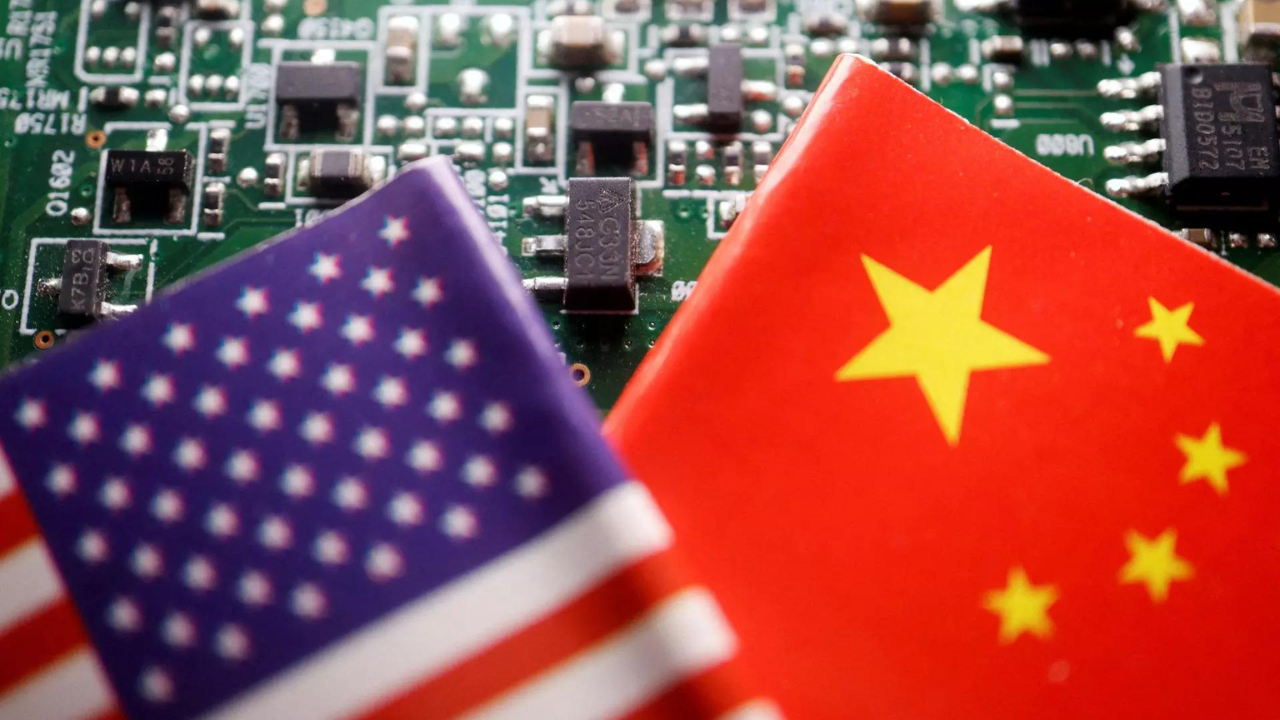
China just pulled off something it hasn't managed since 2017. A supercomputer called LineShine, housed at the National Supercomputing Center in Shenzhen, has been crowned the world's fastest machine on the latest TOP500 list.
And it did so without a single chip from Nvidia, AMD, or Intel. The system clocked 2.198 exaflops—more than 2 quintillion calculations every second—and knocked America's El Capitan off the throne it had held since November 2024. The kicker? LineShine runs entirely on CPUs, the ordinary processors most supercomputers ditched years ago in favor of GPUs. For Washington, which has spent years choking off China's access to advanced AI chips, that's an uncomfortable message.
How a CPU-only machine leapfrogged El Capitan and the US national labs
LineShine's numbers came in more than 20% faster than El Capitan, which sits at the Lawrence Livermore National Laboratory and helps maintain the US nuclear weapons stockpile. El Capitan now ranks second, followed by two more American machines in Tennessee and Illinois. Germany's Jupiter slid to fifth. Those five remain the only publicly verified exascale computers on Earth.The design itself is what caught attention. LineShine packs nearly 14 million computing cores across 90 cabinets, drawing about 42.2 megawatts of power.
Its LX2 processors are a homegrown effort built on Armv9 designs—licensed from Britain's Arm Holdings—and run KylinOS, a Chinese Linux distribution. Each chip bundles in specialized circuitry for matrix and vector math, the kind of work GPUs usually handle. Jack Dongarra, a TOP500 organizer who inspected the machine, called it impressive and noted it isn't reliant on GPUs at all.
Why Beijing wanted the world to see this win
Here's the interesting part: China stopped submitting machines to the TOP500 back in 2023, after years of US export controls.
So putting LineShine forward was a choice. "I'm not surprised it's the number one system. What I'm surprised by is that they submitted it," said Addison Snell of Intersect360 Research. Dongarra was reportedly told the machine was built without government funding, which is why its designers felt free to enter it.
They've also submitted 14 entries for the Gordon Bell Prize, science's big computing award.The timing isn't subtle. It lands as President Trump pushes his own tech agenda, having just signed an executive order targeting a US lead in quantum computing.
The catch: this crown isn't the AI crown
Before anyone declares China the AI superpower, the experts have caveats. LineShine ranked only fourth on a benchmark built to mimic AI-style computing. And the biggest American AI systems—xAI's Colossus, plus clusters from Microsoft, Amazon, and Google—simply don't bother entering the TOP500. One study suggested Colossus already outguns El Capitan. "If the hyperscalers submitted their systems, this 'world's fastest' would not crack the top five," said Jimmy Goodrich of UC's Institute on Global Conflict and Cooperation.
He also flagged CPUs as a loophole in current export rules—one Washington may move to close.
View original source — Times of India ↗
Related stories

ZDNet
TechnologyJun 24, 2026 · 1 min
Apple Maps vs. Google Maps: I used both navigation apps for years, and one is much better
ZDNet

ZDNet
TechnologyJun 24, 2026 · 1 min
AI engineer vs. forward deployed engineer: Which role delivers the most business value?
ZDNet
TechRadar
TechnologyJun 24, 2026 · 1 min
Polaroid vs Instax? I’m an instant camera addict and I’m team Polaroid all the way — here’s why
TechRadar
Indian Express
TechnologyJun 24, 2026 · 1 min
Momo seller sustains burn injuries during roadside clearance for VIP movement in Jaipur
Indian Express