Indian Express
Indian Express··3 min read
Couples alleging mental illness in matrimonial cases must be anonymous, rules Madras High Court
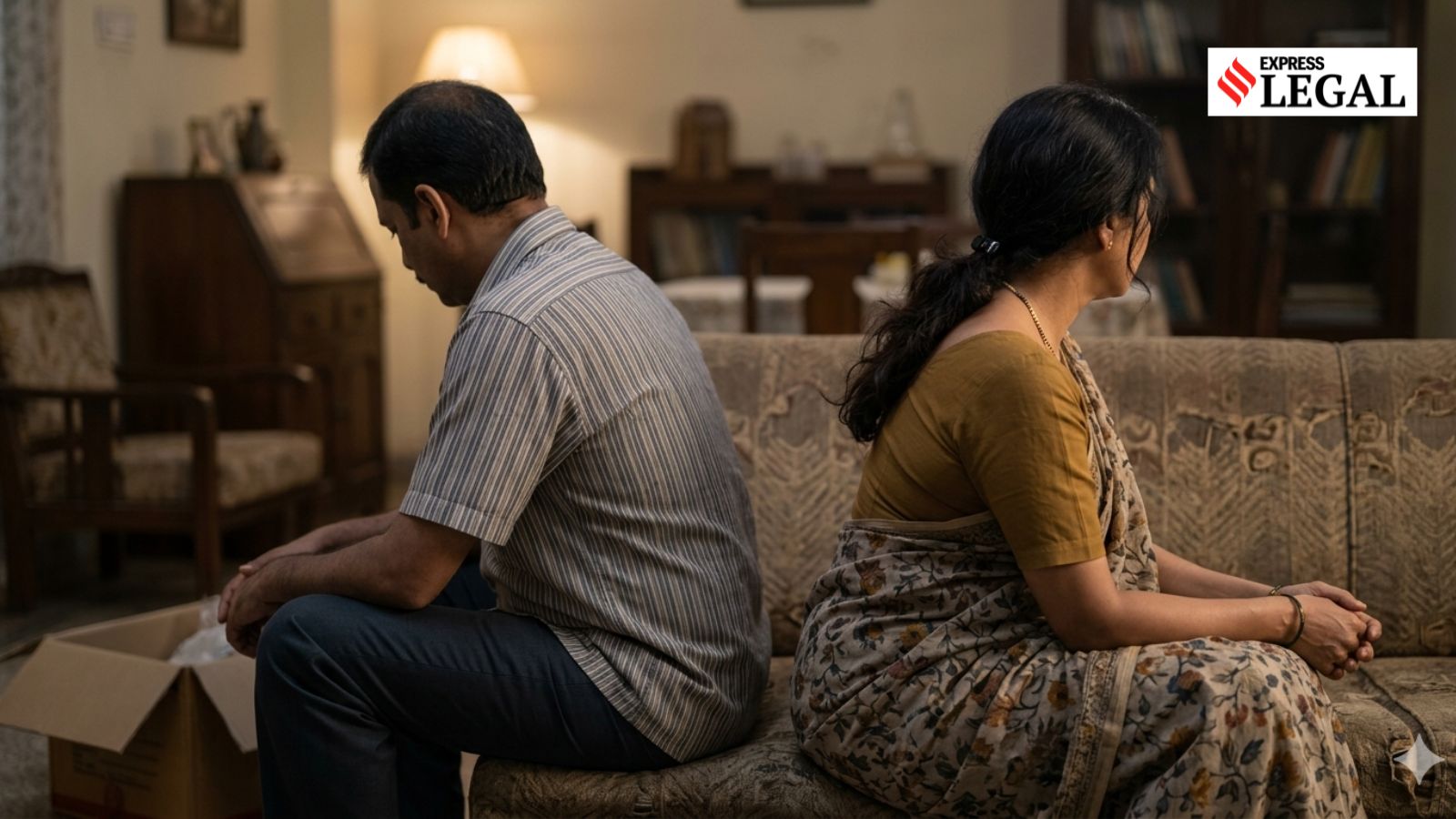
In a landmark ruling aimed at protecting the dignity of persons facing allegations of mental illness in matrimonial litigations, the Madras High Court has directed that parties should be anonymised and referred to as “X” and “Y” or by similar anonymised descriptions without disclosing their names, addresses or any other particulars capable of revealing their identity.
A division bench of Justices N Anand Venkatesh and K K Ramakrishnan issued the directions while dismissing a husband’s appeal against a family court order refusing to dissolve his marriage on the ground that his wife allegedly suffered from schizophrenia and had concealed the condition before the marriage.
“Matrimonial litigation involving allegations of schizophrenia or any other serious mental disorder, whether ultimately proved or disproved, casts a long shadow upon their dignity, privacy, reputation, and the social acceptance,” the order dated June 15 read.
The bench said public disclosure of such persons’ identities could lead to psychological injury, social ostracism, enduring emotional trauma and lifelong stigma, which can legitimately be avoided. It also noted that contemporary Indian society is increasingly witnessing the agony of marital discord, intolerance, and the breakdown of matrimonial relationships.
Justices N Anand Venkatesh and K K Ramakrishnan
Allegations of mental illness
The husband had contended that after the marriage, doctors discovered that his wife had schizophrenia, which had allegedly been concealed by her family before the wedding.
He claimed she displayed abnormal behaviour, including speaking incoherently late at night, and argued that the alleged suppression of her mental illness amounted to cruelty, entitling him to a divorce under Section 13(1)(iii) of the Hindu Marriage Act.
The wife denied suffering from schizophrenia and asserted that the allegations were fabricated to evade marital obligations.
Story continues below this ad
She maintained that the couple had lived together happily after marriage, travelled on a honeymoon, and conceived a child before disputes arose.
She also alleged dowry demands, cruelty by her husband and in-laws, and claimed she was forced to undergo an abortion at an advanced stage of pregnancy.
After examining the oral and documentary evidence, the trial judge dismissed the petition for divorce filed by the husband and allowed the plea filed by the wife for restitution of conjugal rights.
Feeling aggrieved, the husband moved high court.
‘Not valid ground’
At the outset, the court remarked that it was inclined to view marriage in the light of modern psychiatric and psychological understanding as an intimate emotional partnership in which affection, companionship, emotional security, physical closeness, and mutual support constitute the very foundation of mental well-being and emotional stability.
Relying on Supreme Court precedents, the bench observed that schizophrenia by itself is not a ground for divorce and that the severity and impact of the condition on matrimonial life must be established through cogent evidence.
“Mere abnormal conduct, eccentricity, or isolated symptoms, without further aggravating circumstances affecting matrimonial life, would not constitute a valid ground for divorce under Section 13(1)(iii) of the Hindu Marriage Act,” the court held.
It observed that after marriage, it is a legitimate and bona fide expectation within the Indian family system that a daughter-in-law should be treated with the same affection, care, dignity and respect as a daughter.
The court emphasised that treating the daughter-in-law as one’s own daughter implies that, just as a family would care for a daughter in times of illness, they must equally protect and support the daughter-in-law.
“Entertaining an intention to somehow secure a divorce by any means, clearly reflects the conduct of the husband and his family members in the present case,” the court observed.
The court noted that none of the medical records produced before the court disclosed any diagnosis of schizophrenia before or at the time of marriage.
Family court order upheld
The court also noted that the wife, after matrimonial discord arose, completed her M.Tech degree and had withstood four days of extensive cross-examination while giving coherent and consistent answers, which, according to the bench, strongly indicated her mental stability and capacity.
Story continues below this ad
It further held that portraying a spouse as mentally unsound without adequate proof undermines their dignity and privacy.
The court stressed that when emotional difficulties arise within marriage, understanding and empathy are regarded as more conducive to emotional healing than humiliation, suspicion, or accusation.
It held that the doctrine of irretrievable breakdown of marriage or prolonged separation cannot be invoked in a manner that rewards a spouse who has failed to establish grave allegations of mental illness against the other spouse.
Thus, the court dismissed the husband’s plea and upheld the family court’s order.
View original source — Indian Express ↗
Related stories

The Punch
NewsJun 24, 2026 · 1 min
Ebonyi communities endorse PDP gov candidate
The Punch
The Punch
NewsJun 24, 2026 · 1 min
Court fixes June 30 for ruling on Sowore’s bail application
The Punch
The Punch
NewsJun 24, 2026 · 1 min
Police kill two kidnappers, recover N2.2m ransom proceeds in Ogun
The Punch
The Punch
NewsJun 24, 2026 · 1 min
NYSC announces passing-out date for 2025 Batch ‘B’ Stream I corps members
The Punch