Antara News
Antara News··2 min read
Indonesia eyes battery recycling to sustain EV growth
Jakarta (ANTARA) - Indonesia is expanding its electric-vehicle strategy beyond battery production, focusing on recycling and waste management as policymakers seek to build a sustainable battery ecosystem and secure long-term supplies of critical minerals.
Managing used batteries has become a growing priority as Indonesia accelerates electric-vehicle adoption and develops downstream industries linked to its vast mineral resources.
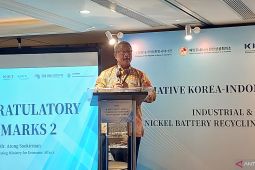
"This is a pressing issue because our focus is not only industrial development, but also how battery waste is managed," Atong Soekirman said at the Korea-Indonesia Economic Partnership Forum in Jakarta on Wednesday.
Atong serves as assistant deputy for metal, machinery, transportation equipment, electronics and miscellaneous industries at the Coordinating Ministry for Economic Affairs.
Under Indonesia's 2025-2029 National Medium-Term Development Plan, electric vehicles are a key component of industrial downstreaming and efforts to increase the value of domestic natural resources.
The country's electric-vehicle market has gained momentum, with sales reaching approximately 103,000 units in 2025.
Lithium iron phosphate batteries dominated Indonesia's electric-car market in 2024, accounting for about 96 percent of usage, while nickel-manganese batteries represented roughly four percent.
The rapid growth of electric vehicles is also increasing concerns over future volumes of electronic waste and retired batteries.
Indonesia must strengthen waste-management systems as more battery-powered vehicles reach the market and eventually approach the end of their operating lives, Atong said.
He said effective battery management would help ensure sustainable supplies of critical materials needed by the industry.
Atong added that successful waste-management policies could help Indonesia establish stronger industry benchmarks and provide a model for other developing economies.
Technology adoption from international partners could support those efforts through circular-economy practices aimed at recovering valuable minerals from used batteries.
Such efforts also require innovation in product development and manufacturing design to maximize value creation through technological adaptation.
Related news: Indonesia's EV battery plant in Karawang set for Q3 2026
A circular-economy framework is considered essential to ensure electric-vehicle batteries are managed responsibly throughout their entire life cycle.
Similar approaches have already been adopted in several markets, including Japan, South Korea and Singapore.
Policymakers believe stronger recycling and waste-management frameworks will help support rising global battery demand.
Worldwide demand for electric-vehicle batteries is projected to increase from about one terawatt-hour in 2024 to roughly three terawatt-hours by 2030.
Battery life spans generally range from eight to 12 years, creating a growing need for end-of-life collection and recycling systems.
Indonesia sees stronger regulations, coordinated management and expanded recycling infrastructure as critical to building a sustainable battery industry capable of supporting long-term electric-vehicle growth.
Related news: Indonesia pushes circular economy for EV battery industry
Translator: Bayu Prasetyo
Editor: Rahmad Nasution
Copyright © ANTARA 2026
View original source — Antara News ↗
Related stories

The Punch
NewsJun 24, 2026 · 1 min
Ebonyi communities endorse PDP gov candidate
The Punch
The Punch
NewsJun 24, 2026 · 1 min
Court fixes June 30 for ruling on Sowore’s bail application
The Punch
The Punch
NewsJun 24, 2026 · 1 min
Police kill two kidnappers, recover N2.2m ransom proceeds in Ogun
The Punch
The Punch
NewsJun 24, 2026 · 1 min
NYSC announces passing-out date for 2025 Batch ‘B’ Stream I corps members
The Punch