Indian Express
Vijay’s dad quit Shah Rukh Khan’s debut, its hero staged a walkout: How SRK got Deewana
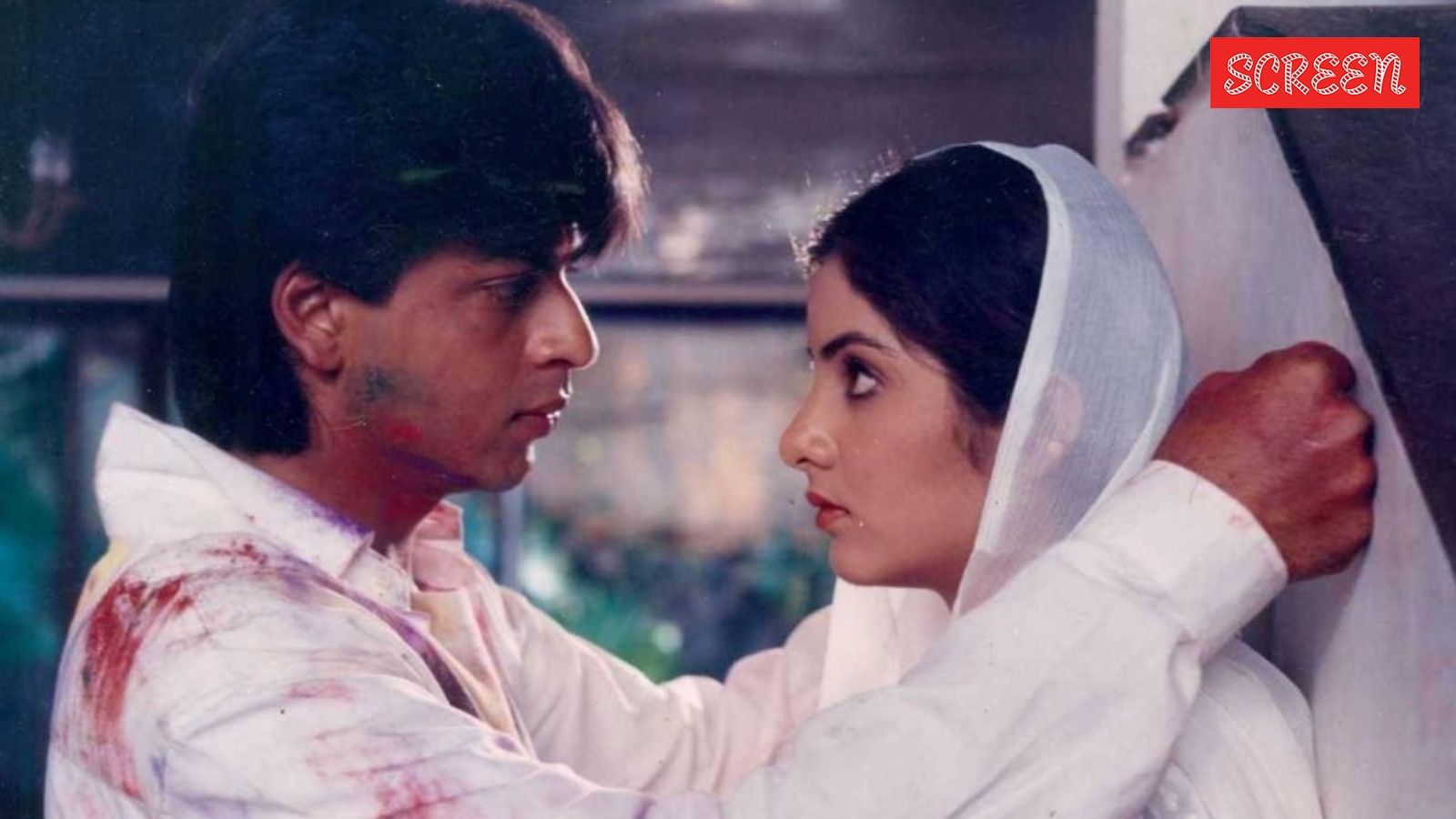
When Deewana released on June 25, 1992, it introduced Hindi cinema to a young Shah Rukh Khan and changed the course of Bollywood history. The film went on to become the second-highest-grossing Hindi release of the year, launched Shah Rukh as a leading man and gave audiences one of the decade’s most memorable soundtracks. But the road to Deewana was anything but smooth.
Details about the film’s journey to the screen were recently shared by YouTube channel Stories By Shekhar, which recounted how a director’s exit, a hero’s walkout and Shah Rukh Khan’s initial reluctance nearly changed the fate of the film.
The story began with producer Guddu Dhanoa, who was trying to rebuild his career after suffering heavy losses from his 1989 production Gola Barood. Along with partners Lalit Kapoor and Raju Kothari, Dhanoa was searching for a project that could revive their fortunes. During a visit to Chennai, the trio watched the Tamil film Vasantha Raagam and decided to remake it in Hindi. That remake would eventually become Deewana. Coincidentally, the film was directed by actor and Tamil Nadu Chief Minister Vijay’s father and produced by his mother Shobha.
From Madhuri Dixit to Divya Bharti
The makers initially considered Madhuri Dixit for the female lead, but scheduling issues reportedly prevented the casting from materialising. Divya Bharti was then brought on board. Rishi Kapoor was cast as Ravi, while Armaan Kohli was signed for the second male lead.
A still from Deewana
Music became a major priority. Guddu Dhanoa was deeply impressed by the songs of Dil Hai Ke Manta Nahin and decided to approach music duo Nadeem-Shravan for Deewana. The decision would prove crucial, as the soundtrack later became one of the film’s biggest strengths.
ALSO READ: Eetha teaser: Shraddha Kapoor as Vithabai dances after giving birth, turns into a legend
When the director walked out
Just as preparations were underway, the project suffered a major setback. Original director S. A. Chandrasekhar reportedly informed the producers that he was too busy with other commitments and could no longer direct the film. Suddenly, the remake had no director.
Story continues below this ad
Dhanoa then turned to Raj Kanwar, who had worked as chief assistant director to Rajkumar Santoshi on Ghayal. Kanwar was looking for his first directorial opportunity and agreed to take over the project. The film had a director again, but the troubles were far from over.
The Armaan Kohli exit
The biggest twist came when Armaan Kohli exited the film following a dispute involving another production linked to the makers. Suddenly, the team had lost its second hero and was scrambling for a replacement.
The breakthrough came during a conversation between Guddu Dhanoa and filmmaker Shekhar Kapur. While discussing the casting crisis, Kapur suggested a young television actor who had become popular through serials such as Fauji and Circus. That actor was Shah Rukh Khan.
Shah Rukh Khan initially refused the film
When Dhanoa and Raj Kanwar met Shah Rukh Khan in Delhi, they discovered that he had already signed five films — Dil Aashna Hai, King Uncle, Kabhi Haan Kabhi Naa, Raju Ban Gaya Gentleman and Chamatkar. As a result, he initially declined Deewana because he had no available dates.
Story continues below this ad
A few days later, however, a scheduling delay in one of his projects created a gap in his calendar. Shah Rukh reconsidered and agreed to hear the narration. What finally convinced him was the character’s rebellious nature and the emotional arc built around widow remarriage, a relatively uncommon theme in mainstream Hindi cinema at the time.
A still from Deewana
Deewana released before all his other projects
Ironically, although Shah Rukh Khan had signed five films before Deewana, it became the first to reach theatres. The film released on June 25, 1992, and emerged as one of the year’s biggest box-office successes, second only to Beta.
The soundtrack became a nationwide sensation, with songs such as “Teri Umeed Tera Intezaar”, “Sochenge Tumhe Pyaar Karein Ke Nahin” and “Aisi Deewangi” dominating the charts. Nadeem-Shravan won major awards for their music, while Kumar Sanu won Best Playback Singer Male for “Sochenge Tumhe”.
Shah Rukh Khan’s motorcyle entry
Guddu Dhanoa was stunned by audience reactions during screenings. Viewers reportedly threw coins at the screen and cheered wildly when Shah Rukh Khan made his entry on a motorcycle. The response signalled the arrival of a new star.
Story continues below this ad
The film earned Shah Rukh Khan the Filmfare Award for Best Male Debut and launched a career that would eventually transform Hindi cinema. It also established Guddu Dhanoa as a producer and Raj Kanwar as a successful director.
A still from Deewana
The ending the makers refused to change
Interestingly, the makers were advised to change the film’s climax before release. Veteran filmmaker Manmohan Desai, who distributed Deewana, felt audiences would not accept the ending in which Kajal ultimately stays with Raja, Shah Rukh Khan’s character.
Desai argued that since Ravi, played by Rishi Kapoor, was Kajal’s first husband, she should reunite with him after his return. He even suggested killing off Shah Rukh Khan’s character and keeping Ravi alive.
However, producer Guddu Dhanoa and director Raj Kanwar disagreed. They believed the story’s central message of widow remarriage would be undermined if Kajal returned to Ravi. The duo decided to stick to their original ending despite the advice, and the film released with the climax audiences know today.
Story continues below this ad
More than three decades later, the making of Deewana remains one of Bollywood’s greatest “what if” stories. Had Armaan Kohli not exited, had Raj Kanwar not stepped in, or had Shah Rukh Khan’s schedule not opened up, Hindi cinema’s most famous superstar might have had a very different beginning.
View original source — Indian Express ↗
Related stories
South China Morning Post
EntertainmentJun 24, 2026 · 1 min
‘War of words’ won’t stop Iran nuclear inspections, says IAEA
South China Morning Post
Philippine Daily Inquirer
EntertainmentJun 24, 2026 · 1 min
BIR scraps LTS VAT audit unit, reorganizes HR offices
Philippine Daily Inquirer

The Hollywood Reporter
EntertainmentJun 24, 2026 · 1 min
Hollywood and Big Tech Are Preparing For War
The Hollywood Reporter

Variety
EntertainmentJun 24, 2026 · 1 min
Passion Paris, ADN Team Up on Hit Webtoon ‘Hero Killer’ Animated Series (EXCLUSIVE)
Variety