Indian Express
Indian Express··3 min read
Zohran Mamdani emerges as Democratic kingmaker after New York victories
New York City Mayor Zohran Mamdani strengthened his influence within the Democratic Party after several progressive candidates he backed defeated establishment-aligned rivals in key New York primary races, signalling a continued shift leftward in some of the party’s safest districts.
Mamdani, a democratic socialist and one of the most prominent progressive figures in New York politics, has increasingly emerged as an influential voice among younger Democratic voters.
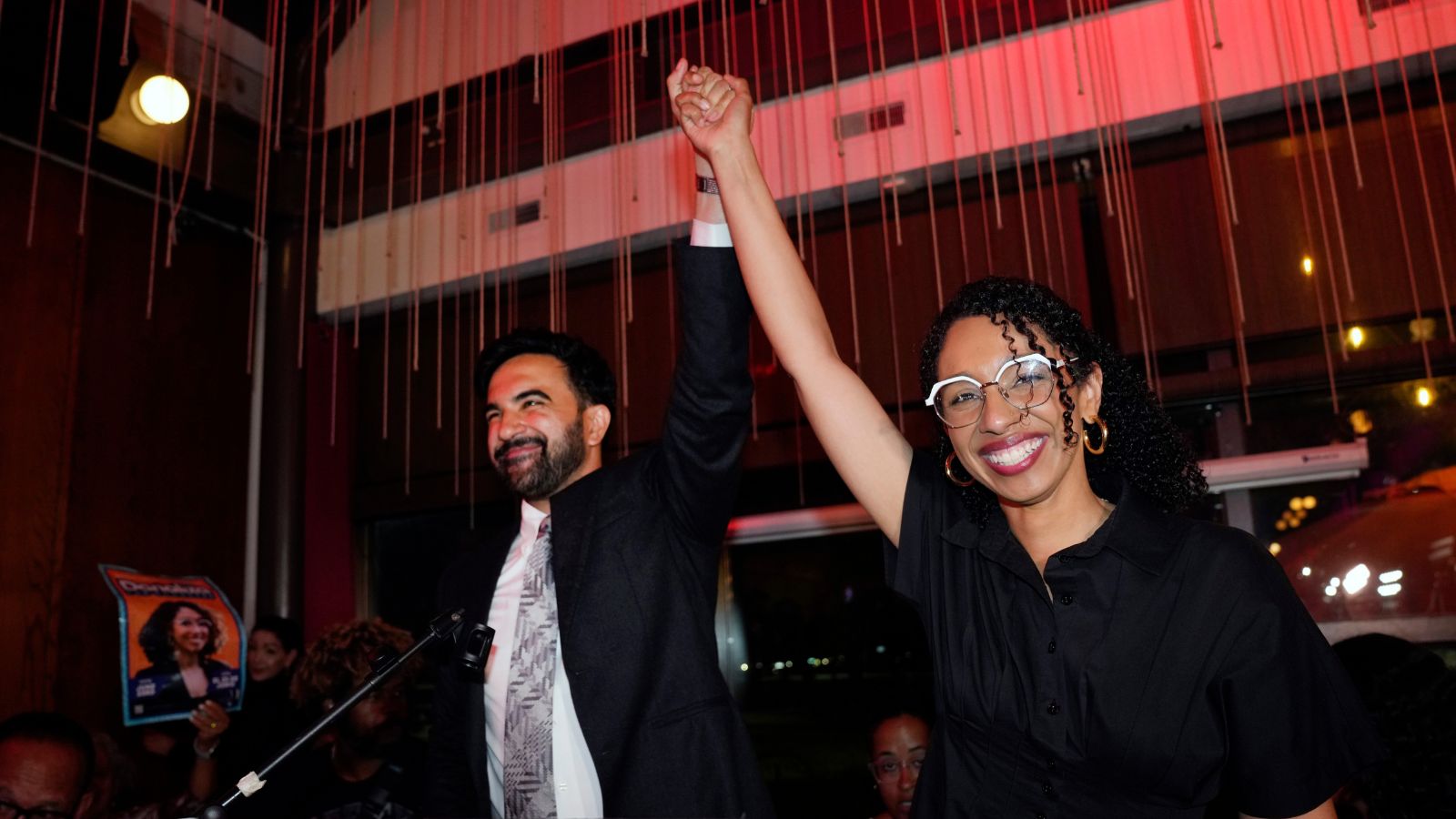
In one key race, state Assembly member Claire Valdez defeated Brooklyn Borough President Antonio Reynoso for the seat being vacated by US Rep. Nydia Velázquez, with Valdez supported by Mamdani and Reynoso backed by the incumbent, the Associated Press reported. Another major upset saw Darializa Avila Chevalier unseat five-term US Rep. Adriano Espaillat, signalling a further shift toward democratic socialist candidates in New York politics. A third Mamdani-endorsed candidate, Brad Lander, defeated US Rep. Dan Goldman in a contest shaped by divisions over Israel’s war in Gaza.
New York City Mayor Zohran Mamdani greets Brad Lander, candidate for New York’s 10th Congressional District, after winning the primary elections in Brooklyn, New York, US, June 23, 2026. (REUTERS)
Collectively, the outcomes are expected to send at least two and possibly three new democratic socialist lawmakers to Congress from New York, strengthening the ideological left within the Democratic Party.
Mamdani, the Ugandan-born son of Indian-origin filmmaker Mira Nair and academic Mahmood Mamdani, has become one of the most closely watched progressive politicians in the United States.
Candidates backed by New York City Mayor Zohran Mamdani have scored major victories in congressional primaries, unseating establishment Democrats backed by pro-Israel groups. pic.twitter.com/9NxvcuDbKd
— Al Jazeera English (@AJEnglish) June 24, 2026
Manhattan race becomes AI battleground
A Democratic primary in Manhattan evolved into a proxy conflict over artificial intelligence regulation, with rival tech-aligned groups spending heavily to influence the outcome. Assembly member Alex Bores, a former Palantir employee who had proposed sweeping AI-regulation legislation, became the central figure in the dispute, Reuters reported.
A political group backed by OpenAI-linked investors spent more than $7 million opposing Bores, while an opposing network tied to Anthropic spent over $10 million supporting his campaign, Reuters reported. Despite the spending surge, Bores lost the nomination to Assembly member Micah Lasher, a Democratic establishment figure who rejected influence from major tech companies, Reuters said.
Lasher said he would not take direction from either AI industry camp on issues such as jobs, safety or environmental regulation, Reuters reported. The race also featured Jack Schlossberg, grandson of former US president John F. Kennedy, and lawyer George Conway, Reuters added.
Story continues below this ad
Trump stabilises GOP influence after earlier primary setbacks
US President Donald Trump sought to reinforce his influence over Republican primaries after recent setbacks in gubernatorial races, according to the Associated Press. Earlier defeats in Iowa and Georgia, where Trump-backed candidates lost governor contests, had raised questions about his endorsement record within the party, AP reported.
In South Carolina, Trump endorsed both Lt. Gov. Pamela Evette and state Attorney General Alan Wilson ahead of a runoff, framing the dual backing as a way to avoid splitting support, AP reported. Wilson ultimately won the nomination and credited Trump’s endorsement as a key factor in his victory, AP said. Trump later claimed credit for the result on social media, celebrating the outcome, the report added.
Utah and Maryland races reflect shifting party dynamics
In Utah, former US Rep. Ben McAdams won a newly competitive Democratic primary created after redistricting, where candidates competed to define themselves in a rare Democratic-leaning district in the state, AP reported. McAdams, previously known as a moderate, has shifted positions in recent years, including stronger support for abortion rights, while maintaining a centrist tone, AP said.
In Maryland, Democrats backed Gov. Wes Moore for re-election, while Republicans nominated Dan Cox, a hard-right candidate aligned with Trump, AP reported. The results highlight widening ideological divisions within both parties, with Democrats consolidating incumbents and Republicans moving further toward their conservative base.
View original source — Indian Express ↗
Related stories

The Punch
NewsJun 24, 2026 · 1 min
Speeding vehicle kills woman in Rivers, police nab two
The Punch
The Punch
NewsJun 24, 2026 · 1 min
Police nab two fake NDLEA operatives in Abia
The Punch

ESPN
SportsJun 24, 2026 · 1 min
Pochettino: USMNT complacency was a 'big punch'
ESPN

ESPN
SportsJun 24, 2026 · 1 min
'Crying long before the anthems': A week in the life of a 2026 World Cup player
ESPN