Indian Express
Indian Express··4 min read
Kerala neighbours take coconut tree battle to high court, told to resolve it over ‘cup of tea’
4 min readNew DelhiJun 24, 2026 05:00 PM IST
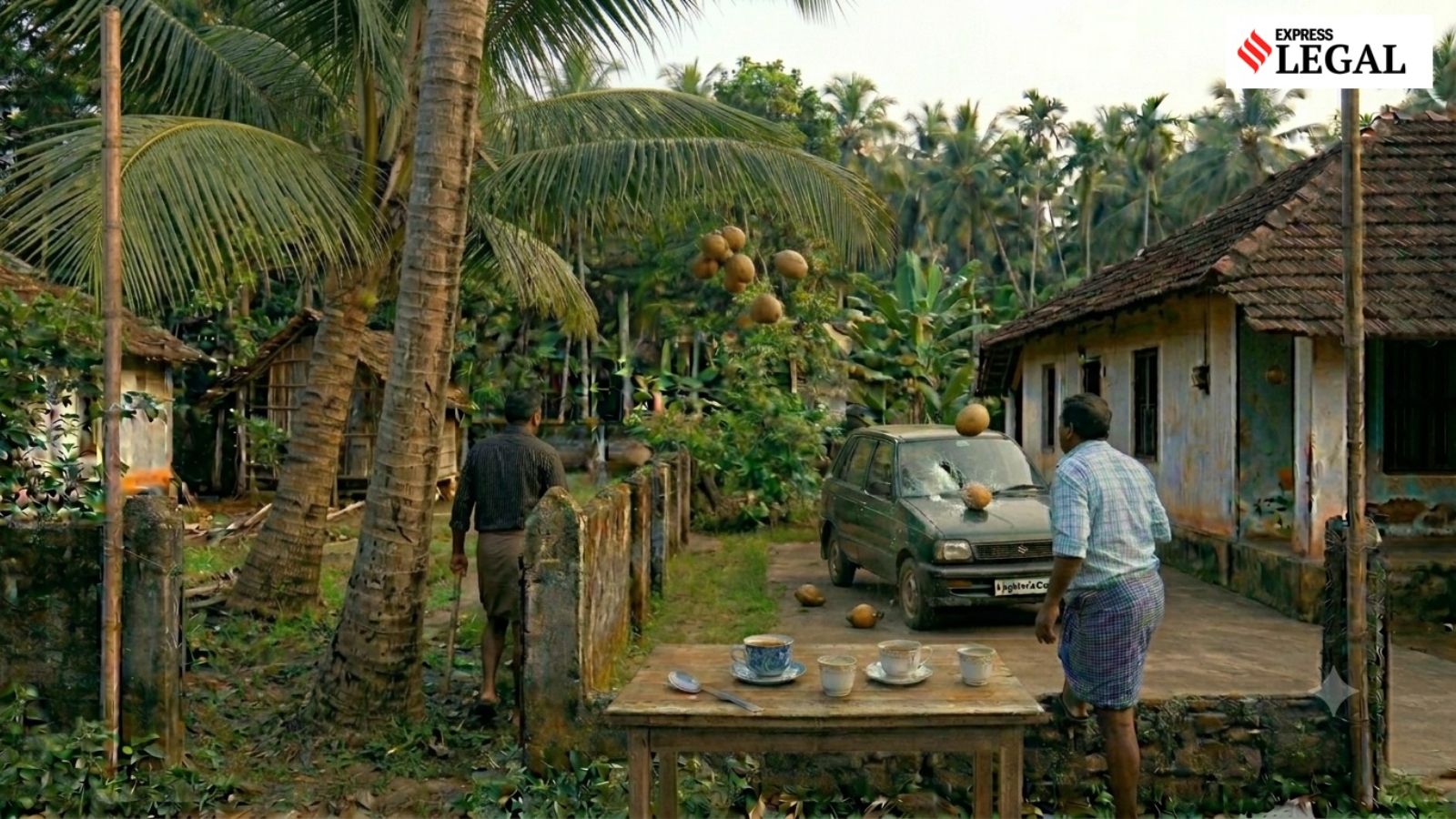
Although the court remarked that the matter was fit for imposing costs on both parties for wasting judicial time, it ultimately refrained from doing so, taking a lenient view. (AI-generated image)
Observing that the dispute was magnified by ego clashes, the Kerala High Court recently disposed of a plea filed by a homeowner seeking action against a neighbour’s coconut tree and directed the parties to settle the dispute over a cup of tea.
Justice P V Kunhikrishnan was hearing a petition filed by a Thiruvananthapuram resident, who alleged that a coconut tree standing in his neighbour’s property posed a danger to his family and property.
Quoting the phrase, “Love your neighbour as yourself”, from the Bible, the court said on June 18, “Let the petitioner and the 9th respondent read the above holy words from the Bible and sit together over coffee or tea to resolve the dispute”.
Although the court remarked that the matter was fit for imposing costs on both parties for wasting judicial time, it ultimately refrained from doing so, taking a lenient view.
“If a coconut tree has the capacity to laugh, the coconut tree might have laughed towards these fighting neighbours. If it had the capacity to fall after a wind, it might have done so to prevent neighbours from fighting over its existence. The ego seems far less flexible than the coconut tree in question,” the high court observed.
Justice P V Kunhikrishnan said the petitioner’s grievance has clearly been magnified by the personal differences and ego clashes between neighbouring families.
According to the petitioner, coconuts that kept falling from a tree on his neighbour’s land had damaged his vehicles, and he had repeatedly approached the panchayat, revenue authorities and the ombudsman for local self-government institutions regarding the matter before moving the high court.
During the proceedings, the high court appointed an advocate commissioner after the petitioner expressed willingness to bear the expense. The commissioner inspected the site and reported that although the coconut tree stood close to the common boundary, it was well-rooted and did not pose any imminent danger of falling.
Story continues below this ad
The commissioner further submitted that the tree had been tied with an iron wire so that it leaned towards the owner’s property, and a protective iron net had been installed to prevent coconuts from falling into the petitioner’s premises.
According to the report, if the width of the iron net is increased and if routine and periodic cleaning of the tree is continued, the dispute may be effectively resolved. Dissatisfied with the report, the petitioner filed an objection to the commissioner’s report.
Court’s findings
The case represents a classic example of unnecessary litigation arising out of a trivial neighbourhood dispute at a time when courts were burdened with serious matters.
The petitioner’s grievance has clearly been magnified by the personal differences and ego clashes between neighbouring families.
Stressing that the law could not substitute basic neighbourly goodwill, the court noted that the neighbours are expected to live in mutual trust and co-operation, especially when they must share boundaries, roads, and resources in a close-knit community.
It also took note of earlier panchayat proceedings and the ombudsman’s directions stating that the tree leaning towards the petitioner’s property can be remedied by tying it towards the owner’s property using an iron string.
Final order
Rejecting the petitioner’s plea for further intervention under Section of the Kerala Panchayat Raj Act, the court held that the provision applies only when any tree, or branches, or portion of trees or fruits of a tree is likely to fall and thereby endanger any person or any structure or any cultivation.
It observed that the tree poses absolutely no danger, and if its protective net is to be extended, the panchayat can issue necessary directions. “Let Jesus Christ shower them with blessings to follow the Holy Bible, Matthew 22:39. The petitioner and the 9th respondent should remember that only neighbours will be there when an emergency arises. Keeping the same in mind, as I said earlier, let them settle the enmity on this silly problem over a cup of tea or coffee,” the court ordered.
© IE Online Media Services Pvt Ltd
Ashish Shaji is a Senior Sub-Editor at The Indian Express, where he specializes in legal journalism. Combining a formal education in law with years of editorial experience, Ashish provides authoritative coverage and nuanced analysis of court developments and landmark judicial decisions for a national audience.
Expertise
Legal Core Competency: Ashish is a law graduate (BA LLB) from IME Law College, CCSU. This academic foundation allows him to move beyond surface-level reporting, offering readers a deep-dive into the technicalities of statutes, case law, and legal precedents.
Specialized Legal Reporting: His work at The Indian Express focuses on translating the often-dense proceedings of India's top courts into clear, actionable news. His expertise includes:
Judicial Analysis: Breaking down complex orders from the Supreme Court and various High Courts.
Legal Developments: Monitoring legislative changes and their practical implications for the public and the legal fraternity.
Industry Experience: With over 5 years in the field, Ashish has contributed to several niche legal and professional platforms, honing his ability to communicate complex information. His previous experience includes:
Lawsikho: Gaining insights into legal education and practical law.
Verdictum: Focusing on high-quality legal news and court updates.
Enterslice: Working at the intersection of legal, financial, and advisory services. ... Read More
Tags:
Kerala High Court
neighbours
View original source — Indian Express ↗
Related stories

The Punch
NewsJun 24, 2026 · 1 min
Speeding vehicle kills woman in Rivers, police nab two
The Punch
The Punch
NewsJun 24, 2026 · 1 min
Police nab two fake NDLEA operatives in Abia
The Punch

ESPN
SportsJun 24, 2026 · 1 min
Pochettino: USMNT complacency was a 'big punch'
ESPN

ESPN
SportsJun 24, 2026 · 1 min
'Crying long before the anthems': A week in the life of a 2026 World Cup player
ESPN