Indian Express
Indian Express··3 min read
Thaw in PMK chill as Ramadoss, son ‘embrace’ after a long feud
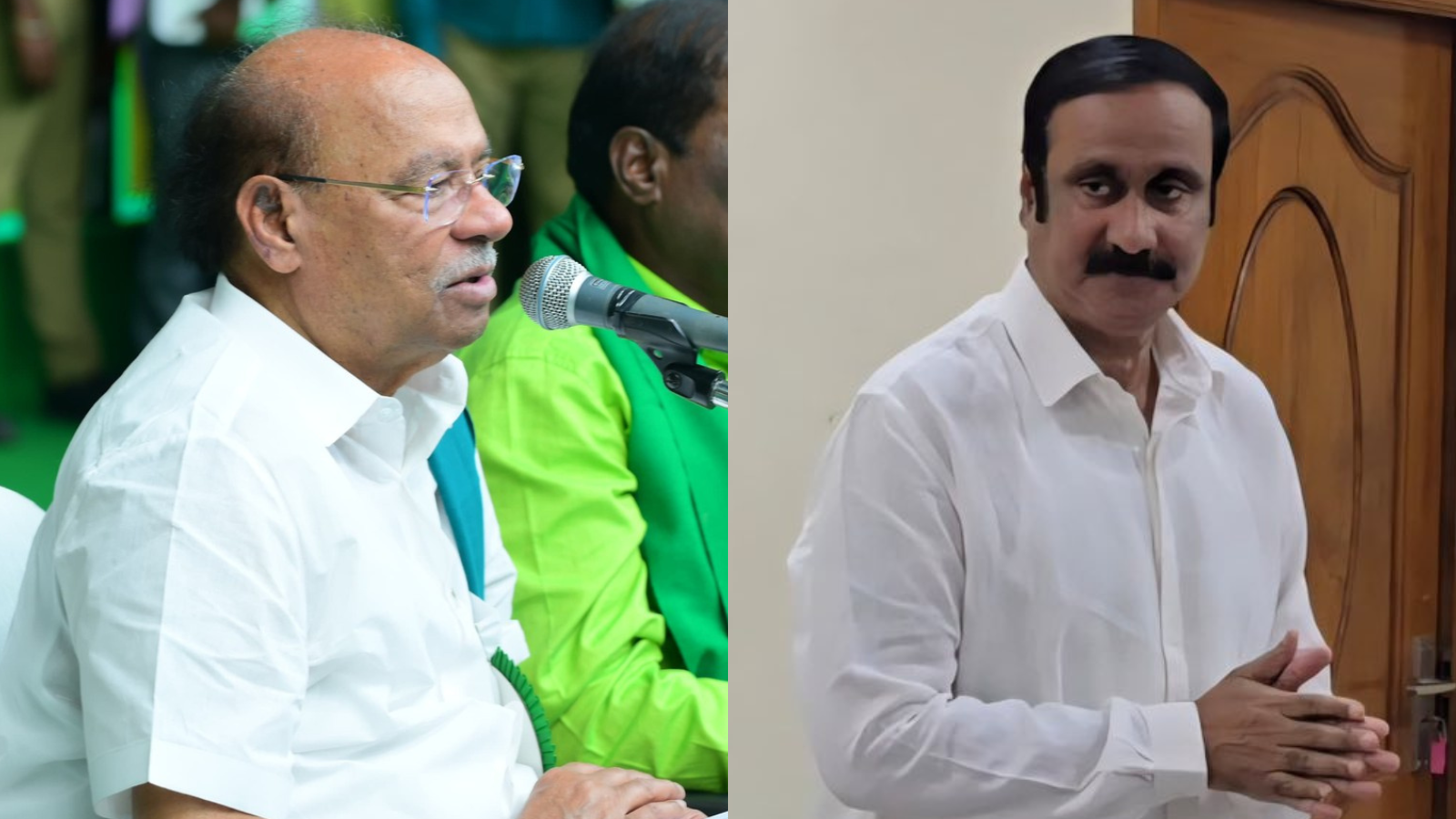
On the occasion of his 61st wedding anniversary, PMK founder S Ramadoss and his son Anbumani shared a moment of reconciliation after months of feuding.
4 min readChennaiJun 24, 2026 07:57 PM IST
First published on: Jun 24, 2026 at 07:57 PM IST
For nearly 18 months, the feud between Pattali Makkal Katchi (PMK) founder S Ramadoss and his son Anbumani Ramadoss had unfolded like a Tamil political adaptation of King Lear – complete with competing heirs, rival camps, expulsions, election battles and allegations of surveillance.
On Wednesday, however, the drama paused for a moment. On the occasion of the 61st wedding anniversary of Ramadoss and his wife Saraswathi, Anbumani arrived at the family’s sprawling Thailapuram residence near Tindivanam with his wife, Dharmapuri MLA Sowmiya Anbumani, and other family members. What followed surprised even seasoned PMK watchers.
According to party sources present at the event, the 86-year-old patriarch received his son with tears in his eyes. The two men, who had spent months battling for control of the party founded in 1989 by the senior Ramadoss, embraced. For the first time in a long while, the PMK’s first family looked less like rival political headquarters and more like a family.
After receiving the blessings of his parents, Anbumani emerged before reporters. “Today, on my father’s and mother’s wedding anniversary, we came with the family and received their blessings,” he said. Asked whether the differences between father and son had ended, Anbumani smiled and replied: “Good things will happen hereafter.”
In Tamil Nadu politics, where statements are often parsed with the intensity of sacred texts, the remark was enough to trigger speculation about a possible reconciliation. The father-son conflict began publicly during a PMK general council meeting in December 2024 when disagreements over succession and party control burst into the open. What initially appeared to be a dispute over appointments quickly evolved into a struggle over authority, ideology and inheritance.
The conflict deepened as Ramadoss attempted to reclaim control of the party he had built, while Anbumani refused to relinquish leadership. Loyalists on both sides were expelled. Senior leaders chose camps. Family relationships became political affiliations.
At one point, the feud became so intense that allegations surfaced regarding surveillance devices discovered at Ramadoss’s residence, leading to police complaints and a flurry of mediation efforts involving political intermediaries, family friends and respected public figures.
Those efforts largely failed. The split eventually became formal. During the 2026 Assembly elections, the two factions contested separately. Anbumani’s camp aligned with the NDA and emerged with four Assembly seats, including one won by his wife Sowmiya. Ramadoss’s faction, contesting alongside long-time J Jayalalithaa aide V K Sasikala’s outfit, failed to make a significant electoral impact.
The election result altered the balance of power but did not heal the emotional wounds. Wednesday’s meeting carried significance beyond symbolism. For years, PMK politics has revolved around questions of community representation, reservations, alliances and electoral arithmetic.
A senior PMK leader trained by the senior and who shifted loyalty to the junior later said the conflict between father and son was something more elemental. “It was nothing but a struggle between an aging founder unwilling to let go and a political heir unwilling to wait. That is why people like me and those respected by the family failed to solve it. They themselves had to solve it. That is what is happening finally now,” he said.
Political observers often compare such succession battles to those seen in other family-led parties. But unlike carefully choreographed transitions elsewhere, the PMK’s rupture unfolded in public view.
However, on Wednesday, for a brief moment, the calculations of coalition politics gave way to something simpler. A son returned home and a father embraced him. Whether the reunion marks the beginning of a political settlement remains uncertain. The PMK has spent too long in open warfare for a single embrace to erase months of mistrust. Finally, both appeared older than when the fight began.
View original source — Indian Express ↗
Related stories

The Punch
NewsJun 24, 2026 · 1 min
NSCIA urges Islamic clerics to verify information, fight fake news
The Punch
The Punch
PoliticsJun 24, 2026 · 1 min
Jeffrey Epstein planned to blackmail me over affairs, Bill Gates tells congress
The Punch
The Punch
NewsJun 24, 2026 · 1 min
Ondo Amotekun arrests couple for burgling ex-speaker’s residence, 44 others
The Punch
The Punch
NewsJun 24, 2026 · 1 min
Delta spent N664.5bn on 362 contracts in 2025 without borrowing — Oborevwori
The Punch