Indian Express
Indian Express··4 min read
Ecological concerns emerge as Delhi runs out of space to dispose drain silt
4 min readNew DelhiJun 25, 2026 02:45 AM IST
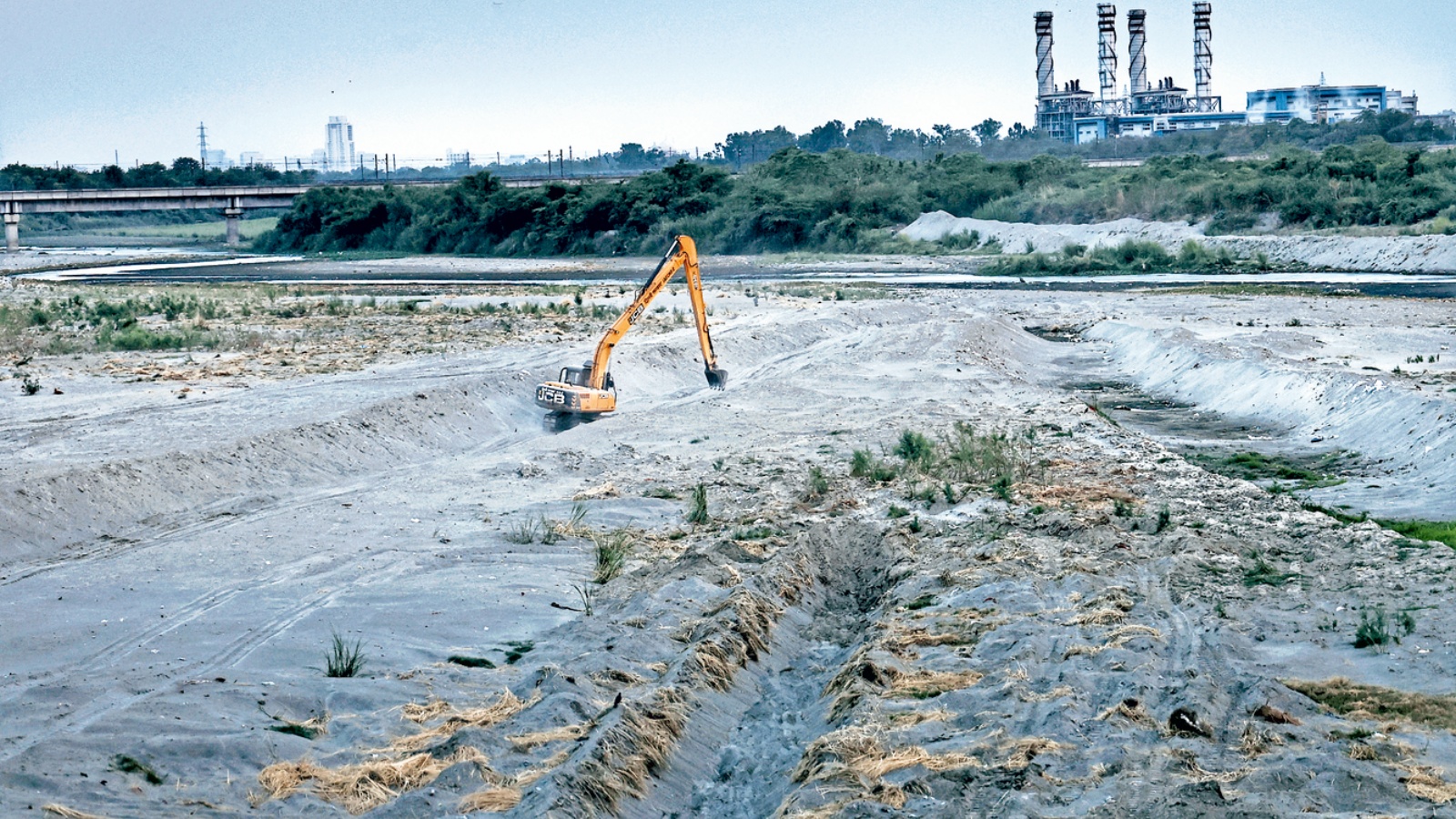
Desilting underway at ITO in New Delhi on Wednesday.
As Delhi has intensified desilting operations to improve drainage and prevent flooding ahead of the monsoon, authorities are grappling with a new concern: the heaps of silt being extracted from the city’s drains.
Officials say the material, often mixed with municipal waste, poses serious environmental risks and can no longer be disposed of through conventional means.
Disposing large quantities of silt has emerged as a major challenge for the Irrigation and Flood Control (I&FC) Department, which oversees flood-control drains across the Capital. Officials said conventional disposal mechanisms — such as strengthening embankments, filling low-lying areas, depositing the material at landfill sites and allowing contractors to lift it for reuse — have reached a saturation point.
The search for alternative disposal methods comes amid an intensified pre-monsoon desilting drive across the Capital. According to official figures released by the Delhi government on Wednesday, the I&FC department has removed 30.91 lakh MT silt from major and supplementary drains this year, up from around 19 lakh metric tonnes last year.
The Public Works Department (PWD), meanwhile, reported that it has completed desilting of 1,900.15 km of drains out of a total network of 2,125.87 km, achieving nearly 90% of its target. From Najafgarh drain, which constitutes the largest component of desilting operations so far, 12.7 lakh MT silt has been removed.
The challenge is particularly acute because the dredged material risks contamination to the surroundings. The department has a total of 77 drains under its jurisdiction, including 22 outfalling into the Yamuna river, and it had initially expected to clear more than 20 lakh MT of silt. According to officials, nearly 25 mixed-flow drains carrying both stormwater and sewage from which the department removes around 3.5 lakh MT silt pose a challenge as the waste contains municipal garbage and other contaminants, making its handling, disposal and reuse significantly complex.
Officials said as several low-lying areas and designated landfill sites have reached saturation, continuing to rely on traditional disposal practices is neither environmentally sustainable nor viable in the long term.
Story continues below this ad
The I&FC department has invited Expressions of Interest (EOIs) from agencies engaged in legacy waste management, bio-mining and bioremediation to evolve methodologies for the handling, processing, scientific disposal and utilisation of silt extracted from its drains.
As part of this, the existing desilting and waste-handling practices will be assessed, including physical and chemical characterisation of dredged material, development of treatment and reuse methods. Preparation of an implementation plan and ensuring compliance with norms prescribed by the Central Pollution Control Board (CPCB), Delhi Pollution Control Committee (DPCC) and the National Green Tribunal (NGT), are also part of the measures being undertaken.
PWD Minister Parvesh Sahib Singh Wednesday conducted an on-ground inspection in Moti Nagar to review monsoon preparedness, as per an official statement. He was quoted as saying, “Every drain, every road and every vulnerable point is being reviewed. Wherever shortcomings are found, immediate corrective action will be taken. We are ensuring that quality and preparedness remain the top priority.”
The statement added: “The cumulative desilting achievement of 30.91 lakh MT is expected to substantially improve drainage capacity, facilitate faster discharge of rainwater and strengthen flood prevention measures across the city.”
Story continues below this ad
According to recent NGT submissions, the I&FC department has also said that it prepared a drain-wise and zone-wise action plan with “prioritization of critical and vulnerable drains”.
Sophiya Mathew is a Correspondent at The Indian Express, based in New Delhi. She joined the Delhi bureau in 2024, and has specialization in Integrated Multimedia Journalism from the Asian College of Journalism (ACJ), Chennai.
Professional Background
Core Beats: Her reporting is primarily focused on the Environment and Education.
Specialization: She has gained recognition for her ground-level reporting on the Yamuna floodplains and the socio-economic challenges faced by those living on its banks. She also focuses on the disparities in Delhi's education system, ranging from elite private schools to government institutions and refugee education.
Recent Notable Articles (December 2025)
Her recent work has been heavily centered on Delhi's severe winter pollution crisis and the government's regulatory responses:
1. The Air Pollution Crisis
"A tale of two cities: Delhi govt schools choke in bad air, private classrooms set up air filters" (Dec 20, 2025): A high-impact feature contrasting the "Clean Air Bubbles" in elite schools with the reality of government school students who are exposed to an equivalent of 17 cigarettes a day due to outdoor exposure.
"Delhi sees season's worst air day, second worst December AQI in nearly a decade" (Dec 15, 2025): An analytical report on the meteorological patterns trapping pollutants in the NCR.
"Delhi bans non-BS VI vehicles from outside: Why curbing vehicular pollution is key" (Dec 17, 2025): Explaining the science behind targeting specific vehicle vintages to lower particulate matter.
2. Enforcement & Regulations
"No fuel at pumps in Delhi without valid PUC certificate from December 18" (Dec 17, 2025): Breaking the news on the environment ministry's strict "No PUC, No Fuel" policy.
3. Education Policy
"Law to regulate school fee in Delhi risks becoming procedural, say parents" (Dec 13, 2025): Investigating the loopholes in the new Delhi School Education (Transparency in Fixation and Regulation of Fees) Bill, 2025.
"Monsoon Session: Private school fee regulation Bill cleared after four-hour debate" (Aug 9, 2025): Covering the legislative passage of the controversial fee hike regulation.
Signature Style
Sophiya is known for her observational depth. Her reporting often includes vivid details from school corridors, hospital waitlists, or the banks of the Yamuna to illustrate how policy failures affect the city's most vulnerable residents. She is a frequent expert guest on the 3 Things podcast, where she explains the complexities of Delhi’s environmental laws.
X (Twitter): @SophiyaMathew1 ... Read More
Stay updated with the latest - Click here to follow us on Instagram
Tags:
New Delhi
View original source — Indian Express ↗
Related stories

The Punch
NewsJun 25, 2026 · 1 min
Lagos sets up independent electricity system operator
The Punch
The Punch
NewsJun 25, 2026 · 1 min
W’Bank, AfDB connect 50 million Africans to electricity
The Punch
The Punch
NewsJun 25, 2026 · 1 min
African countries study Nigeria’s local content model – NCDMB
The Punch
The Punch
PoliticsJun 25, 2026 · 1 min
Stop exporting the future, Tinubu demands end to African resource exploitation
The Punch