Indian Express
Kerala govt blinks: Protests force it to put idea of lowering alcohol tax on hold
3 min readThiruvananthapuramJun 25, 2026 05:30 AM IST
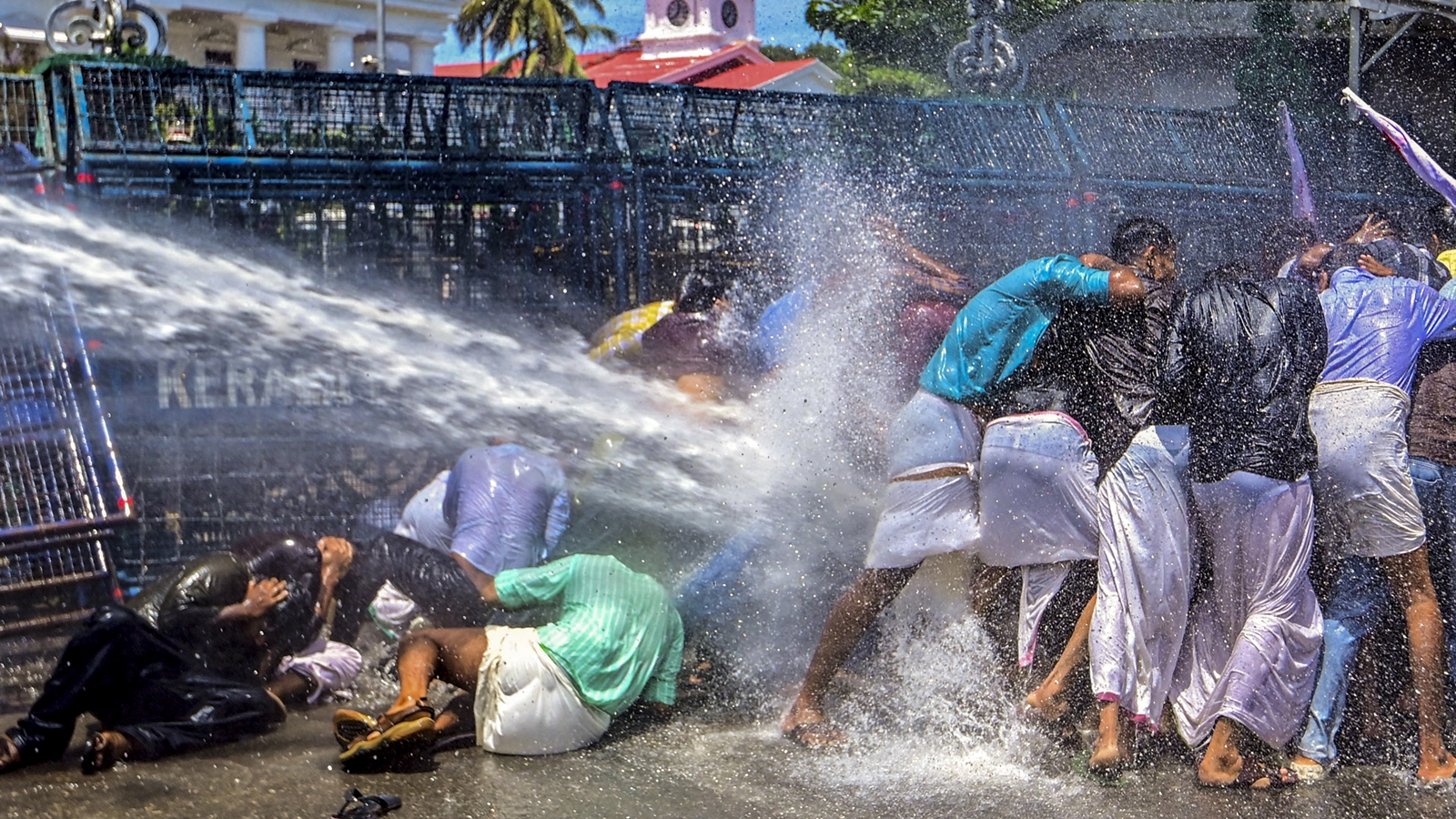
Police use water cannons to disperse SFI protesters in Thiruvananthapuram on Wednesday. (PTI)
Facing protests from the ruling UDF and minority communities over the budget proposal to reduce sales tax on low-alcohol beverages, Chief Minister V D Satheesan Wednesday told the Assembly that a decision on their sale would be taken only after consultations within the ruling alliance.
Last week, Satheesan, who also holds the finance portfolio, announced a new tax regime for low-alcohol beverages, triggering protests from the Congress and its ally, the Indian Union Muslim League. Muslim clerics’ bodies and prominent Christian churches have also opposed the move, fearing it would accelerate liquor addiction in Kerala. The Opposition CPI(M) alleged corruption behind the decision.
Satheesan said: “The liquor policy will be decided by the UDF. We will hold discussions among the UDF allies and if the opinion is against selling low alcohol beverages in Kerala, we will not sell that category of liquor. What is announced in the budget is only a tax proposal. On the other hand if the UDF takes a policy decision to allow low-alcohol content beverages, then the proposed tax will be in force”.
Satheesan pointed out that the previous CPI(M) government had decided to allow the sale of low-alcohol beverages but could not complete the process as Assembly election schedules were announced. “Six months after the second CPI(M) government came into office, the excise department under then minister M V Govindan had initiated steps to define low-alcohol content beverages. In the liquor policy of 2022-23, the previous government had taken a decision to make such beverages available in Kerala.”
He also said the first Vijayan government in 2018 had fixed the sales tax for foreign-made foreign liquor (FMFL) at 78 per cent. When the tax on IMFL was increased to 251 per cent in 2022-23, the rate for FMFL was only 115 per cent. “Was the tax rate reduced after receiving money from Johnnie Walker and Chivas Regal?” Satheesan asked, countering the CPI(M)’s allegation that he had accepted money from a Karnataka-based liquor company in return for lowering the tax on low-alcohol beverages.
Under the budget proposal, tax on beverages with alcohol content between 0.5% and 10% by volume (v/v) has been reduced from 251% to 120%. For products with alcohol content above 10% and up to 20% v/v, the tax has been lowered to 175%. At present, all Indian-made foreign liquor (IMFL) products in Kerala attract a uniform sales tax of 251%, irrespective of alcohol content. Low-alcohol beverages are currently not sold in Kerala because of the high tax burden.
Shaju Philip is a Senior Assistant Editor at The Indian Express, where he leads the publication's coverage from Kerala. With over 25 years of experience in mainstream journalism, he is one of the most authoritative voices on the socio-political, religious, and developmental landscape of South India.
Expertise, Experience, and Authority
Decades of Regional Specialization: Shaju has spent more than two decades documenting the "Kerala Model" of development, its complex communal dynamics, and its high-stakes political environment.
Key Coverage Beats: His extensive reporting portfolio includes:
Political & Governance Analysis: In-depth tracking of the LDF and UDF coalitions, the growth of the BJP in the state, and the intricate workings of the Kerala administration.
Crime & Investigative Journalism: Noted for his coverage of high-profile cases such as the gold smuggling probe, political killings, and the state’s counter-terrorism efforts regarding radicalization modules.
Crisis Management: He has led ground-level reporting during major regional crises, including the devastating 2018 floods, the Nipah virus outbreaks, and the Covid-19 pandemic response. ... Read More
Tags:
Kerala
View original source — Indian Express ↗
Related stories

The Punch
PoliticsJun 25, 2026 · 1 min
NDLEA records 128 convictions, 559 arrests in Anambra
The Punch

TASS
PoliticsJun 25, 2026 · 1 min
Cuban president accuses US of waging relentless war against republic
TASS

Japan Times
PoliticsJun 25, 2026 · 1 min
Trump asks U.S. Congress for more funds to fight Iran, defying rebuke on war powers
Japan Times

Philippine Daily Inquirer
PoliticsJun 25, 2026 · 1 min
Day 5 of Sara Duterte impeachment pretrial commences
Philippine Daily Inquirer