Dawn
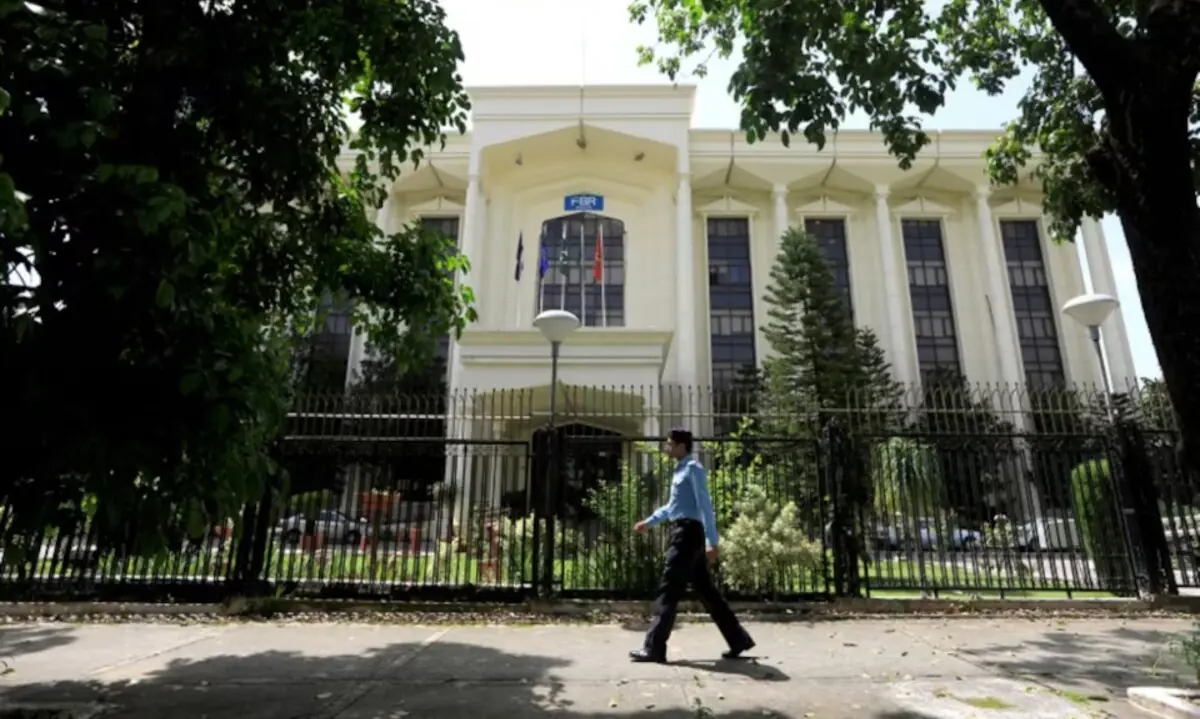
FBR didn’t capitalise on super tax potential, audit finds
• AGP’s report laid before NA, will now be taken up by PAC
• Auditors flag irregularities in Discos, petroleum division
• NTC serving private clients ‘beyond its mandate’
• Railways ‘encroaching’ 1,500 kanals
• Defence Services spent nearly all of Rs2.2tr allocation
ISLAMABAD: Finance Minister Muhammad Aurangzeb on Wednesday laid before the National Assembly the report of the Auditor General of Pakistan (AGP) for the year 2025-26, highlighting massive irregularities across the accounts of various divisions and departments of the federal government, amounting to billions of rupees.
The report, finalised under the aegis of AGP Maqbool Ahmad Gondal, spans dozens of entities, from commercial corporations and the tax machinery to the power, telecommunications, railway and social protection sectors.
The findings are observations representing the auditors’ position and include departments’ responses presented during Departmental Accounts Committee (DAC) meetings. The report will now be taken up by the Public Accounts Committee (PAC) of the National Assembly.
While examining the accounts of the Federal Board of Revenue (FBR), auditors identified Rs117.8bn in under-realised super tax alone, alongside more irregularities such as un-recovered duties.
In the Petroleum Division, auditors pointed to recoveries of about Rs117bn and a disputed gas subsidy balance running into hundreds of billions of rupees.
Electricity distribution companies, including Hesco, Lesco and Fesco, were reported to be operating with unaudited accounts for 2023–25 and without internal audits, against a backdrop of withheld subsidy claims and stalled transmission projects.
The Pakistan Telecommunication Authority (PTA) was criticised for failing to bring data centres under its licensing regime and for not penalising Ufone’s operator despite established cases of illegal SIM activation.
The National Telecommunication Corporation was found to be serving private clients beyond its government-only mandate.
Pakistan Railways received a qualified audit opinion and was flagged for the encroachment of more than 1,500 kanals of prime land.
The National Highway Authority (NHA) was cited for revenue leakages from tolls, right of way and fines, as well as for spending beyond sanctioned limits.
Meanwhile, the Capital Development Authority (CDA) had prepared no annual financial statements for the years under audit and showed weaknesses in its land directorate that auditors linked to the alteration of compensation instruments.
Among Wapda’s projects, the Dasu Hydropower Scheme was reported to have suffered a 257 per cent cost increase, while the 969MW Neelum-Jhelum plant has remained offline since May 2024 following tunnel collapses, inquiries into which remain unfinished.
At the Benazir Income Support Programme, auditors warned of weak data controls leading to ineligible beneficiaries and duplicate payments.
The report shows the Defence Services had used almost their entire Rs2.2 trillion allocation, with an otherwise clean audit opinion. However, the report contained a standing warning over the persistent failure to reconcile military bank accounts with banks and the accountant general.
According to the report, defence store losses for the year totalled about Rs29.8 million. While reviewing the accounts of the National Disaster Management Authority (NDMA), auditors raised 10 findings, four of them rated critical.
They reported about Rs952 million in bank balances omitted from the accounts, more than Rs1bn in undisclosed Sindh sales tax liabilities linked to two Karachi storm-water drain contracts, Rs752 million in misclassified expenditure, and some Rs10.8bn in relief stock held without any inventory-tracking system. In addition, auditors recorded that all 20 findings from the previous year remained unaddressed.
The report also highlighted cumulative losses of Rs21.34bn suffered by the Pakistan Agricultural Storage and Services Corporation (Passco) between 2021 and 2025, with financing costs exceeding revenue.
This was flagged as severe fiscal stress threatening its food security mandate.
The report noted that receivables amounting to Rs257.128bn for wheat supplies remained unrecovered from federal and provincial agencies.
The AGP estimates that a 50 per cent recovery rate could save Rs22.5bn annually in financing costs.
The report also highlighted overbilling of Rs32.26bn to the federal government through inflated strategic reserve costs, incorrect incidental charges and unauthorised mark-up claims.
Recurring themes
Across the reports, the same themes recur: receivables owed but not collected; financial statements unaudited or unfinalised; procurement awarded outside competitive rules; boards and oversight functions falling short of statutory requirements; and audit recommendations left unimplemented year after year.
In most cases, departments had not provided responses at the time of finalisation or had given undertakings whose implementation, auditors noted, remains to be seen.
According to a handout, the presentation of the report was made under Article 171 of the Constitution, marking a significant development in parliamentary oversight of public finances, as the audit documents were placed before the legislature within the same financial year to which the audit cycle relates for the first time in Pakistan’s history.
A key feature of the exercise was the digital dissemination of audit reports to parliament, allowing lawmakers simultaneous electronic access to the documents for the first time.
Published in Dawn, June 25th, 2026
Follow Dawn Business on X, LinkedIn, Instagram and Facebook for insights on business, finance and tech from Pakistan and across the world.
Related stories

AllAfrica
TechnologyJun 25, 2026 · 1 min
Nigeria: Senate Passes Bill to Double Police Trust Fund Allocation to 1 Percent
AllAfrica

Indian Express
TechnologyJun 25, 2026 · 1 min
China Takes Supercomputer Crown From U.S. for First Time Since 2017
Indian Express

Indian Express
TechnologyJun 25, 2026 · 1 min
Cricketer Axar Patel shares morning staple: ‘Whether I have breakfast or not’
Indian Express

Buenos Aires Times
TechnologyJun 25, 2026 · 1 min
Jesica Cirio's dollar videos rock case against ex-Buenos Aires Province official Martín Insaurralde
Buenos Aires Times