Indian Express
Indian Express··5 min read
Probing history can’t lead to boycott, court cancels village order against religious teacher
A dispute over the history of Christianity in Nagaland cannot justify socially boycotting a person for expressing his views, the Gauhati High Court has ruled, quashing a village council’s proclamation that asked residents not to cooperate with a seminary principal who published articles questioning historical claims.
Justice Susmita Phukan Khaund was hearing a writ petition filed by the principal of Haven of Hope Seminary, Dimapur, who challenged before the court a series of notices issued by the Chungtia village council, including a proclamation directing villagers not to cooperate with him, after he published articles in an Ao-language newspaper.
“The proclamation of non-cooperation indeed infringes the right to liberty and the right to live with dignity. There is not an iota of doubt that the petitioner will be locked up from the entire area, if the citizens refuse to cooperate with the petitioner and his right to life and to live with dignity will be affected,” the court said on June 23.
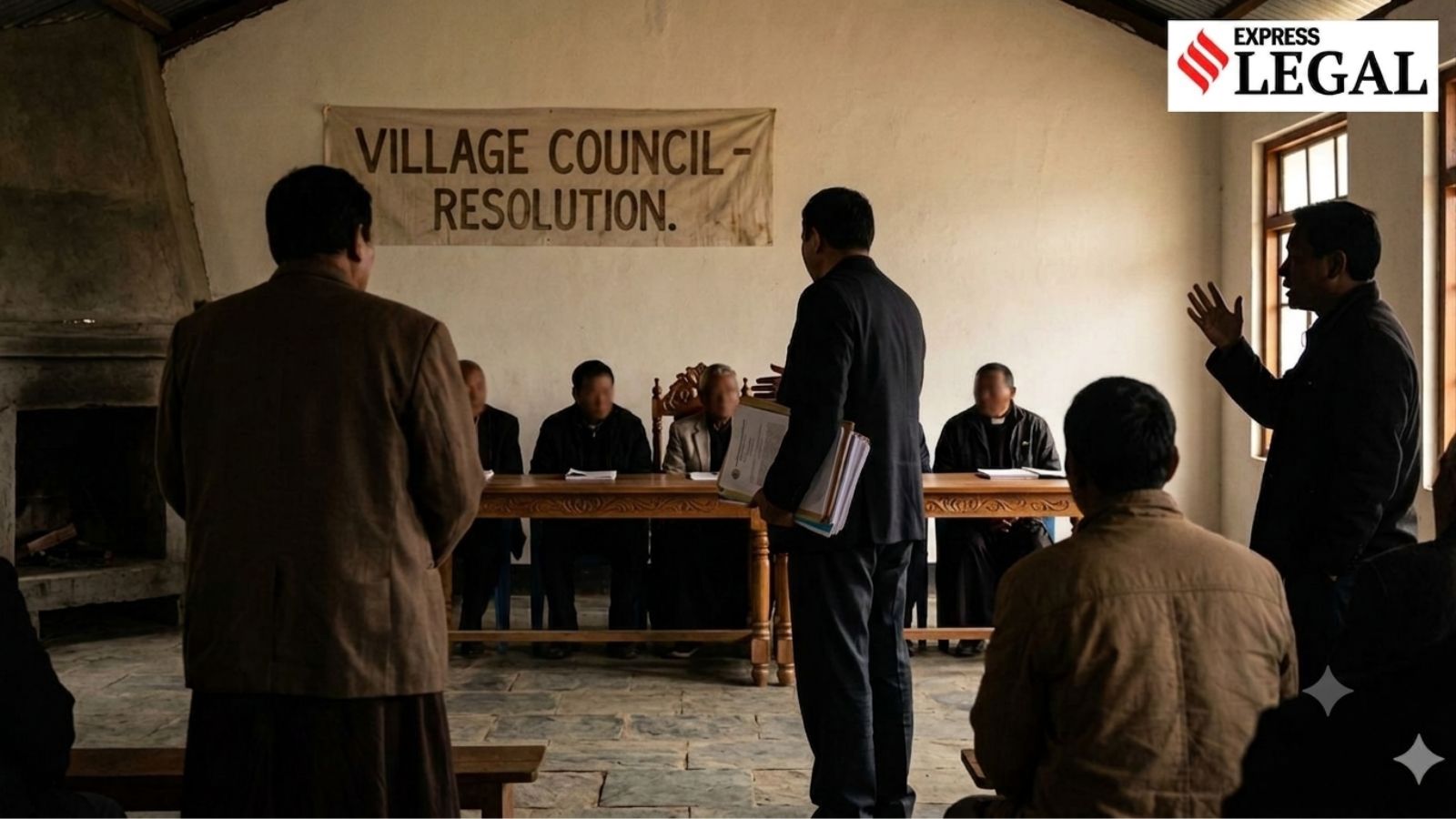
The case arose from a disagreement over historical narratives concerning the advent of Christianity in Nagaland after the principal questioned certain historical claims in newspaper articles. What began as an academic debate eventually snowballed into repeated summons by a village council and a public call asking villagers not to cooperate with him, prompting the court to examine the balance between customary practices and fundamental constitutional rights.
According to the petition, the principal authored two articles published on February 14 and 15, 2025, in the Ao vernacular daily ‘Tir Yimyim’. In the articles, he acknowledged the establishment of the first church in Nagaland but suggested corrections to certain historical assertions made by the community-led Molungkimong Literature Board, relying on existing historical literature.
Justice Susmita Phukan Khaund observed that forcing a community to sever social and commercial ties with a person directly affects that individual’s dignity and livelihood.
The Literature Board responded through another article published on March 1, 2025, stating that such historical disagreements should be resolved through discussions rather than newspaper exchanges. However, the Chungtia village council subsequently directed the principal to withdraw his articles by issuing a notice dated March 3, 2025.
The petitioner replied that he had merely exercised his right to express an opinion and was willing to consider any new facts that contradicted his research.
Story continues below this ad
Repeated summons, proclamation
The dispute escalated after the village council repeatedly summoned the principal to appear before it. When he did not comply, fresh notices were issued to him, his elder brother and even the Chungtiayimsen village council, seeking to secure his presence.
The principal claimed he later learnt that attempts might be made to forcibly bring him before the village council, prompting him to approach the police with a complaint.
On August 12, 2025, the Chungtia village council published a proclamation declaring that the principal was not a native of the village and that no citizen of Chungtia should cooperate with him because he had failed to appear before it.
The petitioner challenged the notices and proclamation before the high court, contending that the village council had no legal authority either to compel his appearance or socially ostracise him.
Story continues below this ad
Village council defends its action
The village council argued that it merely wanted an amicable discussion to resolve differences over historical facts and that the proclamation was not intended as punishment. It also contended that the petitioner had bypassed the statutory appellate remedy available under the Rules for Administration of Justice and Police in Nagaland before approaching the high court.
The respondents further maintained that customary village institutions were entitled to summon individuals when disputes involving historical and customary issues arose.
Court stays away from historical debate
Justice Khaund made it clear that the high court was not required to determine which version of Nagaland’s religious history was correct. Instead, the court focused on whether the petitioner’s constitutional rights had been violated.
The judgment noted that historical events are often passed down orally through generations and that differing narratives are natural. These differences can be amicably sorted out by “tracking recorded events as well as historical events and narratives” transmitted by the ancestors across generations.
The high court emphasised that Article 19(1)(a) of the Constitution protects a person’s right to publish historical analysis and research without fear of retaliation. It also stressed that Article 21 guarantees every individual the right to live with dignity.
The court observed that forcing a community to sever social and commercial ties with a person directly affects that individual’s dignity and livelihood.
‘Can’t justify social boycott’
Rejecting the respondents’ argument that the proclamation was merely symbolic, the high court held that such a declaration could have severe real-world consequences. It observed that refusing to cooperate with the petitioner could deprive him of access to essential services, including shops, water supply and electricity, thereby affecting his right to live with dignity.
Referring to its earlier decisions in Mangyang Lima and Shri T Chalukumba Ao, the court reiterated that customary institutions cannot impose punishments such as social boycott or excommunication that violate fundamental rights guaranteed under the Constitution. It also pointed out that even statutory village courts in Nagaland have no authority to impose punishments such as banishment or excommunication.
Story continues below this ad
Final order: Proclamation set aside
Holding that the proclamation infringed the petitioner’s constitutional rights, the high court quashed the August 12, 2025 order issued by the Chungtia village council. “The proclamation dated 12.08.2025 that no citizen of Chungtia village shall live in cooperation with the petitioner is set aside and quashed,” it ordered. The writ petition was disposed of without any order as to costs.
Court encourages reconciliation
Granting relief to the petitioner, Justice Khaund also encouraged both sides to resolve their differences through dialogue. Observing that the dispute essentially involved competing historical narratives rather than criminal wrongdoing, the court said the parties remain free to discuss questions relating to the history of Christianity in Nagaland and any issues concerning village jurisdiction or domicile.
View original source — Indian Express ↗
Related stories

CNA
NewsJun 25, 2026 · 1 min
The new frontier in the US-China AI race: Talent
CNA

ESPN
SportsJun 25, 2026 · 1 min
Transfer rumors, news: Man United want Scotland 'k...
ESPN

The Punch
NewsJun 25, 2026 · 1 min
Japan denies China’s aircraft carrier harassment claim
The Punch
The Punch
SportsJun 25, 2026 · 1 min
We shut up big mouths, says South Africa’s coach after beating South Korea
The Punch