Indian Express
Indian Express··5 min read
He was sentenced to life in a murder case: 43 years later, Delhi man walks free
For Mukesh Kumar, 64, it meant living under the shadow of a murder charge that spanned his entire adult life. He was just 21, living in West Delhi’s Tilak Nagar, when the incident took place.
Over the next four decades, he got married in 1986, raised a son who is now 36, and saw his daughter turn 39.
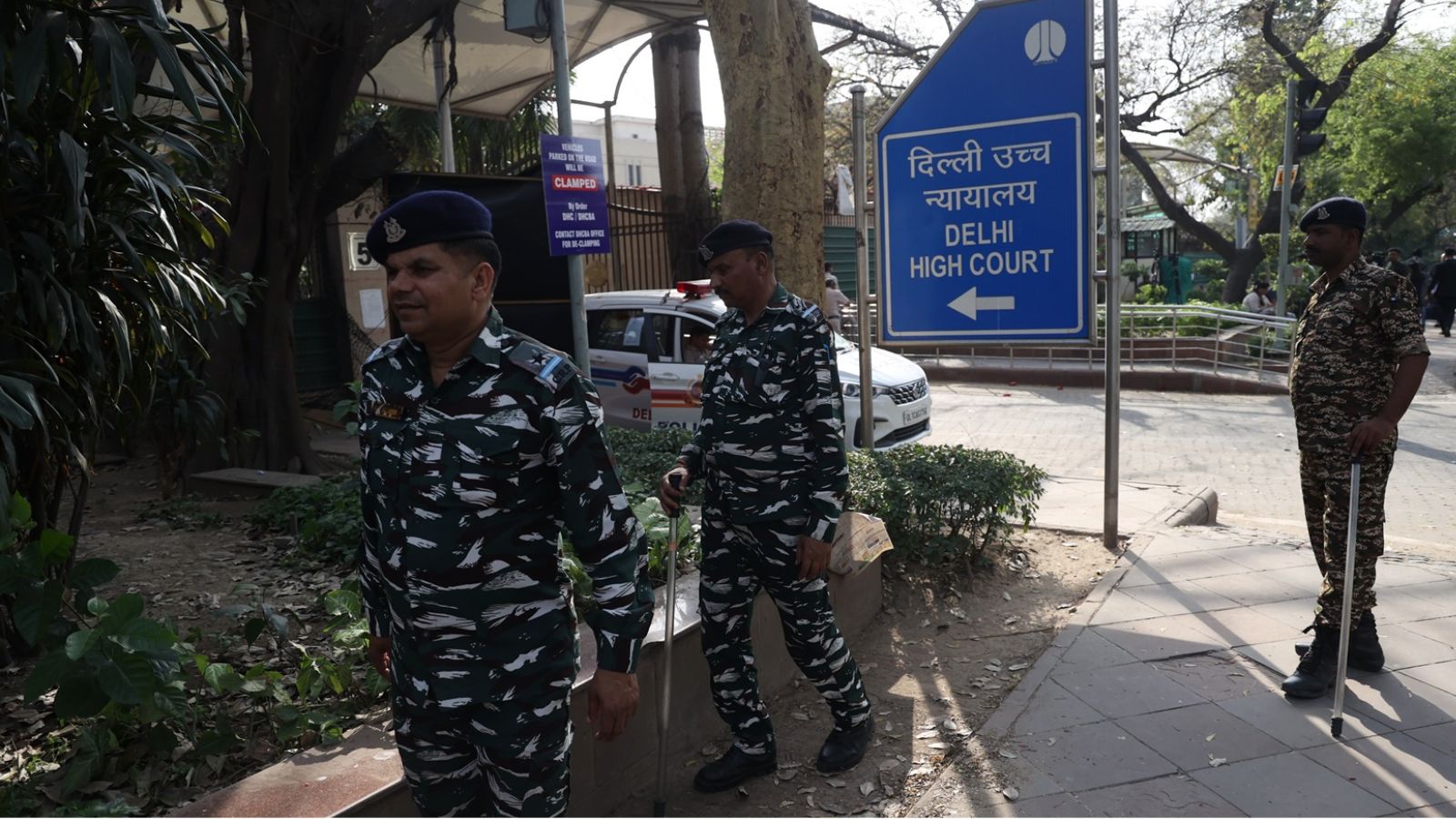
Last Thursday, the Delhi High Court finally acquitted him, overturning a 2004 trial court order that had sentenced him to life imprisonment.
A division bench of Justices Navin Chawla and Ravinder Dudeja ruled on June 18 that the prosecution had fundamentally failed to prove its case beyond reasonable doubt.
The case
The case dates back to the evening of December 1, 1983. The complainant, Usha, then a young nurse, was traveling with her friends on Delhi Transport Corporation (DTC) bus, route number 431, after an evening of shopping and dinner at Lajpat Nagar.
According to the prosecution, a group of young men — including Mukesh — boarded the bus and began misbehaving with two women in the group. When a male friend accompanying them intervened, he was stabbed with a knife and later succumbed to his injuries.
Story continues below this ad
While Mukesh was not accused of wielding the blade, the prosecution, using the legal principle of vicarious liability, argued that he had stood at the back door of the bus, egging on the actual attackers by shouting ‘maaro s***e ko (beat them up)’, while simultaneously raining punches on the group.
A chargesheet was filed against four men under Section 302 (murder) of the Indian Penal Code and relevant sections of the Arms Act among others.
It took until August 2004 for the trial court to hand down its conviction. By then, 21 years had passed, and one of the four accused had died during the trial. Mukesh’s sentence was temporarily suspended in May 2005 after he challenged it.
He spent around 10 months behind bars — he was held as an undertrial from December 27, 1983, to March 5, 1984. He was also in jail in 2004.
Story continues below this ad
Why the case fell apart
When the High Court re-examined the record, after Mukesh moved a revision petition in 2004, it pointed out holes in the evidence connecting him to the crime.
The prosecution had examined 28 witnesses, including purported eyewitnesses, victims, police officials, and the bus conductor. Their case rested primarily on the statements of eyewitnesses and on the refusal of the accused to participate in the Test Identification Parade (TIP).
The court, however, noted that statements of key witnesses failed to align. For instance, the DTC bus conductor, Siripal Singh, who was stationed at the rear exit where Mukesh was allegedly shouting and fighting, testified that he never saw him board the bus or heard provocative slogans.
Defence counsel Himanshu Anand Gupta had argued that the statements of various eyewitnesses regarding the seating arrangements inside the bus and the exact sequence in which the suspects entered suffered from material contradictions.
Story continues below this ad
Conversely, Additional Public Prosecutor (APP) Aman Usman said Mukesh’s identity as an active participant was firmly established by the testimonies of three key witnesses: Alka, Naginder Kumar, and Ashok.
Usman argued that because there was no prior enmity between Mukesh and the victims, the witnesses had no reason to falsely implicate him. He also dismissed the defence’s claim that the police had compromised the identification process, arguing that the onus of proving the accused had been shown to witnesses prior to the TIP rested squarely on the defence.
The High Court bench, however, found the handling of the TIP troubling. “From a reading of the statement of PW-6/Naginder Kumar, we are left with a doubt as to whether the accused persons, including the appellant herein, were indeed shown to the witness prior to their TIP. As noted above, PW-6/Naginder Kumar has admitted that the family members of the deceased had gone to the police station on hearing of the arrest of the accused persons and that the accused persons had been produced in court with unmuffled faces,” it said.
The bench added: “The testimony of… witnesses… casts serious doubts on whether the accused persons were seen by several persons, including the witnesses, on or before 28.12.1983 or at any time before they were produced for their TIP proceedings.”
Story continues below this ad
The court pointed to an order sheet in the case file dated January 5, 1984, which noted that the accused individuals were present in judicial custody “in open face”. Even the Metropolitan Magistrate who conducted the TIP had conceded in his testimony, “I cannot say if the accused were brought directly from judicial custody or were detained outside the courtroom.”
When analysing specific testimonies of the victims and eyewitnesses, the HC bench noted serious gaps regarding Mukesh’s actual identification.
“As far as PW-5/Usha is concerned… she would not have seen the appellant as he was allegedly standing at the back of the bus. She claims to have only heard the whistling and the exhortation. This is not sufficient to conclusively prove that it was the appellant who had done these acts,” the court said.
“Similar is the case as far as PW-7/Alka is concerned, though contradictions have been pointed out in her testimony, she has herself in her testimony stated that she did not see the gentleman who is alleged to have exhorted from the back of the bus.”
Story continues below this ad
The court noted that even if the phrase ‘Maaro s***o ko’ had been uttered, the law cannot automatically equate this with an intent to commit cold-blooded murder. “They can also be attributed to the intention to hurt,” the bench ruled.
What’s next?
The prosecution has indicated that it is likely to approach the Supreme Court to challenge the acquittal. Speaking to The Indian Express, APP Usman said, “The court did not appreciate the testimony properly…”
For now, Mukesh is legally a free man. But that may not be the end of the road. If the state files a special leave petition (SLP) challenging his acquittal, the legal battle will start afresh. The acquittal can be considered truly final only after the apex court decides on the SLP.
View original source — Indian Express ↗
Related stories

CNA
NewsJun 25, 2026 · 1 min
The new frontier in the US-China AI race: Talent
CNA

The Punch
NewsJun 25, 2026 · 1 min
Delta debunks rumour of ex-gov Uduaghan’s death
The Punch
The Punch
NewsJun 25, 2026 · 1 min
Edo to create jobs, promote hospitality sector through tourism
The Punch

Straits Times
BusinessJun 25, 2026 · 1 min
Russia denies it is pressuring Belarus to widen Ukraine conflict
Straits Times