The Guardian
Jaron ‘Boots’ Ennis: ‘It means everything to be a Philadelphia fighter. We always find a way to win’
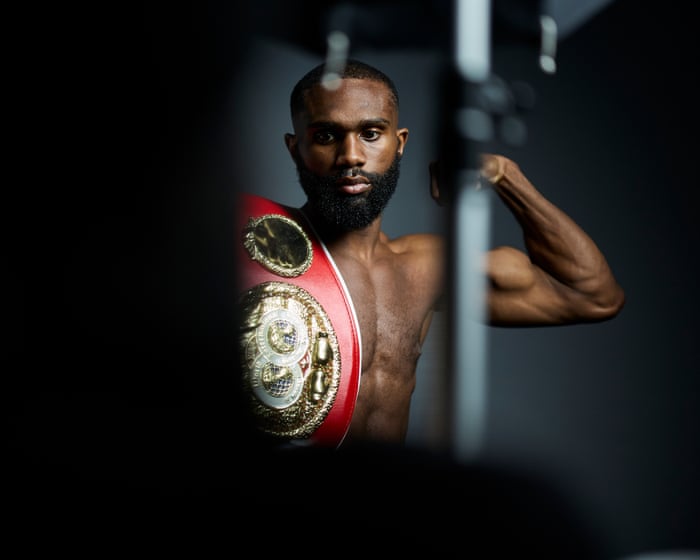
For years, boxing’s chattering class has treated Jaron “Boots” Ennis less like a champion than a prophecy. The next great one. The future pound-for-pound king. The fighter who one day would justify the steady hype that has followed him since he emerged as a teenager from Bozy’s Dungeon in North Philadelphia as one of the country’s top amateurs.
Even now, undefeated in 36 professional fights with 31 knockouts and world championships at two different weights, Ennis approaches Saturday night’s title unification bout with Xander Zayas at Brooklyn’s Barclays Center in an unusual position: celebrated as one of the world’s most gifted fighters while still being discussed as though his breakthrough lies ahead.
Ennis, who turns 29 on Friday, sounds tired of waiting.
“First of all for me, it’s a legacy thing,” he tells the Guardian on a recent Zoom call from Philadelphia, where he is locked into the final preparations for the biggest fight of his career to date. “I call this the legacy tour and we just getting started. I was unified lineal champion at 147 and I’m about to be unified champ again at 154. So, it’s already written.”
That answer lands less like bravado than a matter of fact. Ennis, the WBA’s interim champion at 154lb and a former WBA and IBF title-holder at welterweight, has spent more than a decade passing every eye test boxing could throw at him. At 5ft 10in with a 74in reach, endowed with rare athleticism, fight-ending power and the instinctive ability to change between southpaw and orthodox stances, few fighters today appear capable of winning in as many different ways.
The buzz about Boots predates his professional career. At 17, Ennis won a National Golden Gloves title in Las Vegas just days after Floyd Mayweather Jr and Manny Pacquiao transformed the city into the epicenter of the sporting world. The performance only strengthened the belief that boxing’s next American star might already be on the scene.
Ennis, who came of age in the city’s Germantown section, believes his greatest advantage has less to do with physical gifts than where he comes from.
“It means everything to be from Philadelphia and be a Philadelphia fighter,” he says. “With us, we always find a way to win.”
He smiles.
“Philly got a different swag and demeanor. We carry ourselves different from everybody else.”
Yet for all his success and pedigree, Ennis has spent years trapped in a peculiar boxing purgatory, one that Terence Crawford knew well before finally landing his long-awaited showdown with Errol Spence Jr. Admired by insiders, feared by potential opponents and consistently ranked among the sport’s elite, Ennis has often found himself in the awkward position of being dangerous enough to avoid yet not quite famous enough to force the biggest fights. The result has been a career spent hearing equal complaints about his opposition and the absence of signature names on his résumé.
Ennis doesn’t seem particularly interested in relitigating any of it.
“At this point, it really don’t even matter to me,” he says. “As long as I’m doing what I’m supposed to be doing and that’s winning and putting on a show and looking good, I don’t really care what nobody say.”
The indifference appears genuine. During training camp, Ennis largely avoids social media and the wider conversation around his career.
“When I’m in camp, don’t be on the internet,” he says. “Just post whatever you got to post and get off.”
Saturday’s bout with the unbeaten Zayas, the 23-year-old Puerto Rican prodigy who unified the WBA and WBO titles after becoming boxing’s youngest active world champion last summer, represents the latest opportunity to address what few doubters remain. It is one of the most anticipated fights of the year: two unbeaten champions earmarked for stardom since adolescence, each hoping to establish himself as the defining figure in a resurgent 154lb division. Despite the intrigue, the oddsmakers have installed Ennis as roughly a 5-1 favorite, reflecting the widespread belief among insiders that he remains the division’s most gifted fighter.
For much of the nine months since Ennis’s one-round destruction of Uisma Lima in his first outing since moving up from welterweight, attention focused on a potential meeting with fellow unbeaten star Vergil Ortiz Jr. Yet that fight unraveled earlier this year amid Ortiz’s contractual dispute with Golden Boy Promotions, a saga that spilled into court and left one of the sport’s most anticipated fights on indefinite hold.
Ennis could have waited. Instead, he urged his promoter, Eddie Hearn, to move quickly. “Once I figured out that we wasn’t going to be able to make the Ortiz fight, I told Eddie: ‘Yo, go get me Xander, please,’” he said. “He the next best option. He got two belts. He got what I want.”
The matchup has drawn praise precisely because it was not the easy road for either side. Zayas has been put forth as a future standard-bearer of Puerto Rican boxing in the lineage of Wilfredo Benítez, Héctor Camacho, Félix Trinidad and Miguel Cotto. Rather than taking the more typical measured crawl toward superstardom, he has chosen to find out exactly where he stands against Ennis now.
The San Juan native recently suggested he is taking a greater risk than Ennis was taking at the same age. Ennis isn’t interested in that conversation either.
“Everybody path is different,” he says. “Some people have a faster route. Some people fight six rounds early. Some people fight eight rounds early. My route was a little slower.”
Then he explains why.
“I feel like my route was a little slower because I’m going to be on top forever.”
Asked whether he respects Zayas for taking the fight, Ennis nods.
“You got to respect him for taking the fight,” he says. “You can’t say he’s too young. He a champion. He got two titles at that. And I don’t want to hear none of that after I beat him.”
The answer neatly captures what seems to rankle Ennis more than criticism itself: moving goalposts. Having spent years hearing complaints about his opposition, Ennis appears determined to head off any excuses before the opening bell even rings.
“The difference between me and him,” Ennis says, “it’s so many fighters that fight like him in this boxing game. I seen him many times. He never seen nobody like me.”
Speak with Ennis for any length of time and the word that surfaces more than any other is legacy. The roots of that ambition run through one of Philadelphia boxing’s most accomplished families. His father, Derek “Bozy” Ennis, fought professionally before discovering his true calling as one of the city’s most respected trainers, producing highly regarded fighters from a succession of hard-edged gyms all known as Bozy’s Dungeon. Before Boots emerged, Bozy’s most promising pupils were his own sons: Derek “Pooh” Ennis and Farah Ennis, highly regarded contenders whose careers appeared destined for world-title shots before stalling just short of the summit.
Boots grew up watching all of it. More than a decade younger than his brothers, he was still coming of age when they were fighting on Showtime and ESPN, turning the Ennis surname into a familiar one throughout Philadelphia boxing circles. He had been around the gym for as long as he could remember, trailing behind his older brothers through the doors of Bozy’s Dungeon long before he was old enough to lace up a pair of gloves himself. Even his famous nickname was born there: a childhood pet name from his mother, “Boops”, gradually morphed into “Boots” after gym regulars repeatedly misheard it.
“That’s all I seen,” he says. “I wanted to be like that when I got older.”
His brothers have spoken openly about the distractions that derailed their own careers, chasing what Derek once described as being “Philly famous instead of world famous”. Boots watched, listened and took notes. Where his brothers occasionally drifted from the gym, he became consumed by it. Eventually the mission became something larger.
“That was my part, just to take my last name to the next level, and that’s what I’m doing.”
Asked what his success means to the family, he doesn’t hesitate: “It mean everything. It mean a lot. Like I said, I’m putting on for my last name.”
The influence of Bozy remains central to everything, helping shape the self-assurance that has defined Ennis’s rise. The most important lesson his father taught him, Ennis says, had little to do with boxing.
“Always be yourself. Don’t be no follower. Be a leader. Stay to yourself. You don’t need a bunch of people around you. Have a nice small circle and people that you can trust.”
The result is a fighter who appears remarkably comfortable in his own skin. While many boxers spend fight week bouncing between nerves and braggadocio, Ennis insists he remains largely unchanged until the moment arrives. The transformation does not happen until fight night. Until then, Ennis insists, he remains the same relaxed figure teammates often find laughing, playing games on his phone and chatting in the dressing room before the switch finally flips.
If there is one criticism that genuinely seems to bother him, it is the suggestion that his defense is somehow lacking. Mention the subject and his tone sharpens.
“I feel like people be underlooking my defense,” he says. “My defense is really crazy. I feel like one person said one thing and then all of a sudden I get hit too much. They’re going to see on fight night though.”
For Ennis, the pursuit of greatness has always been a family affair.
“When my career is done and I retire as an undefeated legend, the best in the world, the best ever,” he says, “I want people to say: ‘I want to be like him when I get older.’”
In Philadelphia, where boxing reputations are earned slowly and challenged daily, Ennis carries himself like a man who has already rendered the verdict.
View original source — The Guardian ↗
Related stories
Sky Sports
SportsJun 25, 2026 · 1 min
Littler: 'What's the point in paying money for tickets and then coming to boo?'
Sky Sports
Sky Sports
SportsJun 25, 2026 · 1 min
West Ham latest: Hammers start Championship campaign with trip to Burnley
Sky Sports
CNA
SportsJun 25, 2026 · 1 min
Bagnaia signs four-year deal with Aprilia after Ducati exit
CNA
Sky Sports
SportsJun 25, 2026 · 1 min
L2 fixtures: York, Rochdale return to EFL with every opening game live on Sky
Sky Sports