Indian Express
Ahead of Ganeshotsav, BMC approves AI crowd monitoring at key Mumbai tourist sites
2 min readMumbaiUpdated: Jun 25, 2026 03:11 PM IST
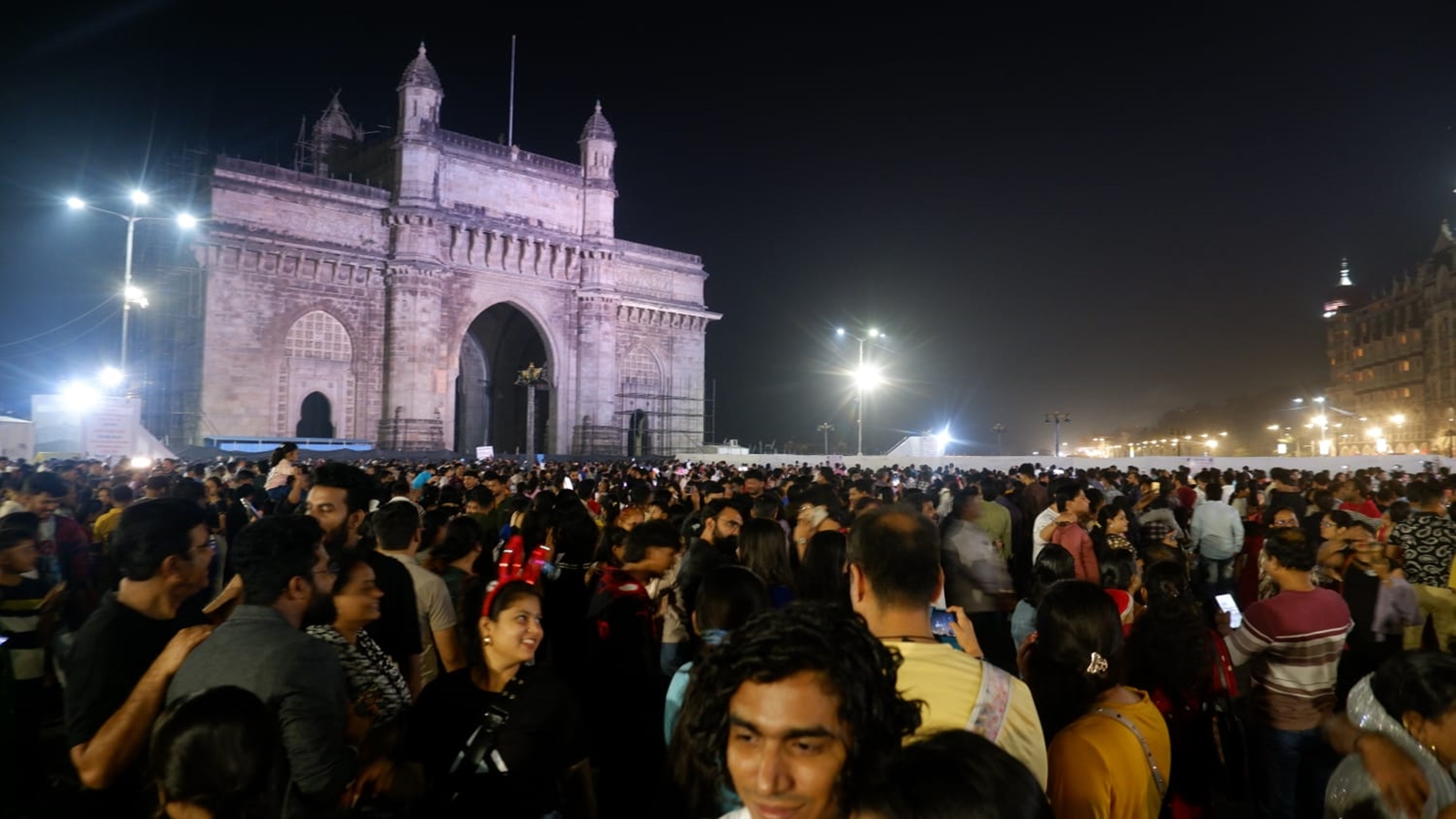
Specialised AI-enabled CCTV cameras will be installed at five major pilot locations, including the Gateway of India (File photo).
Ahead of the upcoming Ganeshotsav, the Brihanmumbai Municipal Corporation (BMC) has approved a pilot project to deploy an artificial intelligence-based crowd-monitoring system at key tourist and religious locations across Mumbai, including the Gateway of India, Siddhivinayak Temple, Juhu Beach, Dadar Beach and Girgaon.
The AI-powered tourist footfall monitoring system will track and analyse the massive influx of floating populations and festive crowds in real time. Unlike Mumbai’s existing 10,000 standard surveillance cameras, this system will actively map crowd counts, movement patterns, and timing.
Officials said detailed reports will be prepared to determine the project’s costs and logistics, and tenders will be issued after the cost estimate is completed.
“The absence of real-time crowd data often creates challenges in sanitation, drinking water supply, traffic management, public amenities, and security. Therefore, a pilot project will be launched in at least five major tourist or religious destinations using AI-powered CCTV technology to monitor visitor footfall in real time,” said BJP councillor Tejinder Singh Tiwana, who proposed the project.
“Real-time crowd analytics will improve public safety, optimise civic services, strengthen traffic management, and support Mumbai’s Smart City planning,” added Tiwana.
Speaking to The Indian Express, a civic official said the BMC’s disaster management department currently monitors CCTV cameras. If this system is implemented, localised war rooms could be established.
Officials hope that the project will facilitate efficient traffic management, improve crowd control through police deployment, and enhance safety measures for citizens visiting these locations during peak season.
Story continues below this ad
Digital street museums
A second AI initiative approved is the citywide ‘digital street museums’ via QR codes to educate citizens and tourists on the local history and the prominent personalities behind Mumbai’s street names.
The BMC will install QR codes onto the blue nameboards across the city’s streets and junctions. Scanning the codes will redirect users to an interactive dashboard featuring short animations and videos.
Under the Mumbai Municipal Corporation (MMC) Act, approximately 19,000 roads are named after historic freedom fighters, scholars, poets, and social workers. Tiwana said that these QR codes will also provide the local history of a particular area in Mumbai.
Pratip Acharya is a seasoned journalist based in Mumbai reporting for The Indian Express. With a career spanning over a decade, his work demonstrates strong Expertise and Authority in critical urban issues, civic affairs, and electoral politics across Eastern and Western India.
Expertise & Authority
Current Role: Journalist, The Indian Express (IE), reporting from Mumbai.
Core Authority: Pratip's reporting focuses sharply on local democracy and development, specializing in:
Urban Governance and Civic Affairs: Providing in-depth analysis of municipal decision-making, city planning, and local infrastructure, essential for informed urban reporting.
City Politics and Environment: Covering the political dynamics of Mumbai and surrounding areas, alongside critical environmental challenges impacting the metro region.
Electoral Coverage (High-Stakes Experience): He has extensive experience in high-stakes political reporting, having covered major elections, establishing his Trustworthiness in political analysis:
National: Lok Sabha elections in 2014 and 2019.
State: West Bengal Assembly elections in 2016 and Maharashtra Assembly elections in 2019.
Major Assignments (Ground Reporting): Pratip demonstrated commitment during crises by conducting ground reporting throughout the Covid-19 pandemic since its breakout in 2020, offering first-hand accounts and analysis of the public health crisis.
Experience
Extensive Experience: Starting his career in 2014, Pratip has built his foundation across multiple prominent English dailies:
Started at The Times of India in Kolkata (2014).
Relocated to Mumbai (2016) and worked with The Free Press Journal and Hindustan Times before joining The Indian Express.
Pratip Acharya's diverse experience across major publications, coupled with his specialized focus on the intricate details of urban governance and a track record of covering major electoral and health crises, establishes him as a trusted and authoritative source for news from India's critical metropolitan centres. ... Read More
Stay updated with the latest - Click here to follow us on Instagram
Tags:
artificial intelligence
BMC
ganeshotsav
Mumbai
View original source — Indian Express ↗
Related stories

TechRadar
TechnologyJun 25, 2026 · 1 min
Don't be tempted by the lowest-ever Nintendo Switch Prime Day discount, I'm a gaming editor and the Switch 2 is still…
TechRadar

TechRadar
TechnologyJun 25, 2026 · 1 min
Currys is a goldmine for back-to-school and business laptop deals from Asus, HP, and Lenovo
TechRadar

Lovin Malta
TechnologyJun 25, 2026 · 1 min
European Commission Releases First €3.2 Billion Under €90 Billion Ukraine Loan
Lovin Malta

Engadget
TechnologyJun 25, 2026 · 1 min
Nothing teases the Phone 4b, launching on July 7
Engadget