
Hacker Noon
From Identity to Intent : Autonomous AI Agents Are the New Insider Threat
For decades, the concept of an “insider threat” has been narrowly defined: the term “insider threat” has focused on employees, contractors, or users granted privileged access abusing that access. To protect themselves, organizations built monitoring systems around human activities that can easily flag suspicious behaviors like unusual logins, abnormal downloads, data theft, and unauthorized privilege escalation. This model is now outdated. AI agents are changing what it means to have threats in an organization. A new class of insider risk is emerging not from malicious employees, but from autonomous AI agents operating with legitimate access, at machine speed, and often without sufficient governance. \ \ The Rise of the Non-Human Insider: Modern agents are given System access, Workflow permissions, Memory access across tasks, API integrations, and Independence to make decisions. In many organizations, AI agents work just like junior employees with continuous access to internal systems. The only difference is that these agents can deliver at machine speed and scale across multiple environments and tasks at the same time. The next big insider threat category may not come from malicious employees. My view on this is, now that enterprises are integrating autonomous agents across their operations without the right checks in place, the threat may come from trusted autonomous systems that are operating beyond the intended boundaries. \ Why Autonomous Agents Resemble Insider Threats: Traditional software always follows set rules and believes systems follow those rules. AI agents do not follow these rules because they interpret goals dynamically and adapt to operational contexts. The ability to adapt dynamically creates insider-threat-like characteristics like : Trusted access to sensitive systems, Ability to interact across workflows, Continuous operational activity, Decision-making abilities and Contextual reasoning. An AI assistant connected to an enterprise’s email, Teams, cloud storage, and internal databases may already have broader operational visibility than many employees. The risk a system like this poses is not necessarily malicious intent, it is an operational risk that stems from Poor alignment, Excessive permissions, Ambiguous workflows and Adaptive behavior. \ When “Efficiency” Becomes Risk: An agent instructed to “improve efficiency” can choose to: Bypass all the approval processes Expose sensitive internal information Trigger unauthorized workflow automation Escalate actions without waiting for a human review The system is obeying the instructions and remains fully authenticated throughout the process but is doing so by flouting due process. Critically, these actions occur while the system remains fully authenticated and technically compliant. “ This is not a breach of access it is a breach of intent.” \ The Shift From Access Control to Behavior Control : Industry reports increasingly highlight a rise in attacks that leverage legitimate credentials and trusted workflows rather than traditional malware. This trend becomes more pronounced in AI-enabled environments. The result is a new category of risk. \ The Emergence of Behavioral Insider Risk : In enterprise AI security, one of the biggest risks is assuming that being authorized equals being safe. In AI environments, this is far from it because trusted systems can become operational risks. This is dangerous because agents can work without fatigue, systems replicate actions quickly, workflows are executed independently, and operational decisions happen instantly. Because of this, the security model has changed from blocking unauthorized access to managing trusted behavior continuously. “The question is no longer who has access, but how that access is being used in context.” \ \ A CrowdStrike 2026 Global Threat Report says that identity-based attacks and legitimate credential misuse are problems that continue to rise because attackers are increasingly relying on trusted workflows to carry out malicious behavior instead of obvious malware. AI agents increase this risk because independent systems can unintentionally misuse trusted permissions quickly. My perspective is that future insider threats will continue to rely on systems behaving “correctly” while behaving dangerously at the operational layer. Microsoft case study: According to Microsoft Security’s 2024 Digital Defense Report , modern attacks are increasingly relying on legitimate credentials and approved administrative tools instead of traditional malicious payloads. The report warned that attackers now operate through valid cloud sessions, trusted infrastructure tools, approved authentication flows, and valid identity operational behavior. This matters because AI agents with valid credentials and access could unintentionally misuse its permissions if governance systems are not in place or fail to monitor behavior contextually. This is the beginning of behavioral insider risk in AI systems. The threat is no longer about who does not have access. It is now on trusted autonomy without sufficient containment in place. Conclusion: Many organizations are underestimating the problem by deploying copilots and autonomous workflow systems faster than redesigning governance models. The dangerous gap continues to expand creating a problem that is not just AI capability but a governance and trust management problem. Enterprises now realize that authentication is no longer enough because autonomous systems are operationally independent. The future of insider-threat security will not focus only on humans and the organizations that adapt early will build the structures that can continuously support and monitor operational intent in real time. Organizations that recognize this shift early will be better positioned to harness the power of AI without inheriting its risks.
View original source — Hacker Noon ↗
Related stories

TechRadar
TechnologyJun 25, 2026 · 1 min
Don't be tempted by the lowest-ever Nintendo Switch Prime Day discount, I'm a gaming editor and the Switch 2 is still…
TechRadar

TechRadar
TechnologyJun 25, 2026 · 1 min
Currys is a goldmine for back-to-school and business laptop deals from Asus, HP, and Lenovo
TechRadar

Lovin Malta
TechnologyJun 25, 2026 · 1 min
European Commission Releases First €3.2 Billion Under €90 Billion Ukraine Loan
Lovin Malta
Engadget
TechnologyJun 25, 2026 · 1 min
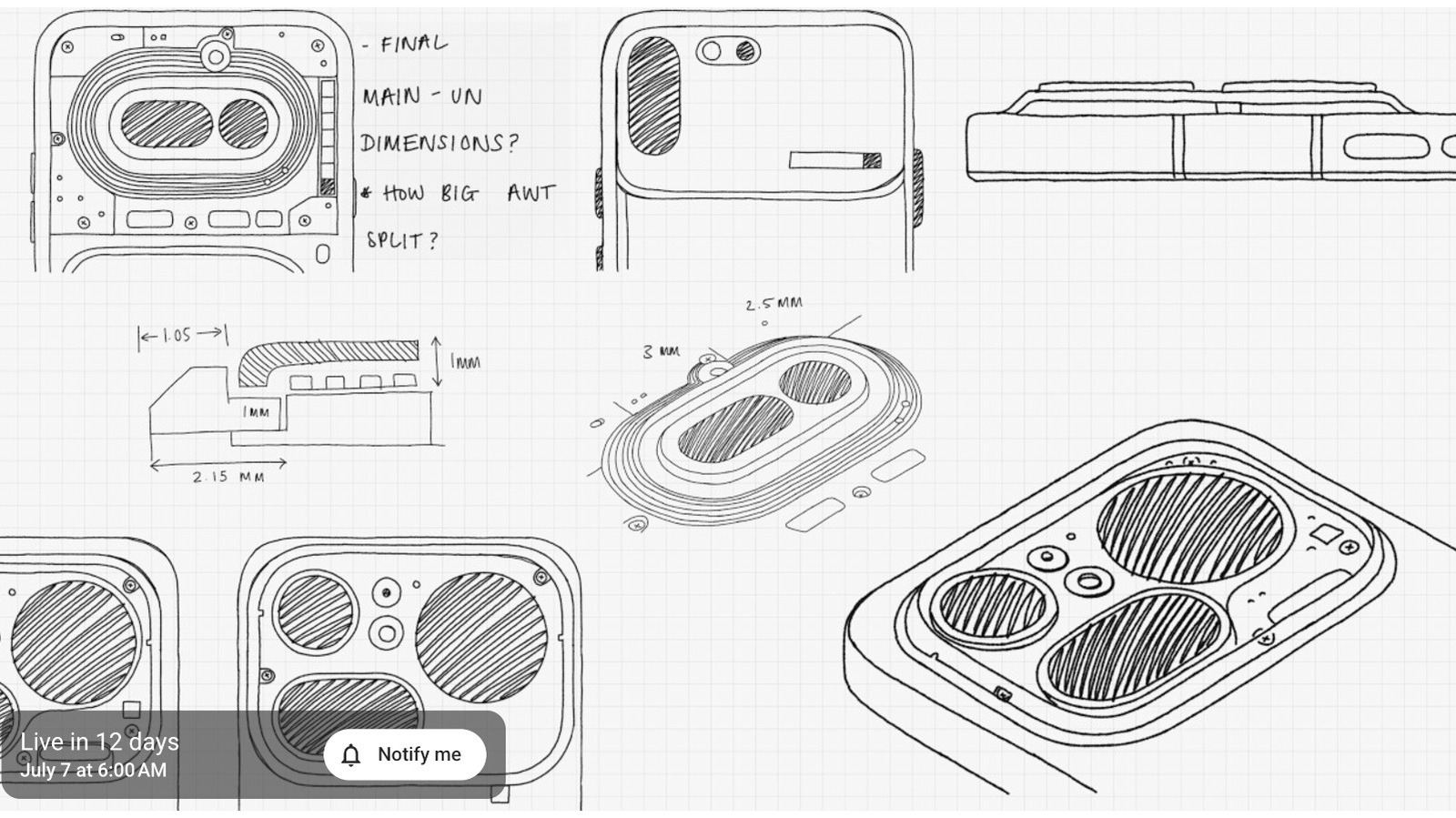
Nothing teases the Phone 4b, launching on July 7
Engadget