CNA
CNA··5 min read
As costs rise, more Singapore collectors part with toys, trading cards and comics
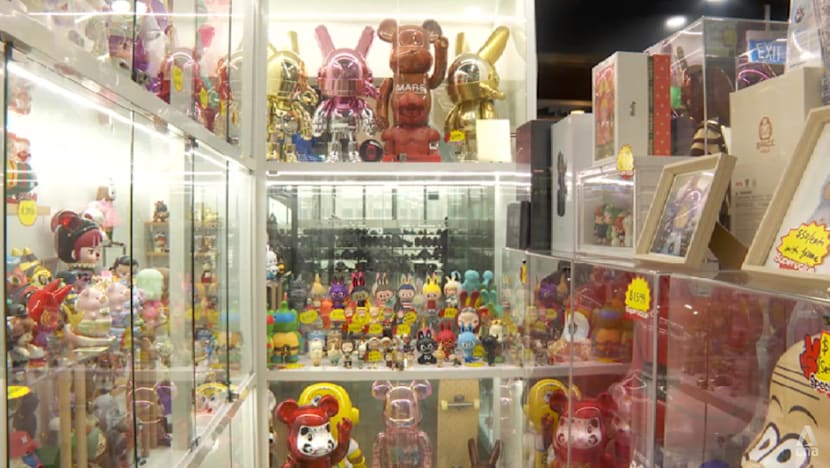
SINGAPORE: From Pokemon cards and Bearbricks figurines to decades-old comic books, collectibles that once sat lovingly on display shelves are increasingly being sold for cash.
Industry players say the number of collectors looking to offload their prized possessions has risen significantly in recent years, with some using the proceeds to help pay for housing and family expenses amid rising living costs.
Others are taking advantage of strong prices, while some are simply clearing part of their collection to fund the next addition to their hobby.
Sugoi Collection, which deals in toys and collectibles, has recorded about 50 per cent more sellers compared with four years ago.
The Orchard Central store said many of them are younger couples looking to unlock cash from items they no longer actively collect.
“Now, because of the rising cost of living, more people are only buying what they really enjoy, and they tend to negotiate the price,” said the shop’s founder Shawn Xu.
Trading card retailers have observed a similar trend.
Both Shane Collectibles and Consignment at Peninsula Shopping Complex and SC Collection at Orchard Towers have seen around a 30 per cent increase in collectors looking to sell cards in recent years.
Store owners said most sellers are in their 20s to 40s and are often motivated by practical financial needs.
“Some reasons include housing down payments, renovation costs, wedding expenses, growing family commitments, newborn kids, business cash flow needs, etc,” said Shane Collectibles and Consignment’s owner Malcolm Wong.
SC Collection’s owner Chong Yong said: “There are cases where people got laid off … one particular guy was getting a bit stressed, so he tried to sell some cards to tide through while he searched for another job.”
QUICK CASHOUT
Part of the appeal of collectibles is how quickly they can be converted into cash.
Transactions can range from a few hundred dollars to tens of thousands, with authentication and payment sometimes completed in as little as 10 minutes.
Mr Wong said some collectors view their cards much like other assets, choosing to cash out when values rise sharply.
“People are looking at all-time high prices. Some bought (an item) low maybe 10 years ago at S$10 (US$8), now it's S$1,000. And it's time to cash out,” he told CNA.
He once bought a Pikachu card for S$3,500 and later sold it for S$6,500. At its highest point, it would have fetched S$35,000.
The highest-priced card currently in his shop is worth S$15,000, while the cheapest costs just S$1.
Mr Wong noted that selling does not necessarily mean collectors have lost interest in their hobby.
“One of the more common misconceptions is that sellers are always looking to offload unwanted items. In reality, many are emotionally attached to their collections and are simply reallocating capital temporarily,” he said.
In fact, some collectors eventually return to buy back items they once sold after their finances improve.
Mr Chong said: “When they need (money), they sell first to free up cash. They will buy back later when they have more disposable income.”
SELLING TO KEEP COLLECTING
Over in the world of graphic novels, collector Kieyron Maldin said he has seen a 45 per cent increase in people letting go of prized books over the past two years.
"Recently, there's been a lot of people selling their collections because of the cost of living. It's been quite sad to see," he said.
Mr Maldin himself has also been giving up his comic books to make some extra cash, earning around S$600 over the past year.
Many of the buyers and sellers he encounters are students, national servicemen and young adults trying to balance their passion for comics with rising everyday expenses.
While common comic books may fetch only a few dollars, rarer editions from the 1970s through the 1990s can sell for thousands.
But financial pressures are not the only reason collectors are selling. Many are also using the proceeds to fund their next purchase and continue pursuing the hobby.
Mr Maldin sometimes even offers discounts to fellow enthusiasts.
“I let (my books) go quite cheap … because I believe in letting this hobby be something that everybody can love and afford. Most of the time I sell in bulk super cheap, just to make that little bit of cash to go and buy more books to continue reading,” he said.
But there are some books in his collection Mr Maldin will not part with.
“It's not the money, it's the memory it holds. Some books have gotten me through tough times. Some characters have gotten me through a lot of sad moments. I want to keep them for my kids, for future generations to see,” he said.
NOSTALGIA DRIVING DEMAND
Even as more collectors cash out, retailers say demand remains strong.
SC Collection’s Mr Chong said brands such as Pokemon, One Piece, Disney and League of Legends continue to attract buyers because of the emotional connection consumers have with them.
“Many people grew up around all (these) major franchises, and there's a very strong nostalgia factor. And they now have spending power,” he said. “There's been a TCG (trading card game) hype and people's collectibles are now suddenly worth quite a bit of money.”
At Shane Collectibles, Mr Wong said the store handles up to 1,000 transactions a month and has attracted buyers from countries including Indonesia and Saudi Arabia.
Many prefer purchasing through physical stores because they can verify authenticity in person, he added. Counterfeit products remain one of the industry's biggest challenges as the popularity of trading cards continues to grow.
BULLISH OUTLOOK
Despite economic uncertainty, retailers remain optimistic about the long-term outlook for collectibles, although they expect buyers and sellers to become increasingly selective.
At Sugoi Collection, Mr Xu believes demand for certain collectibles could rebound despite recent declines.
While Labubu and Bearbrick figures are no longer commanding the same prices seen during their peak, the store continues to buy them.
“Now is the low point of the Labubu cycle, but I believe in the next one to two years it will be good, because the Chinese company Pop Mart, they have a very structured plan to manage the collectibles,” said Mr Xu.
For Bearbrick, Mr Xu pointed to a recent huge investment in Japanese firm Medicom Toy, which owns the bear. He said: “Investors see that Bearbrick will have a future. (It means) the market will go up again, it's a cycle.”
Still, Mr Chong cautioned against viewing collectibles purely as investment assets.
Some new entrants buy collectibles solely because prices are rising, expecting values to continue climbing indefinitely, he said.
When market demand softens or liquidity dries up, these collectors may be forced to sell at a loss.
“The nature of these hobbies is for people to collect, share with their friends, and play the game (for trading cards). It's not really designed as an investment,” he said.
Related stories

CNA
NewsJun 25, 2026 · 1 min
The new frontier in the US-China AI race: Talent
CNA

The Punch
NewsJun 25, 2026 · 1 min
ICPC arraigns El-Rufai, ex-aide over N8.6bn CCTV contract fraud
The Punch
The Punch
NewsJun 25, 2026 · 1 min
We’ll recover all trapped in Rivers collapsed building —NEMA
The Punch

ESPN
SportsJun 25, 2026 · 1 min
Marshawn Lynch, Alex Morgan top celebrities at 202...
ESPN