Indian Express
Indian Express··4 min read
Accident crushes woman’s education, future prospects, court hikes payout to Rs 2 lakh
Recognising its impact on her education, future and marriage prospects, the Andhra Pradesh High Court has enhanced the compensation from Rs 87,036 to Rs 1.99 lakh for a woman injured in a road accident in 2003 while preparing for the Engineering, Agriculture and Medical Common Entrance Test (EAMCET)
Dealing with the woman’s plea, Justice Venkata Jyothirmai Pratapa observed that it is impossible to equate human suffering and personal deprivation with money, but that is what the Motor Vehicles Act enjoins the courts to do. It added that the court has to make a judicious attempt to award damages so as to compensate the claimant for the loss suffered by the victim.
“At the time of the accident, the claimant was pursuing EAMCET coaching and was preparing to appear for the EAMCET-2004 examination… Having regard to the nature of the injuries sustained and the treatment undergone, it is reasonable to infer that the claimant’s studies and preparation for the competitive examination were adversely affected,” the order said on June 19.
Considering that the accident, therefore, not only resulted in physical injuries and medical expenditure but also disrupted her educational pursuits at a crucial stage of her academic career, Justice Pratapa added that these circumstances cannot be ignored while determining whether the compensation awarded by the tribunal constitutes “just compensation” within the meaning of the Motor Vehicles Act.
The high court noted that it is the specific case of the claimant that, owing to the injuries sustained in the accident, she suffered a setback in her educational career and that her marriage prospects were adversely affected, and admittedly, the tribunal did not award any compensation under the heads of loss of amenities, loss of enjoyment of life, or loss of marriage prospects.
Justice Venkata Jyothirmai Pratapa said it is well settled that the Motor Vehicles Act is a beneficial welfare legislation intended to provide future stability.
Future lost to road accident
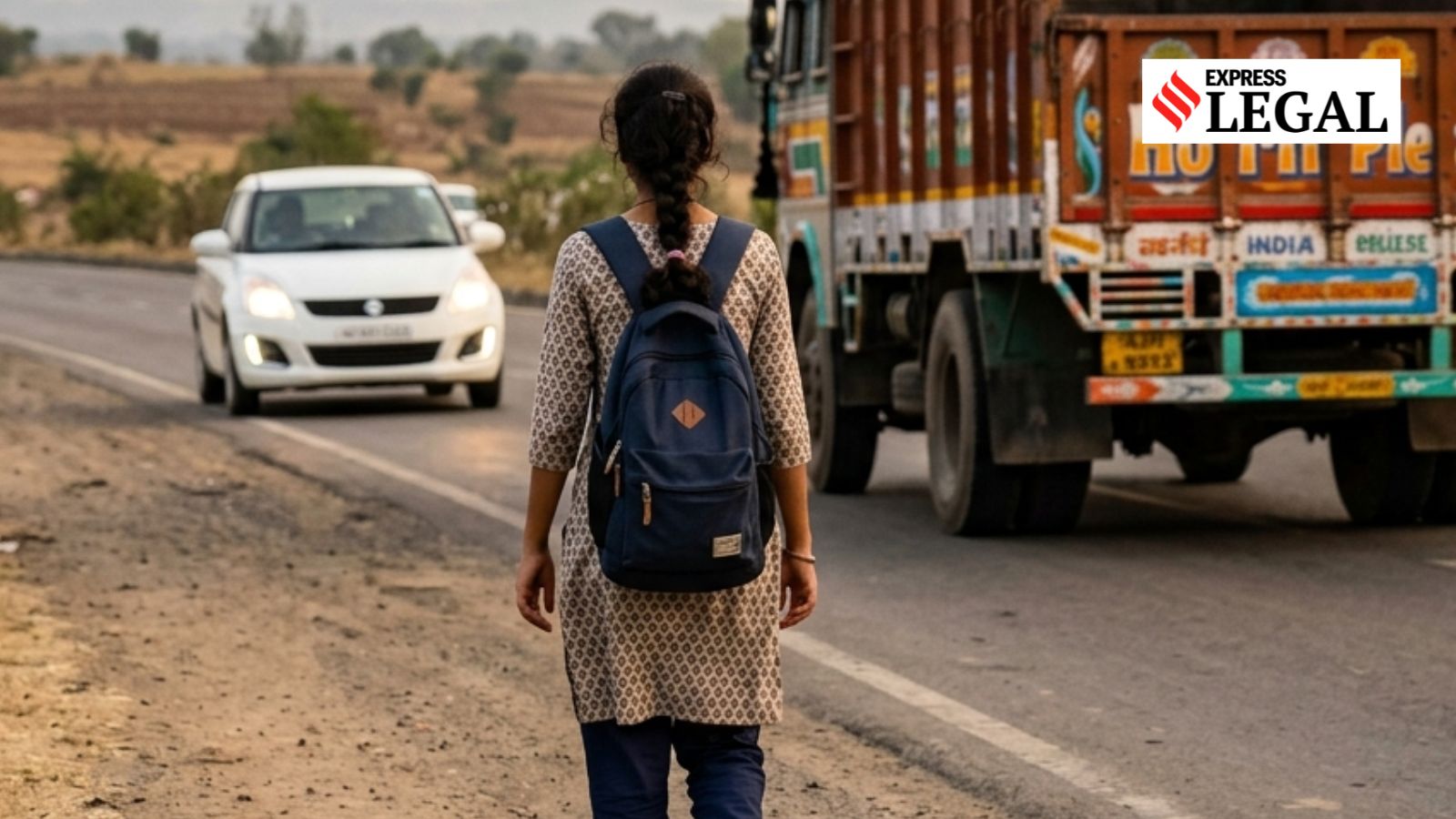
As per the details of the case, On November 18, 2003, at about 7.15 pm, while the claimant was proceeding on foot along the National Highway near Satyam Gari Hotel, Krishnalanka, Vijayawada, the driver of a car that was moving in a rash and negligent manner hit her. As a result of the impact, she fell on the road.
Immediately thereafter, a lorry, which was also being driven in a rash and negligent manner, ran over the claimant and dragged her for some distance, causing multiple grievous injuries and fractures all over her body.
Story continues below this ad
On account of the injuries, the claimant suffered severe physical pain, mental agony, and permanent disruption to her educational pursuits. At the time, she was attending coaching classes for EAMCET. Owing to the injuries and prolonged treatment, she was unable to continue her studies.
Tribunal’s award
The current plea arises out of the award dated February 8, 2007, passed by the Motor Accidents Claims Tribunal (MACT), which analysed the oral and documentary evidence available on record and concluded that the moccurred due to the rash and negligent driving of both the car and the lorry. It consequently fixed equal liability upon them for the injuries sustained by the claimant.
It granted a total compensation of Rs 87,036, together with interest at the rate of 7.5 per cent per annum from the date of filing of the claim petition until the date of realisation.
Dissatisfied with the quantum of compensation awarded under the impugned award, the claimant moved the present appeal seeking enhancement of the award. Appearing for the petitioner, advocate B G Uma Devi contended that the compensation awarded by the tribunal was grossly inadequate and does not constitute just compensation.
Story continues below this ad
Human life can’t be compensated: Court
The accident occurred due to the rash and negligent driving of both the car and the lorry. The tribunal rightly fixed equal liability upon both drivers.
It is well settled that the Motor Vehicles Act is a beneficial welfare legislation intended to provide future stability rather than just reinstating a claimant to their original position.
The amount of compensation should be “just”, reasonable and equitable, and not a bonanza. Since loss of human life can never be compensated by money, the principle of awarding “just” compensation and assessing the extent of dependency would depend on examination of the unique situation of each case.
The compensation should not be assessed very conservatively, but it must also not be assessed in so liberal a fashion as to make it a bounty to the claimant. It should compensate the injured for the deprivation suffered throughout their life and not just token damages.
The nature of injuries, surgery and the consequent recuperation undoubtedly caused physical pain, mental agony, and inconvenience to the claimant. Its impact on her educational prospects, quality of life, and future opportunities is relevant while assessing compensation under the non-pecuniary heads.
Relief enhanced
The high court partly allowed the plea, and it enhanced the compensation awarded by the tribunal from Rs 87,036 to Rs 1.99 lakh, together with interest at the rate of 7.5 per cent per annum from the date of the claim petition till the date of realisation, with proportionate costs.
View original source — Indian Express ↗
Related stories

CNA
NewsJun 25, 2026 · 1 min
The new frontier in the US-China AI race: Talent
CNA

The Punch
NewsJun 25, 2026 · 1 min
ICPC arraigns El-Rufai, ex-aide over N8.6bn CCTV contract fraud
The Punch
The Punch
NewsJun 25, 2026 · 1 min
We’ll recover all trapped in Rivers collapsed building —NEMA
The Punch

ESPN
SportsJun 25, 2026 · 1 min
Marshawn Lynch, Alex Morgan top celebrities at 202...
ESPN