The Guardian
What is in the Caribbean’s new slavery reparations manifesto?
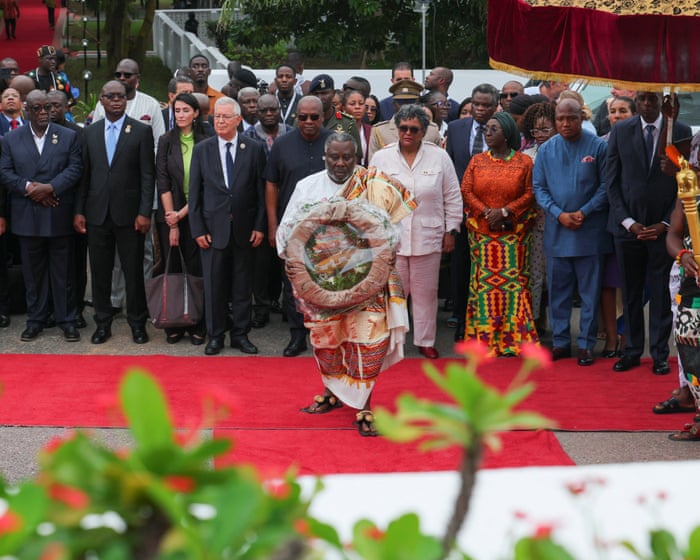
One of the key outcomes of the recent “historic” reparations conference in Ghana was the launch of the Caribbean’s manifesto outlining the “moral, ethical and legal case for reparations” for the enslavement of African people.
The Caribbean Community Reparations Commission (CRC), which created the document, says it is a strengthening of an existing Caribbean Community (Caricom) 10-point plan for reparations from the UK and other former colonial powers, and a response to feedback from the public, organisations and political leaders.
The commission, which leads the Caribbean’s slavery reparations movement, says the manifesto addresses concerns that repair is about extracting wealth from European nations. It adds that it is a chance for the world to address the political and economic systems that promote racism and inequity.
While retaining points such as a “full and formal apology” from Britain and other colonisers, key updates include strengthened legal arguments, and a greater focus on the disproportionate impact of enslavement on girls and women. It also addresses climate justice, which the document asserts is “inextricably linked” to slavery reparations.
The manifesto also focuses on the Indigenous people who were in the Caribbean when Europeans arrived and were the subject of genocides, and those who were brought to the region from Asia to work after the abolition of slavery and faced extreme exploitation.
The document stresses that it will evolve to respond to new evidence on the “crimes against humanity”, and “is not meant to determine the details of a negotiating strategy but rather represents a collective vision for an approach to the pursuit of reparatory justice”.
The update has been approved, with amendments, by a subcommittee of Caribbean leaders, chaired by the Barbados prime minister, Mia Mottley.
The Guardian spoke to Prof Sir Hilary Beckles, the chair of the CRC, about what is new in the manifesto and how it will shape the fight for reparations.
View original source — The Guardian ↗
Related stories

The Punch
PoliticsJun 25, 2026 · 1 min
State police: Ex-lawmaker commends Tinubu, dismisses fears of abuse
The Punch

TASS
PoliticsJun 25, 2026 · 1 min
Russian troops strike Ukrainian long-range UAV launch sites over past day — top brass
TASS

TASS
PoliticsJun 25, 2026 · 1 min
Europe has become main obstacle to peace in Ukraine — MFA
TASS

NPR
PoliticsJun 25, 2026 · 1 min
A federal judge in Boston has blocked parts of Trump's order to limit voting by mail
NPR