CNA
US to create genomic and cellular 'BioVault' for endangered species
WASHINGTON, June 25 : A biotech company and a U.S. government agency announced on Thursday a plan to create an archive of living cells and genomic material for every species protected under the U.S. Endangered Species Act in a project to safeguard roughly 2,300 types of animals and plants deemed threatened or endangered.
Texas-based Colossal Biosciences said it reached an agreement with the U.S. Fish and Wildlife Service for the ambitious biodiversity preservation initiative.
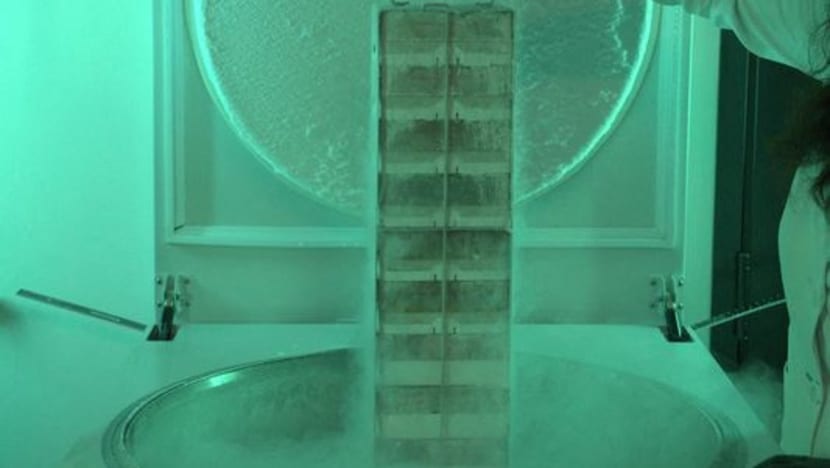
The planned BioVault will be a cryogenic archive for endangered species that stores living cells, reproductive tissues and genomic DNA, with an aim to preserve these samples before populations collapse past the point of recovery, according to Colossal CEO and co-founder Ben Lamm.
"The materials support assisted reproduction, genetic management of wild populations and future restoration if a species is lost entirely. For the first time, we have the technology to make that possible at scale," Lamm told Reuters.
Colossal describes itself as a company dedicated to "de-extinction" — resurrecting vanished species — and last year said it had genetically engineered the dire wolf, an extinct Ice Age predator. Colossal said it will spend tens of millions of dollars to build and operate the BioVault, and that the memorandum of understanding does not obligate federal funds.
The BioVault is planned as a permanent public resource with standardized samples and open-access genomic data available to scientists around the world.
Matt James, Colossal's chief animal officer, said the Fish and Wildlife Service, part of the U.S. Interior Department, leads the partnership and will set conservation priorities and provide the field networks and regulatory authority that make collection at this scale possible. No deadline has been set for project completion, James said.
"This collaboration will help advance our understanding of how biobanking and genomics can complement existing conservation tools and contribute to the recovery and long-term resilience of imperiled species," U.S. Fish and Wildlife Service Director Brian Nesvik said in comments provided by Colossal.
The biological material preserved in the BioVault will be stored cryogenically in liquid nitrogen at minus-321 degrees Fahrenheit (minus-196 degrees Celsius) at its headquarters in Dallas and other locations, Colossal said.
"Redundancy is built into the architecture so that no single event, whether a natural disaster, power failure or regional disruption, can compromise the integrity of the collection," Lamm said.
MODERN-DAY NOAH'S ARK
Lamm likened the BioVault to the biblical Noah's Ark story.
"The Noah's Ark metaphor is about preserving the blueprint of life before it's lost, not waiting until a species is on the brink to start paying attention. Noah didn't build the ark after the flood. The whole point was preparation, preservation and the option to restore what might otherwise disappear forever," Lamm said.
"We're not loading two of every animal onto a boat, we're preserving the genomic and biological building blocks that define what an entire population is. Every species we bank is a species whose biological information, millions of years of evolutionary innovation encoded in its DNA, is protected against the worst outcomes," Lamm said.
That material can support recovery efforts, inform conservation management, restore genetic diversity to struggling populations and, in the most extreme cases, provide the foundation for future de-extinction efforts if a species is lost, Lamm said.
Species protected under the Endangered Species Act range from the famous, like the polar bear, to the obscure, like the Hine's emerald dragonfly.
Biobanking for species has been underway for decades but not in a systematic way. Zoos, universities, government agencies and private institutions have built collections in isolation, using different protocols, different access rules and with no shared catalog, Lamm said.
This has resulted in a patchwork in which some species have redundant samples across multiple institutions and others have nothing. BioVault differs by being a national program with a government mandate, Lamm said.
One leading example of biobanking is the Svalbard Global Seed Vault, a "doomsday" vault storing food crop seeds from around the world on a remote Norwegian Arctic island.
The samples of various species to be stored in the BioVault would be owned by the organizations that provide them, James said.
"This is also a call to the broader conservation community — zoos, universities, government agencies, NGOs and research institutions around the world. The Colossal BioVault is built to be complementary, not competitive," James said. "If you're doing this work, we want to work with you."
Related stories
MarketWatch
BusinessJun 25, 2026 · 1 min
Apple’s MacBooks and iPads are getting more expensive as the memory crunch deepens
MarketWatch
CNA
BusinessJun 25, 2026 · 1 min
US Fed's preferred inflation gauge hits fresh three-year high
CNA
Bloomberg
BusinessJun 25, 2026 · 1 min
Ford CEO Jim Farley Says Culture Change Brought Quality Improvements
Bloomberg

TASS
BusinessJun 25, 2026 · 1 min
Market participants to discuss stablecoin regulation in Russia
TASS