Indian Express
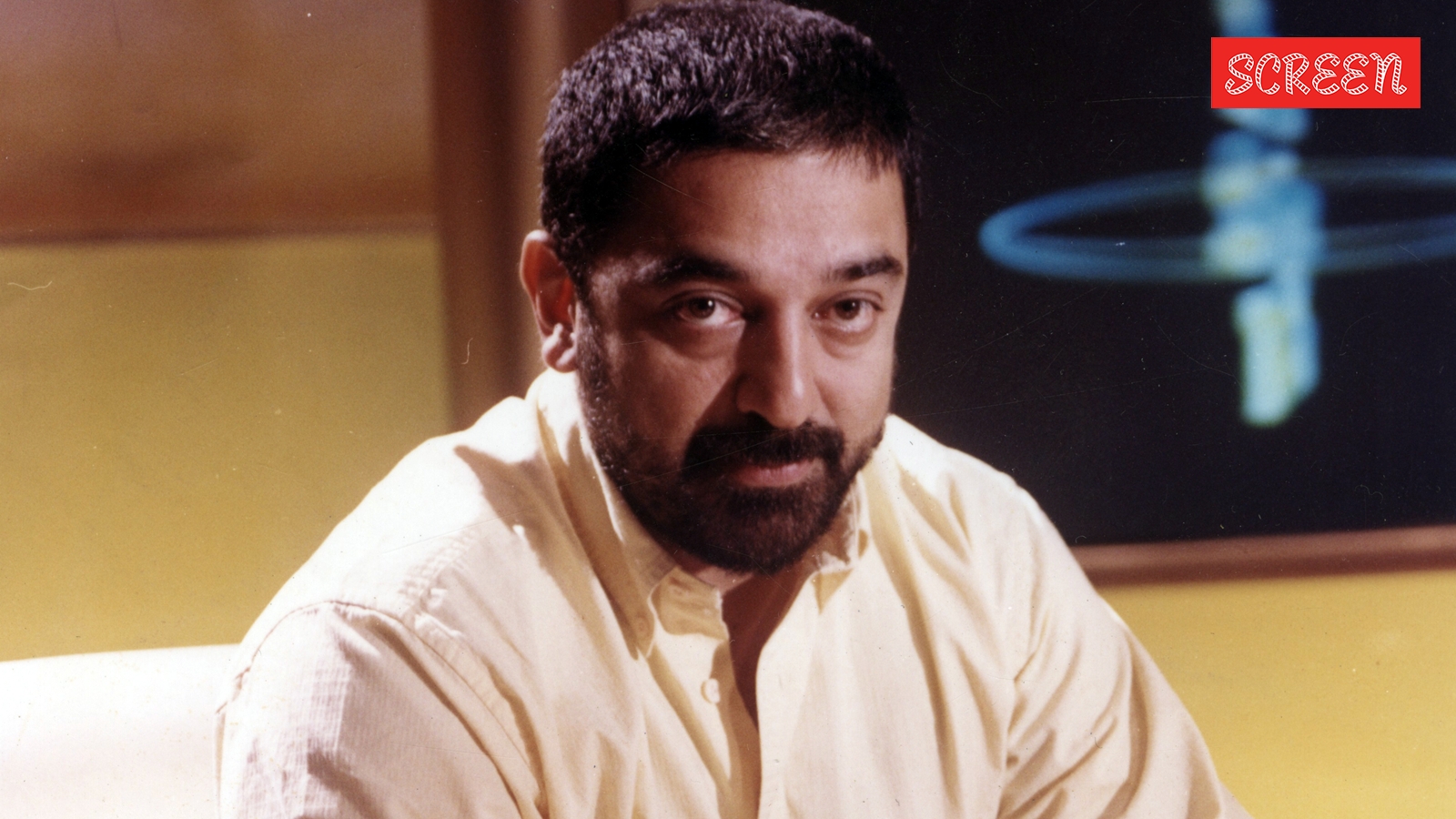
‘Too many underworld connections’: Kamal Haasan reveals why he abandoned Bollywood career
Although it is Tamil cinema that made him the Kamal Haasan he is today, there’s no doubt that he is among the very few Indian actors to have left a lasting impact in any language he worked in. While he starred in several notable movies in Telugu, Malayalam, and Hindi, even his few appearances in Kannada and one in Bengali didn’t go unnoticed, thanks to his immense acting potential.
Kamal made his Hindi debut in 1974, playing a small role in his mentor K Balachander’s Aaina, a remake of the director’s Tamil film Arangetram (1973). However, his proper foray into Bollywood happened over half a decade later.
Don’t Miss | Ananthan Kaadu review: Murali Gopy swallowed an encyclopedia, now we’re paying the price
Kamal Haasan’s golden run in Bollywood
This time, too, Balachander himself paved the way for the actor. When the director remade his widely successful Telugu romantic tragedy Maro Charitra (1978) in Hindi as Ek Duuje Ke Liye (1981), Balachander retained Kamal as the male lead. Instead of Maro Charitra’s Saritha, Rati Agnihotri took on the role of the female lead in Ek Duuje Ke Liye.
The movie opened to rave reviews and became a massive success, making Kamal Haasan a star in Bollywood overnight. After following it up with films such as Sanam Teri Kasam (1982), Yeh To Kamaal Ho Gaya (1982), and Zara Si Zindagi (1983), which all performed well at the box office, Kamal hit it out of the park yet again with Balu Mahendra’s Sadma (1983). A remake of their Moondram Pirai (1982), which earned the actor his first National Film Award for Best Actor, Kamal and Sridevi’s performances in the movie received widespread appreciation.
Must Read | Did Amitabh Bachchan shelve Khabardar with Kamal Haasan out of fear of being overshadowed?
His subsequent appearances in Yeh Desh (1984), Ek Nai Paheli (1984), Yaadgaar (1984), Raaj Tilak (1984), and Karishmaa (1984) also helped him capture attention in Hindi cinema. However, it was his performance in Ramesh Sippy’s Saagar (1985) that catapulted Kamal further in Bollywood, as he even overshadowed the film’s lead star, Rishi Kapoor, with his portrayal. He then worked with Amitabh Bachchan in Prayag Raaj’s Geraftaar (1985) and also headlined Dekha Pyar Tumhara (1985).
Story continues below this ad
However, that became his last Hindi film for a long time. He made a comeback to Bollywood only in 1997, remaking KS Ravikumar’s Avvai Shanmugi (1996) as Chachi 420. That was also the last time Kamal appeared in an out-and-out Hindi film, although he later did bilingual movies such as Hey Ram (2000), Abhay (Aalavandhan, 2001), Mumbai Xpress (2005), Vishwaroop (Vishwaroopam, 2013), and Vishwaroop II (Vishwaroopam II).
Kamal Haasan in Chachi 420. (Express archive photo)
Why Hindi cinema overwhelmed Kamal Haasan
Despite earning significant fame and adoration in Bollywood, Kamal Haasan’s decision not to continue there has surprised many over the decades. However, the legendary actor-filmmaker had his own reasons, which he revealed once. Mentioning that he didn’t have the luxuries Bollywood actors of his era enjoyed, Kamal said he also wasn’t wealthy enough, in a way, to juggle six films at once. The actor further mentioned that the underworld connections Bollywood maintained at that time also discouraged him from pursuing a career there.
“The times… those times were like that. I was a poorer cousin of Hindi cinema. I had to do my own laundry and stuff like that. They were spoilt and rich. They could do six films at a time. I thought that was very defeating. That was one of the reasons,” he shared while addressing the India Today South Conclave in 2017.
ICYMI | Kamal Haasan’s 15-year dream turned into a Rs 300 cr disaster despite a GOAT at the helm
Story continues below this ad
When Kamal Haasan said no to Bollywood’s underworld and black money culture
He cited his disinterest in getting embroiled in black money matters as another reason for bidding goodbye to Hindi cinema. “[Bollywood had] Too many underworld connections. I didn’t want to stay there, either to oppose it or to succumb to the threat. I was one of the actors to decide that I would not have anything to do with black money. I’m quite happy. I drove in a car. It is quite possible. Someone else did it earlier: cameraman Vincent. He never touched black money. It was long before any government threatened him to not keep black money. My brother and I made that call,” he added.
Kamal Haasan was most recently seen in director Mani Ratnam’s Thug Life (2025), which proved a critical and commercial failure.
View original source — Indian Express ↗
Related stories

Deadline
EntertainmentJun 25, 2026 · 1 min
No New NYC Rape Retrial For Harvey Weinstein, But Maybe Long Prison Stretch, D.A. Says
Deadline

Deadline
EntertainmentJun 25, 2026 · 1 min
Harold Perrineau Enters Ring On MMA Drama ‘Brawlers’ From Executive Producer Ronda Rousey
Deadline
Indian Express
EntertainmentJun 25, 2026 · 1 min
Dharman makers drop poof after fans slam Rajinikanth’s ‘Deadly Doctor’ poster, watch
Indian Express

TASS
EntertainmentJun 25, 2026 · 1 min
Over $7.4 bln of unpaid taxes return to Russia’s income within 15 years
TASS