
Portugal Resident
The summer Milky Way is now overhead in July evenings
The summer Milky Way is now overhead in July evenings. Deep inside the Milky Way, we have the three bright stars of the summer triangle.
The brightest of these three stars is Vega, in the constellation of Lyra “the Harp”. Close to this star is a faint star called Epsilon Lyrae. This star can be seen as a very close double through any optical aid. Each star is also double, and this gives it the name of the Double Double.
The constellation of Cygnus, “the Swan”, can be seen near this area of the evening sky. The most southern bright star of this constellation is called Albireo and, through a small telescope, it can be seen as a wonderful double star of contrasting golden and blue colours.
Low in the southern sky, during the evening, is the constellation of Scorpius, with its brightest star, Antares. This red supergiant is also a double star, with a faint, blue-white companion located very close by.
Comet 10P/Tempel is currently in the constellation of Aquarius, but it is extremely faint and can only be seen with a large telescope.
At the end of the month, the Delta Aquariids and Alpha Capricornids meteor showers will peak simultaneously. Both these showers happen as a bright, near-full Moon is in the sky.
The elusive planet Mercury is at inferior conjunction with the Sun on the 12th, making it difficult to observe. The bright planet Venus reaches its greatest elongation from the Sun on the 15th and will be visible low in the western sky shortly after sunset. It will appear close to the star Regulus on the 4th.
The red planet Mars is a morning object and, on the 15th, will be close to the Moon. The gas giant planet Jupiter is currently too close to the Sun and will be in conjunction on the 29th. The ringed planet Saturn is a morning object and now close to Neptune.
On the 6th, the planet Earth is at its furthest distance from the Sun, making northern hemisphere summers slightly cooler than they would otherwise be.
The near-full Moon on the 1st will be in the constellation of Sagittarius. At the moment, the Moon is passing through the lower part of its orbit, making it appear very low above the southern horizon as seen from our part of the world.
The Moon is at last quarter on the 7th,new on the 14th, first quarter on the 21st and full on July 29.
Read Clive Jackson’s last month’s article of The June 2026 Night Sky or the following month of August 2026 (soon).
Clive Jackson
Clive Jackson is the director of the Camera Obscura – Tavira EYE attraction, located near the Castle of Tavira. Specialising in education and public outreach.
View original source — Portugal Resident ↗
Related stories

Straits Times
TechnologyJun 25, 2026 · 1 min
Apple removes Russia’s VKontakte from App Store
Straits Times

TechRadar
TechnologyJun 25, 2026 · 1 min
It’s a bird! It’s a plane! No, it's your shiny new DJI drone thanks to these 35% off savings
TechRadar
Indian Express
TechnologyJun 25, 2026 · 1 min
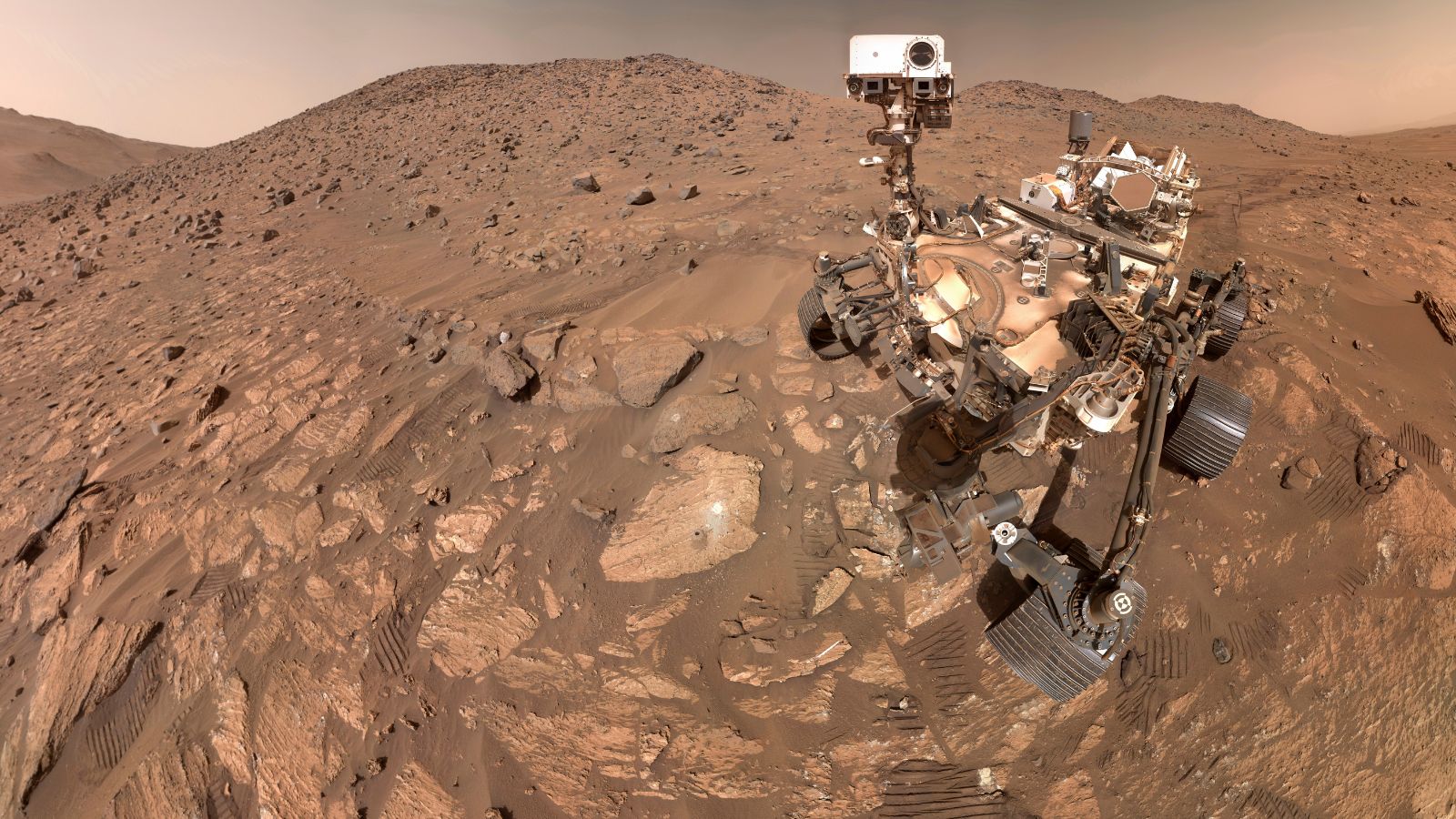
Did Nasa just find evidence of ancient life on Mars? Perseverance detects complex organic carbon
Indian Express

Engadget
TechnologyJun 25, 2026 · 1 min
Sony A7R VI review: A huge speed boost makes this a nearly perfect high-resolution camera
Engadget