Indian Express
US has to ensure competitive edge for India to get trade deal: Trade Minister Piyush Goyal
3 min readNew DelhiUpdated: Jun 25, 2026 10:19 PM IST
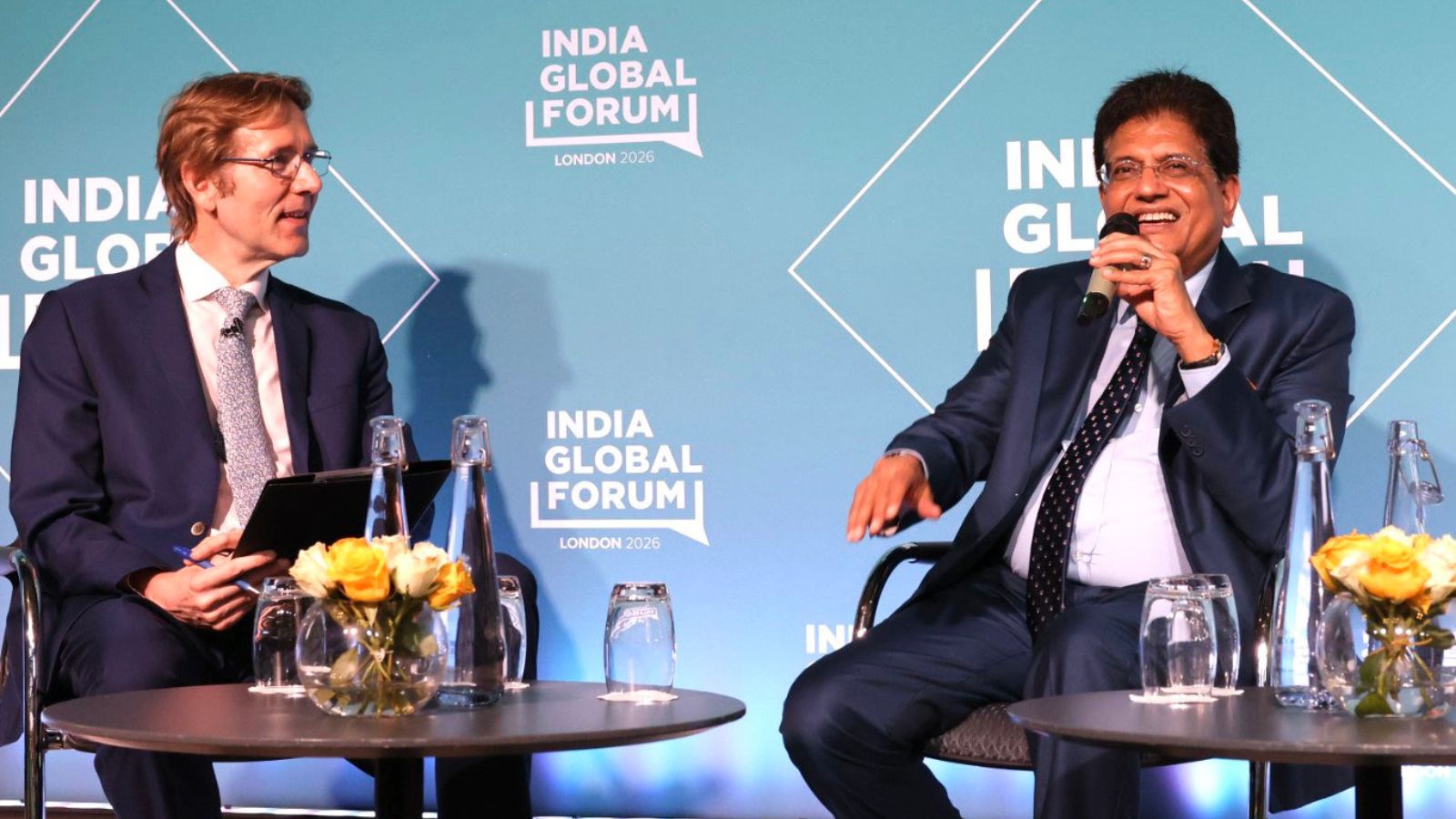
Responding to a question on the status of the deal at the India Global Forum in London, Goyal said, “The India-US deal was done on February 6th. It was confirmed by both the US and India. (Credit: X/@PiyushGoyal)
A day after a visiting US delegation, led by United States Trade Representative (USTR) Jamieson Greer, concluded negotiations on a bilateral trade deal with India, Union Commerce and Industry Minister Piyush Goyal said Thursday that the agreement will be signed the day the US ensures a competitive edge for India over countries such as Vietnam, Thailand, the Philippines, Indonesia, Malaysia and China.
Responding to a question on the status of the deal at the India Global Forum in London, Goyal said, “The India-US deal was done on February 6th. It was confirmed by both the US and India. There were International Emergency Economic Powers Act (IEEPA) tariffs when we finalised the trade deal. We had negotiated the deal based on bringing down the 50% (tariff) to 18%. The whole deal was centred around that competitive advantage that we got with 18% over our neighbours and competing countries… lower than ASEAN countries other than Singapore.”
“With the US Supreme Court striking down the IEEPA tariffs, and now with the 10%, which expires on July 24, we have to have some reason to be able to enter into force that agreement which we have agreed upon,” he said.
“And until the framework of getting into the competitive advantage can be finalised, we cannot enter into a US deal. That is broadly the discussion on how the US will find the appropriate tools and legal backing to give us the competitive advantage over our competition. The day this happens, the deal is on,” Goyal said.
Meanwhile, the EU Thursday became one of the largest trading partners to enforce the US deal after the US Supreme Court in February this year ruled tariffs under the IEEPA illegal. Several US deals automatically became unenforceable by partner countries as reciprocal tariffs were no longer in effect. The US is working on a new tariff structure under Section 301 of the US Trade Act of 1974.
Under the US-EU deal, the EU is expected to eliminate tariffs on all US industrial goods and to provide preferential market access for a wide range of American seafood and agricultural goods including tree nuts, dairy products, fresh and processed fruits and vegetables, processed foods, planting seeds, soybean oil, and pork and bison meat.
The US, in turn, committed to apply the higher of either the US Most Favoured Nation (MFN) tariff rate or a tariff rate of 15%, comprising the MFN tariff and a reciprocal tariff, on originating goods of the EU. But on June 18, the US opened a fresh Section 301 investigation on Germany, the EU’s largest economy.
© The Indian Express Pvt Ltd
Ravi Dutta Mishra is a Principal Correspondent with The Indian Express, specializing in economic policy and financial regulations. With over five years of experience in business journalism, he provides critical coverage of the frameworks that govern India's commercial landscape.
Expertise & Focus Areas: Mishra’s reporting concentrates on the intersection of government policy and market operations. His core beats include:
Trade & Commerce: Analysis of India's import-export trends, trade agreements, and commercial policies.
Banking & Finance: Covering regulatory changes and policy decisions affecting the banking sector.
Professional Experience: Prior to joining The Indian Express, Mishra built a robust portfolio working with some of India's leading financial news organizations. His background includes tenures at:
Mint
CNBC-TV18
This diverse experience across both print and broadcast media has equipped him with a holistic understanding of financial storytelling and news cycles.
Find all stories by Ravi Dutta Mishra here ... Read More
Tags:
India US trade
Piyush Goyal
View original source — Indian Express ↗
Related stories

CNBC
BusinessJun 25, 2026 · 1 min
Judge blocks Trump's rule limiting federal student loans for certain grad school borrowers
CNBC

CNA
BusinessJun 25, 2026 · 1 min
Stellantis, Nissan eye Marelli assets in rescue talks, Bloomberg reports
CNA
Dawn
BusinessJun 25, 2026 · 1 min
Audit report identifies Rs3.41bn worth of irregularities in health sector
Dawn

CNA
BusinessJun 25, 2026 · 1 min
Xbox to raise console prices worldwide from August
CNA