Times of Israel
Hormuz traffic rebound returns oil to prewar rates, as US reassures wary Gulf allies
Oil prices fell to pre-war levels on Thursday as the United States said flows through the Strait of Hormuz were nearing normal, even as Iran insisted it would keep control of the strait under any deal with the US.
US Energy Secretary Chris Wright said shipments through the strait were approaching levels seen before the US and Israel launched strikes on Iran on February 28, with at least 20 million barrels exiting the strait in the previous 24 hours.
During the conflict, Iran took effective control of the vital chokepoint, disrupting oil flows and rattling global energy markets and the wider economy.
Despite the recovery in traffic, Iran signaled it would continue to assert control. Its Revolutionary Guards on Thursday warned vessels to stick to routes through the strait designated by Tehran, rejecting newly announced shipping routes not coordinated with Iran as unacceptable and dangerous.
The warning came after Oman announced temporary shipping lanes through the strait in coordination with the United Nations’ shipping agency.
Get The Times of Israel's Daily Edition
by email and never miss our top stories
By signing up, you agree to the terms
Data from the UN’s International Maritime Organization showed that 57 ships carrying about 1,100 seafarers have transited the strait since June 23 under the evacuation plan.
US Secretary of State Marco Rubio sought to reassure Gulf allies wary of Washington’s preliminary accord with Tehran.
After meeting with Gulf Arab foreign ministers in Bahrain — home to the US Navy’s Fifth Fleet — he told reporters that Gulf allies shared some serious concerns and that they wanted to be informed of every step of the peace accord, which includes provisions on the Strait of Hormuz.
If Iran threatens or blocks ships in the strait, “then we’re going to have a problem,” Rubio said, having earlier told ministers that “no country on Earth has the right to charge for the use of international waterways” and that fees for shipping would never be part of any deal.
Badr bin Hamad Al Busaid, the foreign minister of Oman, which lies across the strait from Iran, told the meeting that future shipping arrangements should not involve tolls.
Oil tankers use new route through Strait of Hormuz despite Iranian threats
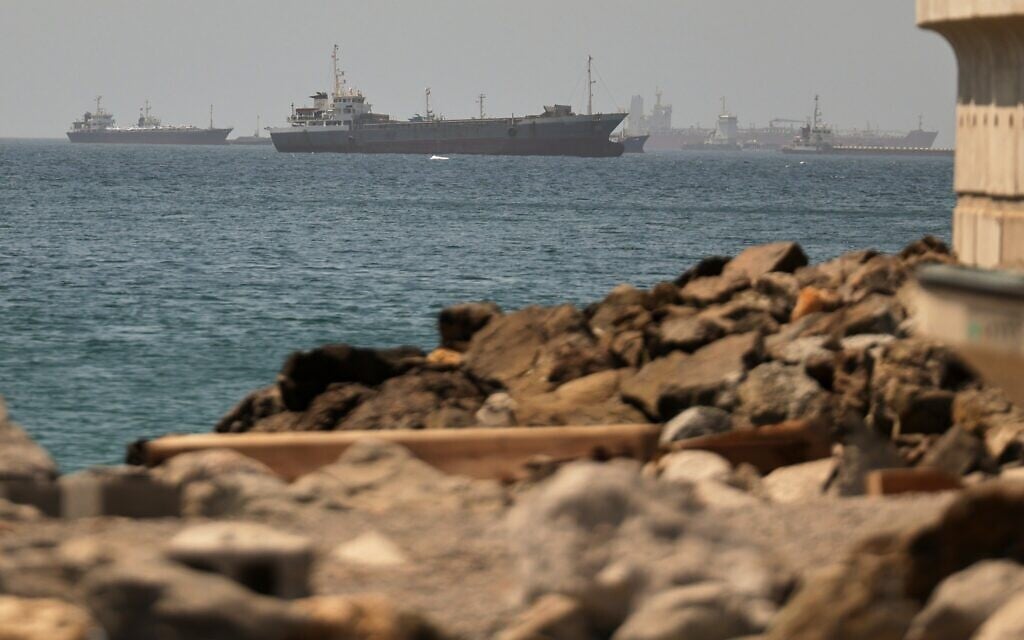
Several tankers made their way out of the Strait of Hormuz on Thursday using a new route promoted by a UN maritime agency. Iran has threatened vessels using the path, which runs along the coast of Oman.
The opening of an alternative passage through the vital waterway would relieve pressure on the world economy and remove Iran’s main source of leverage in ongoing peace talks with the United States. Rubio, during his visit to the Gulf, said Washington was committed to the new route.
Traffic through the strait has increased but is still well below prewar levels. Oil on Thursday briefly dipped below its last prewar price of just under $73 per barrel, a sign that the market believes the situation is improving.
The two sides are still debating the terms of an interim peace deal — from getting ships through the narrow mouth of the Persian Gulf to the future of Iran’s stockpile of highly enriched uranium.
Under the memorandum of understanding signed last week, the US and Iran agreed to a 60-day period to iron out the details. As talks are held behind closed doors, US President Donald Trump and Iranian leaders have seemed to negotiate in public, trading threats and claiming concessions the other side denies.
The flare-up of fighting in Lebanon between Israel and Iranian-backed Hezbollah fighters has meanwhile threatened the wider truce. Israel’s first airstrike on Lebanon since a ceasefire took effect over the weekend killed two people on Wednesday, according to Lebanon’s state-run news agency.
Israel is not party to the agreement between the US and Iran and bitterly opposes many of its aspects.
More ships are passing through the strait, but far fewer than before the war
The oil tankers, led by the Stoic Warrior vessel, sailed along the coast of the United Arab Emirates and then Oman early Thursday, passing by Oman’s Musandam Peninsula fairly close to the shore. The route was laid out by Oman and the International Maritime Organization, a UN agency.
North of the route is the Traffic Separation Scheme corridor, in the center of the strait, where ships had moved through freely before the war, transporting about a fifth of all the world’s oil and natural gas.
Iran said it mined that passage after the US and Israel attacked it on Feb. 28, and at least one mine has been sighted there.
Though some ships had been getting out of the strait, with US military support, the UN agency’s effort is the latest to free trapped vessels. The shipping company Maersk said its container ship, the Maersk Baltimore, and another chartered vessel had also made it out of the strait on Thursday.
Last week, 125 vessels crossed the strait, up from 33 the week before, according to marine data and analysis firm Lloyd’s List Intelligence.
According to S&P Global, Wednesday saw 78 transits, the most since the war began. Among the vessels were 10 crude oil tankers, including five outbound large carriers that can carry up to 2 million barrels of oil.
Still, that daily total is below the average of 130 or more from before the war.
“Opportunistic operators — and there are many of them — emboldened by the lower transit risk, or at least the perceived lower transit risk, have begun chasing the backlog of trapped cargoes that built up during the conflict,” said Richard Meade, editor-in-chief at Lloyd’s List.
Iran says the new shipping route is ‘unacceptable’
The naval arm of the Revolutionary Guard, apparently reacting to the new shipping route and increased traffic, issued a warning Thursday, carried by Iran’s state-run IRNA news agency.
It said the new route was established “without notice or coordination with the Islamic Republic of Iran,” calling it “unacceptable and completely dangerous.”
“The only authorized route for passing through the Strait of Hormuz is the one declared by the Islamic Republic of Iran,” the Iranian force said. “Vessel traffic outside these routes is extremely dangerous and prohibited.”
“Violators will be dealt with,” it added, without elaborating.
There were no immediate reports of any incidents in the strait. On Wednesday, however, the Guard threatened one tanker over the radio, with a soldier warning, “you are in range of my missiles and maybe (I) fire on you,” according to the private security firm Ambrey.
Rubio says the US will ensure there are no tolls on ships
Rubio met with foreign ministers from the six-nation Gulf Cooperation Council to assure them that their interests would be protected in any agreement with Iran.
Those countries, including major energy producers reliant on the Strait of Hormuz for exports, came under attack by Iran after the start of the war.
“There is no part in this deal that’s undertaken that in any way undermines the security, the stability or the prosperity of any of our partners in the Gulf region,” Rubio said at the meeting in Bahrain, home to the US Navy’s 5th Fleet.
He later told journalists the US and Gulf allies would ensure there would be no fees charged on ships moving through the strait.
He also criticized Iran’s hard-liners for going “on their official media and making all kinds of pronouncements” that he described as not true.
He said the US wanted to make sure the Oman route continued for ships to transit the strait. “If that stops, then we’re going to have a problem,” Rubio said.
The GCC countries have expressed reservations about the limitation of the US-Iran deal signed last week, including conflicting claims over the strait and the fact that the memorandum of understanding does not specifically cover Iran’s nuclear or ballistic missile programs.
Bahrain’s Foreign Minister Abdullatif bin Rashid al-Zayani thanked the US for its support, saying that because of the agreement, “today we see a glimmer of hope for our region,” but stressed that it was “critically important that Iran adheres to its obligations.”
View original source — Times of Israel ↗
Related stories

ZDNet
TechnologyJun 25, 2026 · 1 min
This deal on an Anker Solix power station and solar panel combo is hard to beat this Prime Day
ZDNet

The Verge
TechnologyJun 25, 2026 · 1 min
It’s a bad time to want a new computer
The Verge

ZDNet
TechnologyJun 25, 2026 · 1 min
Amazon is selling Pokemon Mega Lucario Battle Decks for $28 off during Prime Day
ZDNet

Folha de S.Paulo
TechnologyJun 25, 2026 · 1 min
Brazilian Government Agency Wants to Create Team Dedicated to Investigating Big Tech
Folha de S.Paulo