Indian Express
Indian Express··4 min read
How AI-based system is expected to make AQI forecast sharper in Delhi
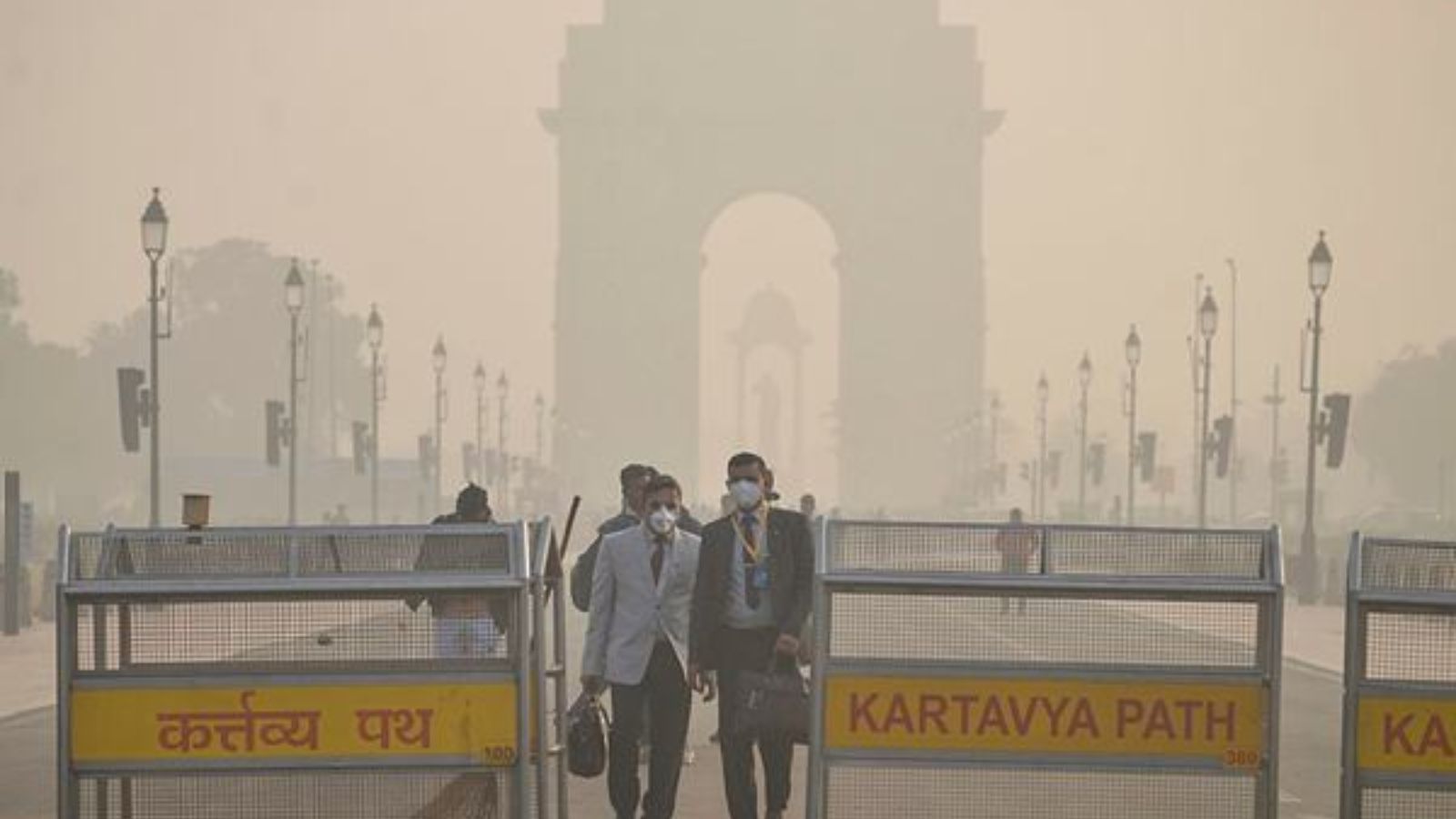
Every year, as the Capital battles severe air pollution during winters, emergency measures are introduced based on forecasts of how foul the air is likely to get. With an aim to make those forecasts sharper, IIT-Kanpur’s Airawat Research Foundation (ARF) has been building a system under a pilot initiative, The Indian Express has learnt.
The Indian Express had reported last November that the Decision Support System (DSS) — the current model used for identifying sources and air quality forecasts — suffers from several issues, including an ageing emissions database and accuracy that tails off outside the peak winter months. To resolve these issues and modernise the system, IIT-K signed a memorandum of understanding (MoU) with the Delhi Environment department last month.
Improved prediction
Drawing on a constant stream of live pollution data, the new AI-based DSS will use artificial intelligence (AI) to spot the first signs of a worsening episode early, so that action can be taken before conditions worsen, sources said. This marks a shift from the system that the Capital currently relies on, which produces a single forecast each day from a fixed scientific model. The new system, by contrast, continuously learns from patterns — studying the city’s AQI data from the past to anticipate how it will behave next, and improving its predictions in the long run, sources added.
A report by the Council on Energy, Environment and Water (CEEW) released last October underlined that even as Delhi’s existing forecasting and decision-support setup meets most of the requirements of an ideal system, “Delhi’s Air Quality Early Warning System (AQEWS) and DSS satisfy most of the requirements for an ideal Air Quality Decision Support System (AQDSS)” yet its accuracy is uneven. The forecasts are strongest at the dangerous end of the scale, predicting “‘very poor and above’ (AQI > 300) pollution episodes more than ~80% of the time” in recent winters, but the system has been formally evaluated only for the post-monsoon and winter months, leaving much of the year less rigorously tested.
The DSS has also historically been run mainly during the winter season rather than throughout the year.
A central weakness flagged by the report is the data underpinning the model. CEEW recommends that the emission inventory (EI) — the database of which sources emit how much, on which the forecasts rest — be refreshed on a regular cycle, suggesting “a framework in place to update the EI every two to three years” and noting that “the immediate focus should be on upgrading the EI for the Delhi NCR region to improve Delhi’s forecasts.”
Even with better data, the report cautions that “even after revamping the EI, the model output may still have errors. It specifically urged the use of artificial intelligence to close that gap, recommending that the agencies “use machine learning (ML) models to correct errors in the forecasts.”
Focus of new system
Story continues below this ad
The AI-driven approach now being piloted by IIT-Kanpur’s Airawat Research Foundation maps closely onto these prescriptions — modernising the underlying data, adding machine-learning-based correction, and moving towards a year-round, more granular system. The predictive analytics dashboards, hotspot detection systems, hyperlocal source apportionment and forecasting models that form the core of the new platform are designed to give a far more granular picture of the city’s air than they have had before.
According to the agreement, the system is being built to generate pollution forecasts and advisories 48 to 72 hours in advance — a window intended to give authorities time to act before an episode peaks. Rather than a single city-wide snapshot, the tools aim to pinpoint where pollution is building up, identify the airsheds and regional movement feeding it, and trace the contribution of individual sources.
Airawat Research Foundation (ARF) is a non-profit set up under Section 8 at IIT-Kanpur as part of the Centre’s initiative for an AI Centre of Excellence for Sustainable Cities. Beyond forecasting, the MoU envisages expanding Delhi’s monitoring network through low-cost sensors, mobile laboratories and the integration of satellite data.
The improved forecasts are meant to affect directly the staged curbs Delhi imposes as air quality deteriorates. Under the plan, the partnership will help formulate Standard Operating Procedures, coordination mechanisms and graded response protocols aligned with the Graded Response Action Plan (GRAP) and the National Clean Air Programme (NCAP). Because these measures are triggered by forecasts, the accuracy and timing of predictions directly shape how effective — and how disruptive — the response is.
Story continues below this ad
As per the arrangement the Department of Environment will coordinate with other departments and stakeholders, provide access to operational and technical data subject to applicable laws, nominate a nodal officer, and validate the analytical models before they are deployed. ARF, for its part, will develop the AI-driven tools, deploy technical experts and researchers, ensure compliance with data protection and IT laws, and submit periodic progress reports and policy recommendations.
A component of the project is devoted to capacity building for training officials to interpret the analytical systems and plan interventions.
The Secretary, Department of Environment, will act as the supervising authority on behalf of the GNCTD, while the CEO or Project Director of airawat will coordinate implementation from the foundation’s side, with regular review meetings to track progress. The agreement is valid for five years and can be extended by mutual consent, the MOU has stated.
View original source — Indian Express ↗
Related stories

The Punch
NewsJun 26, 2026 · 1 min
Research analyst buys 17,000 United Capital shares
The Punch
The Punch
BusinessJun 26, 2026 · 1 min
Lagos seeks greater ownership of Africa’s creative economy
The Punch
The Punch
NewsJun 26, 2026 · 1 min
30,000 Lagos primary pupils to benefit from school feeding initiative
The Punch
The Punch
NewsJun 26, 2026 · 1 min
36 Speakers back state police, final test begins
The Punch