Indian Express
Gram Chikitsalay Season 2 is easy to love. It is also afraid of its own story
There is a scene in Gram Chikitsalay Season 2 where a pregnant woman is rushed to Dr Prabhat’s PHC in a bullock cart, the local quack having prescribed a havan for her complications. The medicines needed to treat her aren’t available. A crisis is building. And then, at just the right moment, the medicine supply comes through. Mother and child are fine. The scene earns its warmth.
That is precisely the problem.
Not the warmth itself, but the convenience of it. In the world of the show, medicine shortages resolve when they absolutely have to. It is a satisfying version of rural India. It is also a version that most people who have actually lived in rural India would not fully recognise.
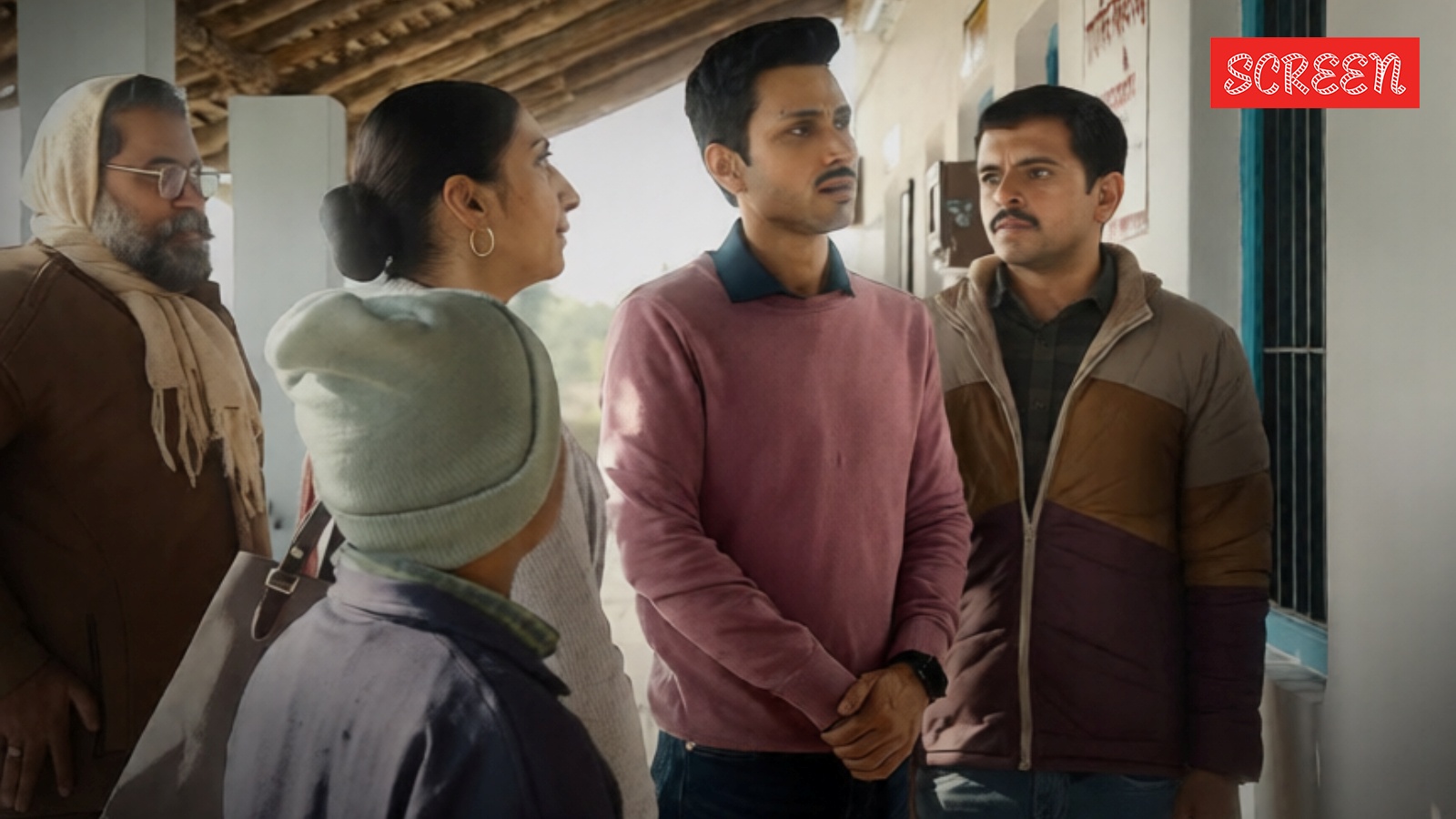
The show is set in Bhatkandi, a fictional village in Jharkhand. Dr Prabhat Sinha, played with considerable sincerity by Amol Parashar, is trying to make the local Primary Health Centre functional and trusted. Season 1 established the premise well, a non-operational PHC, a village that preferred its quack doctor, Chetak Kumar, played by Vinay Pathak with scene-stealing ease. Prabhat had to earn trust before he could offer treatment. That was a worthwhile story.
Season 2 has patients now. The new problem is that medicines are running short. Prabhat’s goal is to win the Adarsh PHC award, which comes with a reliable medicine supply from the CMO’s office. The stakes feel real. The show handles this conflict with its characteristic lightness — corrupt officials, administrative red tape, moments of genuine humanity scattered throughout.
And yet, finishing Season 2, I kept thinking about what the show wasn’t saying.
ALSO READ: At 70, Hrithik Roshan’s mom Pinkie Roshan’s fitness routine connects ‘head, heart, hand’
I grew up in a small Himalayan town. I know what district hospitals look like — not on a screen, but from the inside. I know what it means to wait for a CT scan report that has to travel by email from a larger city, hours away, and arrive at a facility where the doctor on duty may not have the training to read the films. I know what it means when a delivery complication turns into an emergency referral, and the nearest hospital that can actually handle it is four hours down a mountain road. I know what happens when district hospitals are quietly reduced to forwarding offices — places where the referral slip is written, not the treatment given.
Story continues below this ad
A still from Gram Chikitsalay.
Every person from a small town or village in this country has a version of this story. Someone in their family or their neighbour’s family. A case that went wrong not because of fate but because of a system that had already given up on them.
Gram Chikitsalay Season 2 knows none of this. Or if it does, it has decided not to look.
A PHC is supposed to serve 30,000 people. In practice, often more. The doctor posted there may be months out of medical college with no specialist to call. Night cover is frequently absent — a woman who goes into labour at 3am may find the building locked. Diagnostic equipment, where it exists, breaks and stays broken because there is no repair budget and no technician. ASHA workers, the community health volunteers the entire primary healthcare system is built on, are chronically underpaid and carry workloads that would exhaust people paid three times as much.
Gram Chikitsalay could have shown any of this. It chose warmth instead.
Story continues below this ad
A PHC is the first link in a chain. What happens when Dr Prabhat stabilises a patient and realises they need more? What happens when the referral they send to the district hospital disappears into a system where the district hospital has its own medicine shortages, its own vacant specialist posts, its own equipment that exists on paper but not in practice?
In June 2025, a ground report documented the case of Reena Devi, 27, from Banka in Bihar. She started bleeding at 3am. The nearest PHC was closed. Her family put her in a three-wheeled auto and drove toward the district hospital, 34 kilometres away. She died before they got there. No doctor picked up the phone. No ambulance came. Bihar’s maternal mortality ratio stands at around 149 deaths per 100,000 live births. Jharkhand — where Bhatkandi is set — is at 163.
Gram Chikitsalay Season 2 is streaming on Prime Video.
These are not statistics. They are Reena Devi, repeated.
More recently, in Manendragarh, Chhattisgarh, a woman named Shyama Bai Yadav had a heart attack. The civil hospital there couldn’t treat her. Doctors referred her to Raipur and requested an ambulance at 6pm. The ambulance arrived at midnight. She died in transit.
Story continues below this ad
That story is almost a scene from the show the makers didn’t write. A Season 3 episode that Gram Chikitsalay has now made it harder to reach.
Because that is what a finale moment does. Panchayat is a warm, funny, deeply human show and it still let Prahlad Cha lose his son in season 2, showed the grief and carried that weight into the next season without losing what it was. Kota Factory’s Season 2 ended with an ambulance siren playing under a celebration, Jeetu Bhaiya learning that one of his students had attempted suicide after failing the JEE. Both shows had earned those moments. Both used them to go somewhere deeper in the season that followed.
TVF knows how to let warmth survive contact with a harder truth. Which is why Gram Chikitsalay’s insistence on the good ending feels like a choice rather than a limitation.
Season 2 needed an ending that changed the terms of the show. A patient who didn’t survive the referral. A night when Dr Prabhat realised that fixing the PHC was only the beginning, that the chain above him was broken in ways he couldn’t charm or hustle his way around. Not as spectacle. As fact — the same fact that anyone who has ever sat in a government hospital waiting room at 2am already carries.
Story continues below this ad
The show has the setting for it. What it is missing is the willingness to let Bhatkandi hurt.
Gram Chikitsalay Season 2 is streaming on Prime Video.
Gram Chikitsalay is not a decorative name. When you put those words on a show and stream it to an audience that includes millions of people who have lived that reality, you are making an implicit promise that the story will go where the subject goes.
There is nothing wrong with hope. But hope means more when it has survived something real.
Gram Chikitsalay is a good watch. The performances are good, the characters are well-drawn, TVF’s affection for this world comes through in every frame.
Story continues below this ad
A show with this name, on this subject, can do more than be a good watch.
View original source — Indian Express ↗
Related stories

Indian Express
EntertainmentJun 26, 2026 · 1 min
Did Prabhas, Rana Daggubati and Anushka Shetty just tease Baahubali 3? Fans think so
Indian Express
Times of India
EntertainmentJun 26, 2026 · 1 min
'Meet your next federal budget director’: JD Vance jokes after Usha Vance buys $50 dress for $8.75
Times of India

Indian Express
EntertainmentJun 26, 2026 · 1 min
Kriti Sanon chooses Deepika Padukone’s Veronica; but says Cocktail 2 ‘completely different’
Indian Express

The Hollywood Reporter
EntertainmentJun 26, 2026 · 1 min
David Boreanaz, Former ‘SEAL Team,’ ‘Bones’ and ‘Angel’ Star, to Keynote Italian Global Series (Exclusive)
The Hollywood Reporter