Indian Express
Indian Express··7 min read
How an Aligarh surgery that removed the wrong kidney led to a 12-year legal battle
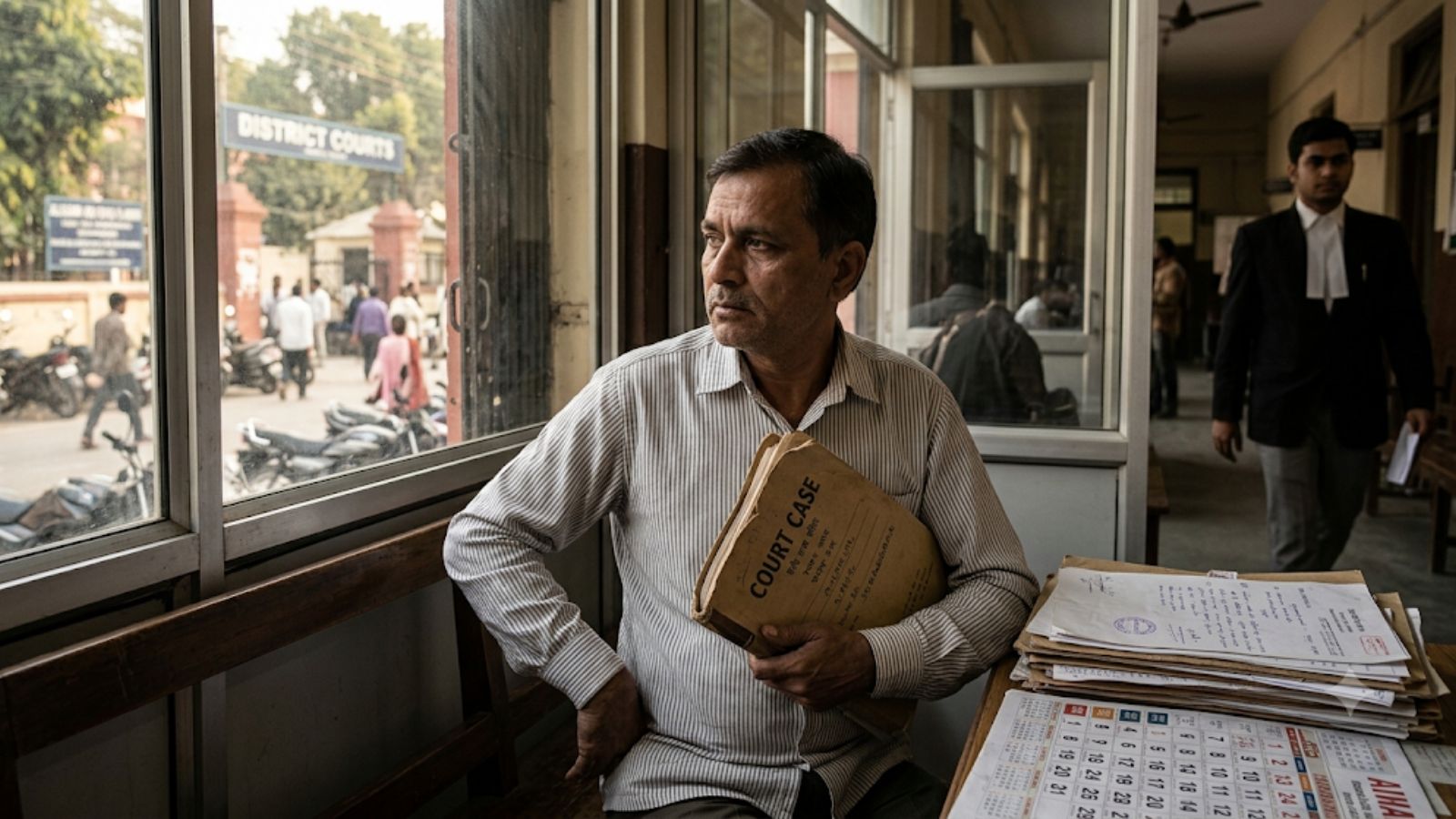
Ever since he took his mother to the Ashirwad Nursing Home in Aligarh 14 years ago, Veer Singh has measured his life in court cases. A “negligent” surgeon removed her healthy kidney, instead of the diseased one, triggering a medical board inquiry, proceedings before the Uttar Pradesh Medical Council, and a 12-year legal battle before the National Consumer Disputes Redressal Commission.
In between, Veer’s mother died and he grew older — but the court cases carried on. He spent years struggling to clear the medical debt while grieving the loss of his mother. That is, until last month, when the National Consumer Disputes Redressal Commission directed the doctor responsible for the surgery to pay two crore rupees.
“These 14 years have felt like an eternity – first running around hospitals and doctors and then courts. I would travel from Aligarh to New Delhi for the commission hearings, then learn that opposing counsel wasn’t present and that the case was adjourned,” says Singh.
In its May 18 order, the commission directed Dr Rajeev Lochan of Ashirwad Nursing Home to pay two crore rupees to Shanti Devi’s family for “the negligent surgery” and for depriving them of her “company, love and affection”.
“The loss is irreparable, in as much as, the loss of a mother to her sons, a spouse to her husband and a housewife to a family, all combined together cannot be diluted, moreso with the nature of the negligence in the present case,” the consumer commission’s order says.
For the family, this order came after years of trauma and suffering. “Even after the botched surgery, we were not counting money, we were solely focused on keeping her alive. It was my wish to get justice while she was alive, so that she gets some sense of closure,” Veer Singh, who works as an LIC agent, says.
The hospital no longer exists. Queries sent to Dr Lochan’s lawyer went unanswered.
Story continues below this ad
The visit and surgery
It started with a dull, radiating pain in the abdomen. At first, 56-year-old Shanti Devi, who managed the family convenience store, ignored it, but the pain grew insistent.
On April 17, 2012, Veer, the eldest of her three sons, took Shanti Devi to the clinic after work because it was close to home. “We didn’t know him and had never consulted him before. But we knew the hospital was conveniently located,” he recalls.
It was meant to be a routine visit: they would meet the doctor, get her checked up, get some medicines and return home. Instead, it led to a series of tests and a worrying diagnosis: hydronephrosis, or enlargement of the right kidney because of blockages and urine build-up. Further tests confirmed that the surgery was necessary.
“After the diagnosis, we even got second opinions from other places, including the hospital attached to Aligarh Muslim University, and a hospital in Agra. They all said that the surgery was necessary. So, in the end, we decided to go to Lochan.”
Story continues below this ad
At 11:30 am on May 6, Shanti Devi was wheeled into the operation theatre for kidney removal. The family had spent the previous day undergoing pre-operative tests and, though anxious, they were convinced that the procedure was necessary for her survival.
But then it went downhill. Shanti Devi’s health declined. She couldn’t pass urine even 24 hours after the surgery, her body swelled and turned a pale blue. Yet there was no word from the doctor, even during his post-op rounds. A day later, Dr Lochan referred her for dialysis at another hospital and discharged her. There were no questions, no tests and no follow-ups, only a hospital bill of just under one lakh rupees.
At the hospital she was sent to, she underwent dialysis. Blood tests also showed that her creatinine levels were normal. But Shanti Devi’s family remained anxious. “We got scared. We thought, ‘Why does she need dialysis when she has one healthy kidney?’”
Despite the dialysis, Devi’s health continued to slide. On June 3, 2012, Veer Singh consulted Dr Dinesh Khullar, a New Delhi-based nephrologist, who was visiting Aligarh. He ordered fresh tests.
Story continues below this ad
The results stunned them. Instead of the damaged kidney, the surgeon had removed the healthy one. Another round of second opinions followed, and the family confronted Dr Lochan.
“He didn’t admit to the mistake. We even pleaded with him. He said that the only thing that can be done now is to go for a kidney transplant and offered us Rs 50,000 to keep quiet,” Veer Singh recalls. “He (Dr Lochan) suggested a kidney transplant, saying someone from her family should donate to her. But her blood group is different from ours, and what’s the guarantee the donor won’t become sick? We registered at AIIMS New Delhi for a kidney transplant, but the queue was long and our number never came.”
In the days that followed, an FIR invoking provisions relating to causing grievous hurt by weapon – later modified to the less serious charge of grievous hurt by rash and negligent act — under the Indian Penal Code was registered. This led to a medical board inquiry into the incident.
On July 18, 2012, the board unequivocally found Dr Lochan “fully responsible and guilty of removing the left kidney of the patient whereas the right dysfunctional kidney was in its place in her body”. Subsequently, the Uttar Pradesh Medical Council suspended Dr Lochan’s licence for two years in March 2013. The suspension was upheld by the Medical Council of India in 2014.
Story continues below this ad
In October 2012, police filed a chargesheet, which remains pending before an Aligarh court. In 2013, the Allahabad High Court dismissed a plea by Dr Lochan to quash the chargesheet.
The long court battle
After the botched surgery, life had overnight taken a tragic turn for Shanti Devi. She was confined to her bed. Her outings were limited to hospital visits once every three days for dialysis. Her weight fell dramatically from 58 kg to 30 kg. Her condition was fast deteriorating and soon her family realised that the end was near.
“Before, she was very active and was very close to my children. She would drop them off at school and pick them up, and manage the convenience store,” Veer Singh remembers. “But after the surgery, my mother broke. She had accepted that she would die. She wanted the pain to end. Woh kehte the mujhe ichchhamrityu chahiye (She would say she wants to be euthanised)”.
For the family, too, life changed dramatically: medical trips and doctor’s appointments began to dictate their lives, medical bills climbed, and savings dwindled. “We had to mortgage the house to meet the expenses. I wasn’t working at that time, and dedicated my time to caring for her. When she was alive, we would travel to New Delhi for her dialysis and health check-ups. After her death, it was for the court cases,” Veer Singh says.
Story continues below this ad
On February 20, 2014, Devi died of “shock and septicaemia”. In August that year, Veer Singh moved the National Consumer Disputes Redressal Commission accusing Dr Lochan of medical negligence. The complaint stated the family had “reasonable and strong apprehension that the healthy kidney removed from the body of Late Shanti Devi has been illegally sold by (Dr Lochan) with an intention of enriching himself”.
The commission admitted the complaint in March 2015 — over a year after Devi’s demise — and written statements were filed by 2017. But repeated adjournments and pandemic disruptions delayed hearings, with the complaint finally heard in May this year.
In his arguments, Dr Lochan called it an accident, even theorising that “probably both the kidneys of the patient were on the same side and hence could be a congenital defect”. He said that, after opening Shanti Devi’s abdomen, “he could see the kidney and thus removed it”.
In their order, a Bench of Justice A P Sahi (president) and Bharat Kumar Pandya (member) rejected these arguments. “The removal of the left kidney was a medical disaster and negligence of the highest order. Had the left kidney remained intact, the patient would have survived longer,” the commission said, noting that records showed Lochan could neither confirm which kidney he had removed nor firmly state its size.
Story continues below this ad
For the family, the order brings closure to a long court battle, but a Shanti Devi-sized void remains in their lives. What Veer Singh remembers most about his mother is her laughter: loud and uninhibited, the kind that fills up the room. “I still miss eating and laughing with her. These specific images still come back to me at the most unexpected times. Even Rs 50 crore cannot make up the loss,” he says.
View original source — Indian Express ↗
Related stories

South China Morning Post
NewsJun 26, 2026 · 1 min
Japan’s women-only carriages turn 25
South China Morning Post

The Punch
NewsJun 26, 2026 · 1 min
Davido drops first single of 2026, I Know Who I Be
The Punch

ESPN
SportsJun 26, 2026 · 1 min
Poch puzzled by 'weird' questions: We 'won group'
ESPN
The Punch
SportsJun 26, 2026 · 1 min
World Cup: US lose 3-2 to Turkey after last-gasp strike
The Punch