Indian Express
Indian Express··8 min read
A retired NSG commando killed, a son’s revenge: How 7-year feud destroyed two Gurgaon families
At first glance, nothing about Kasan village suggests it has been living through a bloody feud between two families that once shared a close bond. Yet, the signs are hidden just under the calm.
It is quiet on a summer afternoon, as residents walk past houses painted in shades of blue and green. Near the local market stands the Moni Baba ka Chabutra, a raised concrete platform where villagers would regularly gather to chat. It is now largely deserted and only a man, standing alone, is smoking beedi. The shops in the market only begin opening by midday.
It was on this chabutra that a bloody feud, which many believed had already been settled by the courts, erupted once again on the morning of April 30.
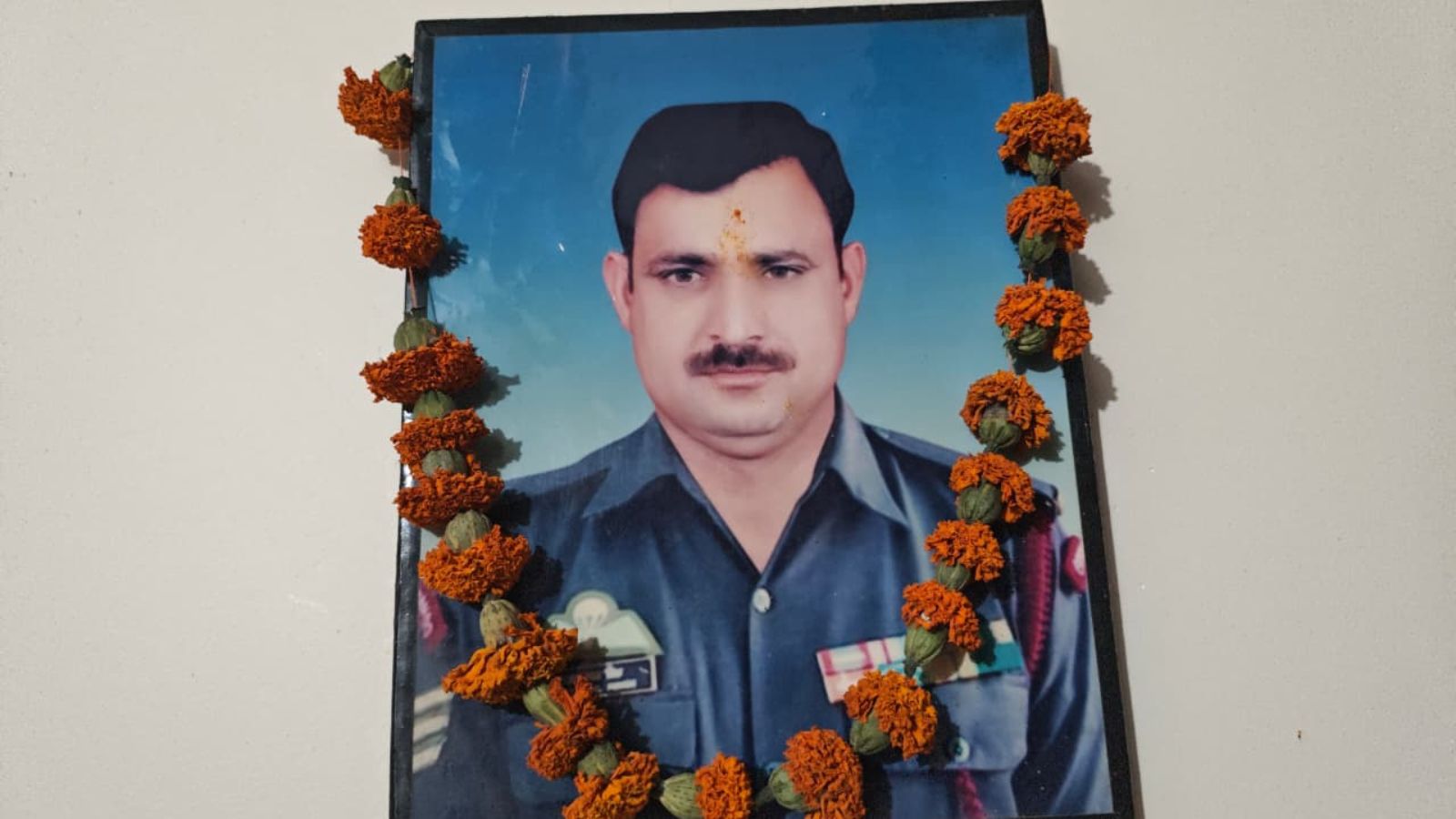
Sundar Pal Singh, a 55-year-old former National Security Guard (NSG) commando known in the village as Sundar Fauji, was shot dead in broad daylight. He was out on parole from a life sentence for murder. The man accused of pulling the trigger was 20-year-old Kartik Chauhan, the younger son of the man Fauji had been convicted of killing in 2018 — former village sarpanch Bahadur Singh Chauhan.
The home is dotted with remnants of Fauji’s former life: NSG insignia and trophies gathered over years of service. His Royal Enfield motorcycle is parked nearby.
The physical distance between the homes of the two families is not more than 100 metres. The emotional distance has, however, widened significantly in these eight years.
The Indian Express visited both households in the village in Haryana’s Gurgaon district to understand how a friendship forged over the years unravelled into a cycle of bloodshed that has now claimed two lives and altered many more.
Morning of April 30
Around the chabutra, hardly anyone is ready to give a clear picture of the shooting incident. They did not see it, many say, it happened early, before shops had opened for business.
Story continues below this ad
Police say the attack took place around 8.30 am. According to investigators, Fauji had been sitting at the platform, waiting for his wife. He had been released on parole on March 29 to attend a family wedding and was expected to return to prison soon. Police allege that Kartik and his friend Gulshan, alias Gullu, approached him and fired five rounds from close range.
A video of the murder surfaced later. As the former commando collapsed, villagers rushed towards the scene. According to police, the two accused allegedly pointed their weapons at pursuing residents before abandoning two pistols and fleeing. Fauji was taken to a nearby private hospital, where he was declared dead.
In May, Gurgaon police arrested Kartik and Gulshan, describing the killing as a “planned act of revenge”.
Police claim that during questioning, Kartik admitted that he had orchestrated the attack to avenge his father’s death. Investigators further allege that he had travelled to Uttar Pradesh to procure illegal firearms used in the shooting.
Story continues below this ad
But the story, according to both the families, began years earlier.
‘Never used violence’
A narrow lane leads to the Singh household, where Fauji’s family is struggling to come to terms with his murder. Several houses owned by the family stand side by side. Some have been rented out to villagers.
His home is a medium-sized two-storey building, with black and silver metal gates at the entrance. The walls were recently painted pink for a wedding in the family. Inside, the living room is plastered with floral wallpaper.
The home is dotted with remnants of Fauji’s former life: NSG insignia and trophies gathered over years of service. His Royal Enfield motorcycle is parked nearby.
Story continues below this ad
Fauji’s wife, 53-year-old Manju Rani, speaks softly, often pausing midway through sentences. Currently, she lives with her mother in the house.
Rani says Fauji joined the Army’s Rajput Regiment in the early 1990s and later served as an NSG commando before retirement.
She remembers her husband as a problem solver in the village. “He never used violence. Even on that day in 2018, we do not know exactly how the gun went off,” she says.
Bahadur Singh’s home in Gurgaon. He was killed by Fauji in 2018. His wife, children and daughters-in law live in the house now. (Express Photo by Abhimanyu Hazarika)
Her mother, 72-year-old Angoori Devi, remembers her son-in-law as a caring family man. “He looked after me better than a son,” she says. “He paid for my medicines and my eye operation.”
Story continues below this ad
A Gurgaon court convicted Fauji for the murder of Bahadur and sentenced him to life imprisonment.
What happened that day remains central to the competing narratives both families tell.
The 2018 killing
Rani alleges that the dispute arose over money.
Her husband, she says, had lent substantial sums to Bahadur over the years because of their friendship.
Story continues below this ad
“He had given him nearly Rs 65 lakh as far as we know, including money borrowed from my brothers and relatives,” she says. “Most of it was in cash. He had gone to ask for the money back.”
The relationship began to sour, Fauji’s family says, when he asked for the money back multiple times because the family needed to pay for children’s education. The Chauhan family, however, disputes these claims, saying no money was borrowed from Fauji.
The 2018 murder took place when Fauji purportedly went to ask for his money from Bahadur — on April 11 of that year. According to police and family members, Fauji went to Bahadur’s dairy farm in the village at night, and was initially thrown out from there. Then, he allegedly went in and shot Bahadur.
Police sources say eight shots were fired from a licensed revolver that Fauji had allegedly taken out of his bank locker a week earlier.
Story continues below this ad
Aftermath
Rani alleges that after the 2018 murder, members of the Chauhan family forcibly took control of a school she operated in the village and intimidated staff members. She says that the cases related to this intimidation remain pending before the courts. The Chauhans deny wrongdoing and maintain that the school property legally belongs to them.
At the Moni Baba ka Chabutra, where Surender Fauji was killed on April 30. (Express Photo by Abhimanyu Hazarika)
Rani’s sister-in-law, Madhuri, also lives in the village. She insists Fauji had actively supported Bahadur’s political career and even helped finance his election campaigns.
“He stood by him,” she claims. “What happened in 2018 was wrong, yes. But now our children are facing questions about revenge and more revenge.”
The family says that they had celebrated the marriage ceremony of Fauji’s elder daughter only 10 days before he was killed.
Story continues below this ad
“We want the bloodshed to stop now,” Madhuri says. “The legal cases can continue. But enough people have suffered.”
Rani says she is now focused on rebuilding the family’s life.
“I am waiting for my pension paperwork,” she says. “Our son is pursuing an MBA. We have to pay his fees.”
The other house
A short walk away from the Singhs’ home is the Chauhan household. The two-storey house with green-tinted windows is painted olive green with floral motifs.
Though eight years have passed, several among the Chauhan family are still angry. Satpal, Bahadur’s elder brother, remains unapologetic. “What my nephew did was right,” he says bluntly, regarding the murder of Fauji.
However, Bahadur’s other children take a more measured tone. Rohan Chauhan, 26, and his sister Sapna, 30, say they do not support their younger brother’s actions, though they believe years of unresolved trauma and provocation contributed to them.
According to the siblings, their father and Fauji had once shared a close friendship. “He used to eat at our house,” they say. They knew each other from the time they served in the Army together in Kashmir in the 1990s. The families, however, did not interact much.
“My father attended their family functions and Fauji did the same. We knew their kids, but we were not friends,” Sapna says.
The family rejects claims that Chauhan had borrowed money from Fauji. “There was no question of debt,” Sapna says. “We had gotten close to Rs 3 crore when Maruti acquired our land.”
Sapna insists that her family owns the disputed school property. “The property belongs to us. It was only leased to the Singh family to run the school. After the 2018 incident, we took it back,” she claims.
Increasingly withdrawn
The family says Kartik appeared increasingly withdrawn in the days leading up to last month’s shooting. “We thought he was being shy after marriage,” says Rohan. “He had only been married for three months.”
The siblings allege that Fauji occasionally approached Kartik and made remarks that disturbed him, though they say they never imagined matters would escalate into violence.
“If we had known what was going on in his mind, we would never have left him alone,” says Rohan.
The family insists they had accepted the court’s verdict in the 2018 murder case. “We got closure when the life sentence came,” says Sapna. “But now Kartik has ruined his own life.”
The siblings describe a future that now appears permanently altered.
Kartik was in his first year of a BA degree via distance learning. “He had ambitions to expand the family’s water purification business into dairy and poultry ventures,” Rohan says.
Now, each family member gets only a few moments on the phone with Kartik every day. “He talks about food and routine things,” says Sapna. “Not about what happened.”
‘Inevitable’
Villagers say they were not surprised by the killing because they believed the conflict had never truly ended.
A resident of Kasan village, who knew both the families, says she had even thought of moving out after the 2018 incident, fearing a cycle of violence would follow.
“My son, who lives in the city, had asked if we wanted to move in with him [after the latest murder]. We were scared that there might be more violence. Even though we didn’t move then, we are not ruling it out. Who can say what will happen,” she says.
The families involved are aware of the sentiment. Sapna says some had been anticipating something like April’s incident. “People thought it was inevitable,” she says quietly.
-At the Moni Baba ka Chabutra, where Surender Fauji was killed on April 30. (Express Photo by Abhimanyu Hazarika)
-At Sundar Pal Singh’s house in Gurgaon. He was a 55-year-old former National Security Guard (NSG) commando, known in the village as Sundar Fauji. (Express Photo by Abhimanyu Hazarika)
-Outside Bahadur Singh’s home in Gurgaon. He was killed by Fauji in 2018. His wife, children and daughters-in law live in the house now. (Express Photo by Abhimanyu Hazarika)
View original source — Indian Express ↗
Related stories

South China Morning Post
NewsJun 26, 2026 · 1 min
Japan’s women-only carriages turn 25
South China Morning Post

The Punch
NewsJun 26, 2026 · 1 min
Davido drops first single of 2026, I Know Who I Be
The Punch

ESPN
SportsJun 26, 2026 · 1 min
Poch puzzled by 'weird' questions: We 'won group'
ESPN
The Punch
SportsJun 26, 2026 · 1 min
World Cup: US lose 3-2 to Turkey after last-gasp strike
The Punch