VnExpress
VnExpress··3 min read
The world's most-educated young adults are moving back home to become 'full-time children'
Unable to find work or afford rent, a growing number of young South Koreans are moving home and becoming "full-time children," adults who trade housework and caregiving for their parents' support.
South Korea has the highest share of college-educated young adults in the OECD. About 71% of those aged 25 to 34 hold a tertiary degree, the top rank among member countries, according to the organization's "Education at a Glance 2025" report.
Yet their employment rate, 80%, falls below the OECD average of 87%. Many of the country's most qualified young adults, the OECD notes, are simply inactive.
The "full-time child" describes an unemployed or economically inactive adult who lives with their parents and takes on chores, cooking and caregiving in return for an allowance or free housing.
On South Korean social platforms, videos tagged "a day in the life of a full-time child" draw hundreds of thousands of views. They show ordinary routines: making breakfast before parents leave for work, doing laundry, driving parents to hospital appointments, running errands.
Some earn a monthly allowance. Others simply trade labor for room and board.
The term was translated from "quanzhi ernu" in China, where youth unemployment among those aged 16 to 24 hit a record 21.3% in June 2023, figures from the National Bureau of Statistics reported by CNN and NBC News show.
The label has since spread to South Korea.
Full-time children are quick to separate themselves from the older Korean stereotype of the "kangaroo generation," adult children who lean on their parents financially. Their case is that they contribute real labor and care.
"They are not simply staying home and doing nothing," Jeon Young-soo, a professor at Hanyang University's Graduate School of International Studies and the author of a recent book on the trend, told The Korea Herald.
"In an era of youth unemployment, slow growth and high inflation, this is a survival strategy born from the intersection of young people's economic difficulties and parents' desire to support their children."
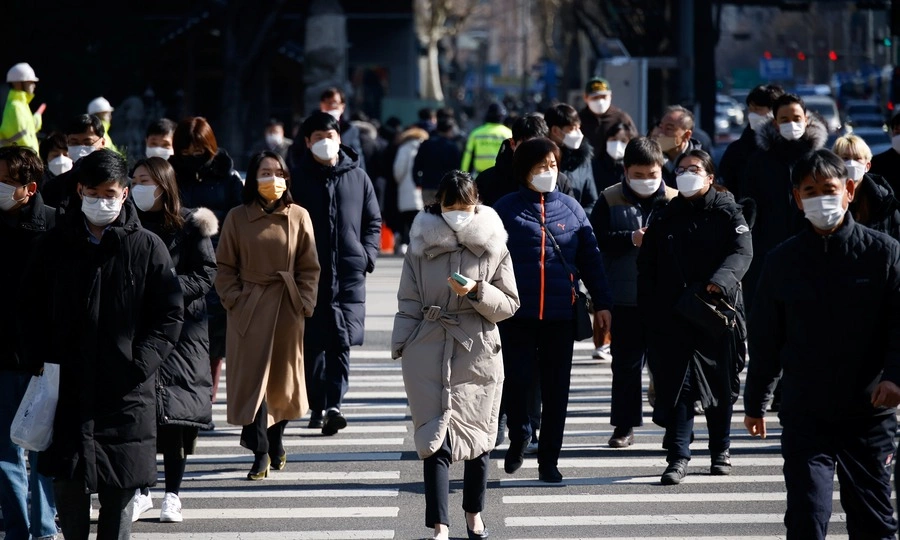
Commuters cross a zebra crossing in Seoul, South Korea, Feb. 3, 2021. Photo by Reuters
The math of moving home
Government data on May employment trends, released June 11, showed the number of employed South Koreans aged 15 to 29 fell by 255,000 from a year earlier, The Korea Herald reported. It was the steepest drop since January 2021, when the pandemic drove a 314,000 decline.
The youth employment rate slipped to 43.8%.
Housing makes the calculation worse, especially in Seoul. A 2025 government survey found 54.4% of South Koreans aged 19 to 34 still living with their parents, according to The Korea Herald.
Research by the Seoul Institute, cited by the paper, shows co-residence climbing across generations. About 19% of people born between 1971 and 1975 were still at home at age 35.
For those born between 1981 and 1986, the figure rose above 32% nationwide, and topped 40% in the Seoul metropolitan area.
One YouTuber documented moving back to her parents' house after years of paying about 700,000 won ($455) a month in rent in Seoul. Others describe quitting drawn-out job hunts after graduating from top universities, picking up household duties while they decide what comes next.
Supporters see economic realism, not failure. With parents aging into needing care and young people unable to afford independence, both sides can gain. Parents get help at home; adult children dodge high rents while keeping family ties.
The arrangement also scrambles old assumptions about domestic labor. For decades, Korean society cast housework and caregiving as women's work, while full-time children now include men and women doing the same tasks inside the family home.
Critics see dependence dressed up. The role rests entirely on parents' money and health, and if parents retire, fall ill or die, children who spent years out of the workforce may find it hard to get back in.
Online, many call it unemployment with a friendlier name. Others worry it drains parents already nervous about their own retirement.
Jeon argues the blame is misplaced. "The important thing is not to blame young people," he told The Korea Herald. "This is a structural phenomenon created by demographic change, labor market conditions and the rising cost of living."
View original source — VnExpress ↗
Related stories
South China Morning Post
NewsJun 26, 2026 · 1 min
Japan’s women-only carriages turn 25
South China Morning Post

ESPN
SportsJun 26, 2026 · 1 min
Transfer rumors, news: Arsenal eye move for Bruno...
ESPN

ESPN
SportsJun 26, 2026 · 1 min
A Premier League star who does it all: Why City sp...
ESPN

Rio Times
EntertainmentJun 26, 2026 · 1 min
Brazil’s “Funk” Wins Over Tribeca, Putting Favela Funk on the World Stage
Rio Times