Indian Express
Indian Express··5 min read
Can Himanta Sarma government in Assam stop Aadhaar cards for all above 18? Experts differ
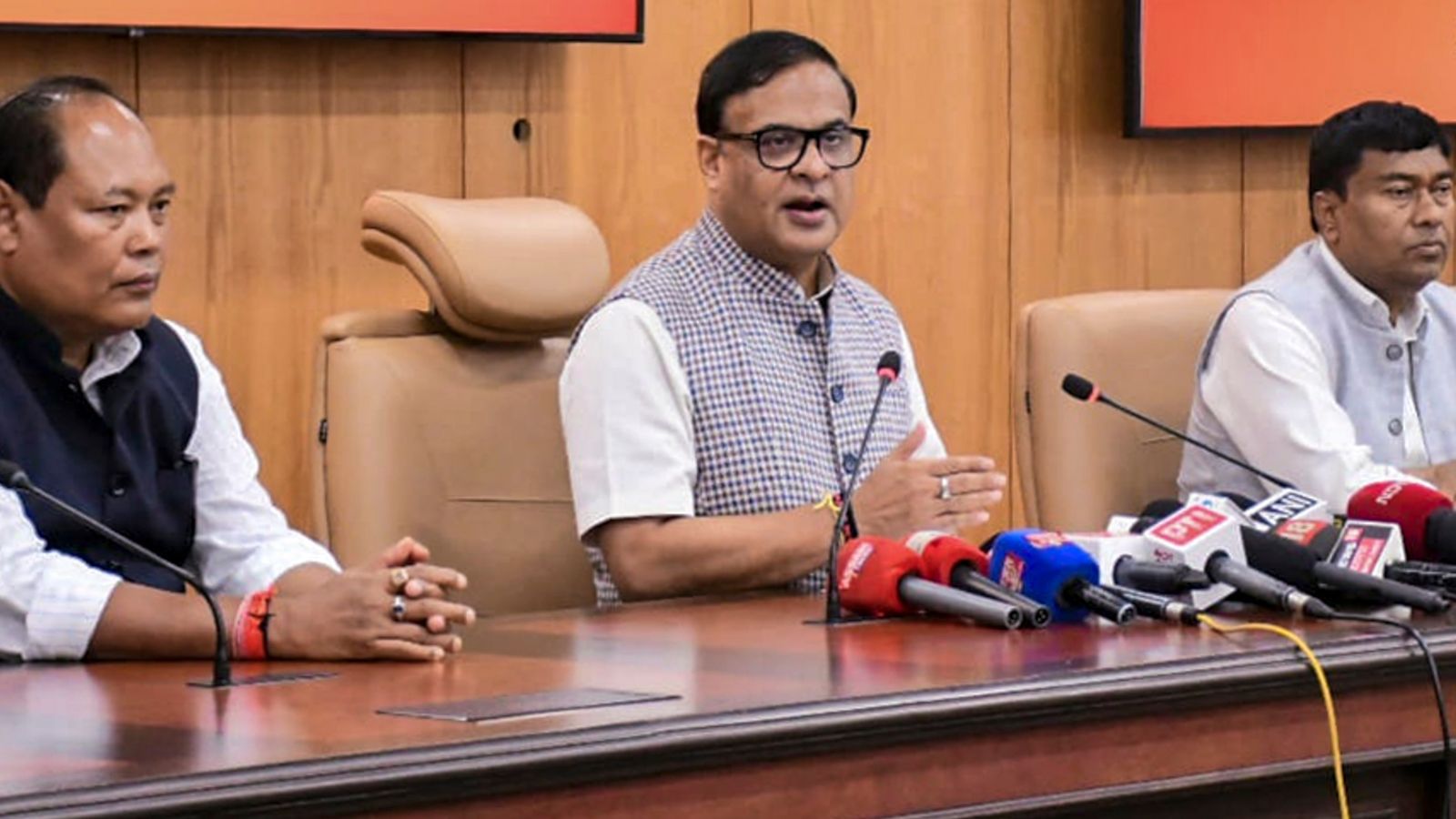
Announcing that his government would stop issuing Aadhaar cards to adults above the age of 18, Chief Minister Himanta Biswa Sarma framed it as a measure to check illegal Bangladeshi migrants obtaining Indian identity documents.
However, experts are divided on whether a state government, whose role is essentially defined as an Aadhaar “registrar”, can impose a pre-clearance requirement on enrolment, when it is not part of the Aadhaar Act 2016 or in the regulations and processes set by the Unique Identification Authority of India (UIDAI).
Under the Aadhaar Act, a registrar is defined as “any entity authorised or recognised by the Authority for the purpose of enrolling individuals under this Act”. State governments are among the primary registrars, and under an MoU with the UIDAI, are “responsible for abiding by the roles and responsibilities assigned to them”.
Sarma said that now, no more Aadhaar cards will be approved for adults at the district level in Assam. “If at all, there is some genuine person, then the Deputy Commissioner will send a proposal and the government will approve. But at the DC level, no more Aadhaar cards will be issued to a citizen more than 18 years of age.”
Alok Prasanna Kumar, co-founder of the Vidhi Centre for Legal Policy, says: “The state government has no legal power to stop Aadhaar enrolment. At best, a state can request the Central government to ask the UIDAI to do the same.”
Prasanna Kumar adds that the state government as such is not involved in the issue of Aadhaar cards, with a person applying directly to the UIDAI, biometrics processed centrally, and the UIDAI issuing the card.
Usha Ramanathan, an activist who has written extensively on the Aadhaar framework, also says that Assam’s actions appear to be “a simple usurpation of power… a brazen statement of defiance of the law”.
Story continues below this ad
The Aadhaar guidelines
Section 3(1) of the UIDAI Act provides that every resident shall be entitled to obtain an Aadhaar number by submitting demographic and biometric information through the enrolment process. “Resident” is defined as “an individual who has resided in India for a period or periods amounting in all to one hundred and eighty-two days or more in the twelve months immediately preceding the date of application for enrolment.” There is no age limit defined for Aadhaar enrolment, with even a newborn entitled to do so.
The proviso to Section 3(1) gives only the Central government the power to notify any additional category of individuals who may be entitled.
Section 9 of the Act states that the Aadhaar number shall not by itself “confer any right of, or be proof of, citizenship or domicile”. The decision to use Aadhaar enrolment as a check on immigration therefore has to contend with the Act’s own framing of what Aadhaar is and is not.
Sources in the Central government argue that adult enrolments already require approval by the state – and Assam’s “infiltration” logic is just a spin on it. In case of any 18-plus person applying for Aadhaar, as per these officials, the UIDAI accepts the documentation but proceeds only after the respective state governments approve its issue, after verification.
Story continues below this ad
An Assam government official also argues this, saying a protocol of verification at the district level for Aadhaar cards was already in place, especially after it announced a Cabinet decision in August 2025 requiring a district collector clearance for all adult enrolment from October 1.
“While till about 2021, the target was to increase Aadhaar coverage, after that state governments were given the responsibility to implement checks. So in every state, applications taken in Aadhaar centres are routed to the state and, from there, to districts to verify if the applicant resides in the particular district,” said the official.
However, while the UIDAI’s enrolment process does state that applications may be verified through state authorities, there is no provision for district-level clearance for first-time Aadhaar enrolment of all applicants above 18.
As per Prasanna Kumar, any additional verification by the state is not allowed by the UIDAI legislation. “Even if the state does not respond, the statute gives you a right. The only legitimate grounds for refusal are that a person is not a resident or is committing fraud. If someone is a resident with valid documents, Assam or any other state for that matter cannot block the issue (of Aadhaar).”
Story continues below this ad
Ramanathan adds that as a “registrar”, a state government is there to facilitate enrolment, and ensure it is transmitted to the UIDAI. “No one can ask for anything other than the information the UIDAI requires for enrolment,” she says.
She adds that in Assam, the fear is that “not only those who are not citizens will not be allowed to enrol…, those who are not allowed to enrol will be denied citizenship, unless the government of the day decides otherwise.”
Court interpretation
The Supreme Court has considered the intersection of Aadhaar and Assam government orders earlier. In 2022, a Bench issued a notice to the Union Government, UIDAI and Assam on a petition arguing that the Aadhaar Act contains no bar on issuing Aadhaar to any class of residents, and that denial on the basis of NRC (National Register of Citizens) status creates a class within a class in violation of Article 14. Those matters remain pending.
Last month, the Bench of Chief Justice of India Surya Kant and Justice Joymalya Bagchi disposed of a PIL seeking to restrict fresh Aadhaar enrolment to children below the age of 6 years, on the ground that the system was being misused by illegal infiltrators. The Court declined to entertain this, saying these are policy matters within the Executive sphere.
Story continues below this ad
The numbers
Based on the UIDAI’s state-wise data as of May 31, 2026, Assam has an estimated Aadhaar penetration of 91.46%, with about 3.36 crore live Aadhaar holders against a projected population of 3.67 crore. This is below the national average of 94.43%.
The UIDAI notes that these figures are based on the current address recorded in Aadhaar and do not necessarily reflect domicile, meaning the figure does not by itself indicate how many Aadhaar holders are originally from that state.
(with inputs from Sukrita Baruah, Guwahati)
View original source — Indian Express ↗
Related stories

The Punch
NewsJun 26, 2026 · 1 min
$4.5bn fraud: Emefiele challenges EFCC statements, cites torture, detention
The Punch

ESPN
SportsJun 26, 2026 · 1 min
Sources: Pistons to land Joe in trade with OKC
ESPN
The Punch
NewsJun 26, 2026 · 1 min
NSCDC nabs three suspects over illegal ethanol haul in A’Ibom
The Punch
The Punch
NewsJun 26, 2026 · 1 min
Taraba gets permanent police HQ 35 years after creation
The Punch